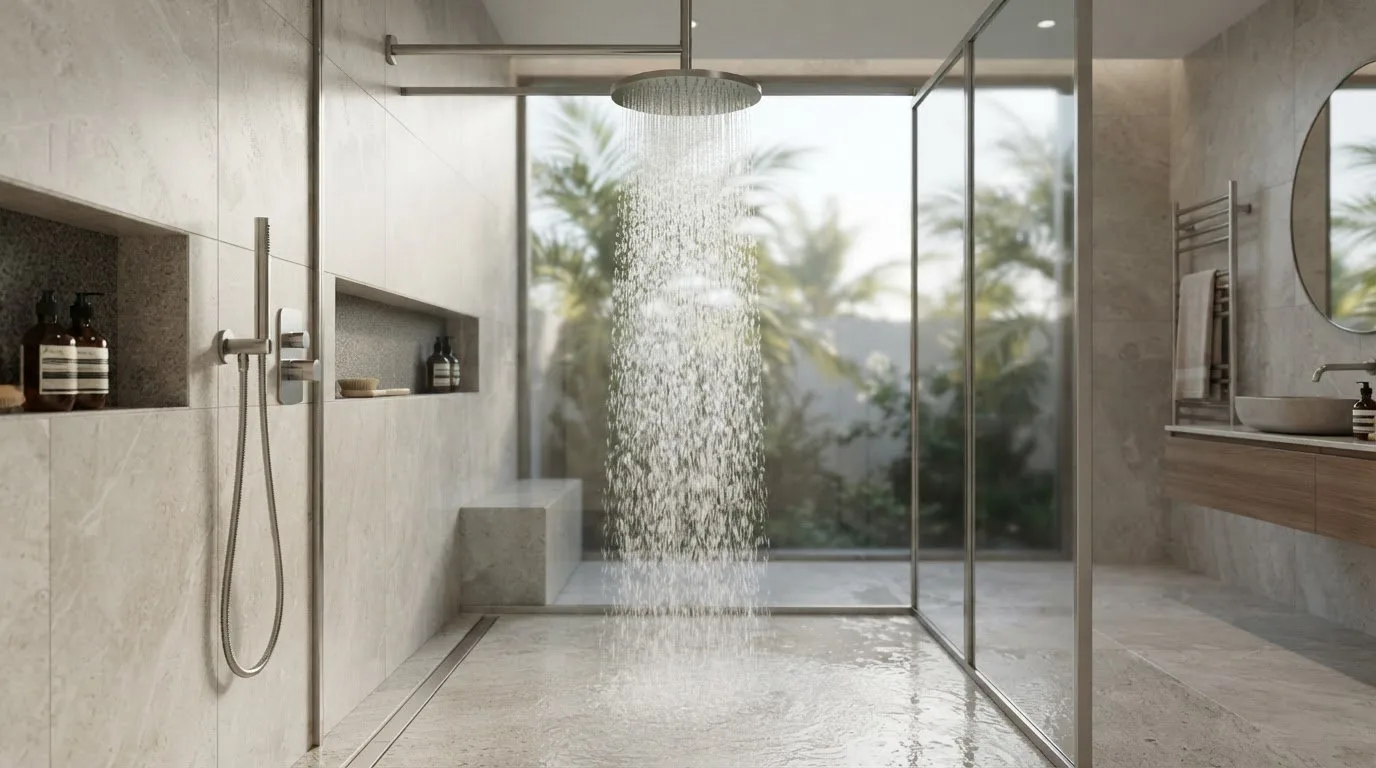
A bigger shower head isn’t automatically the better choice. If you’re wondering what a rain shower system is, it’s an overhead shower with a broad, flat head that spreads water in a gentle, even flow. Its coverage and feel depend on the head’s size and position, as well as your bathroom’s water pressure.
The soft, enveloping spray can make a shower feel calm and spacious, but it may not suit everyone. A rain head usually feels less forceful than a standard shower head, and a larger model needs enough water pressure to work well. Ceiling height and existing plumbing also affect which setup makes sense.
This guide explains how rain showers work, what coverage to expect and how they compare with waterfall and standard shower heads. It also covers practical trade-offs, from water pressure to installation layout, to help you choose a shower that fits your bathroom and daily routine.
Key Takeaways
- Choose a shower-head size to suit your shower space and water pressure; a 250 mm head balances coverage with pressure demands for many bathrooms.
- Rain showers spread water gently from overhead, while waterfall heads create a more focused, sheet-like flow.
- Compare ceiling-mounted and wall-mounted designs with your existing plumbing, ceiling height and preference for a separate hand shower.
- Weigh the broad, even spray against practical tradeoffs: pressure needs, water use that varies by model, and the cleaning your chosen design requires.
- Plan your bathroom fixtures as a whole, so the shower works comfortably alongside the basin, faucet and other essentials.
What Size Rain Shower Head Provides Optimal Coverage?
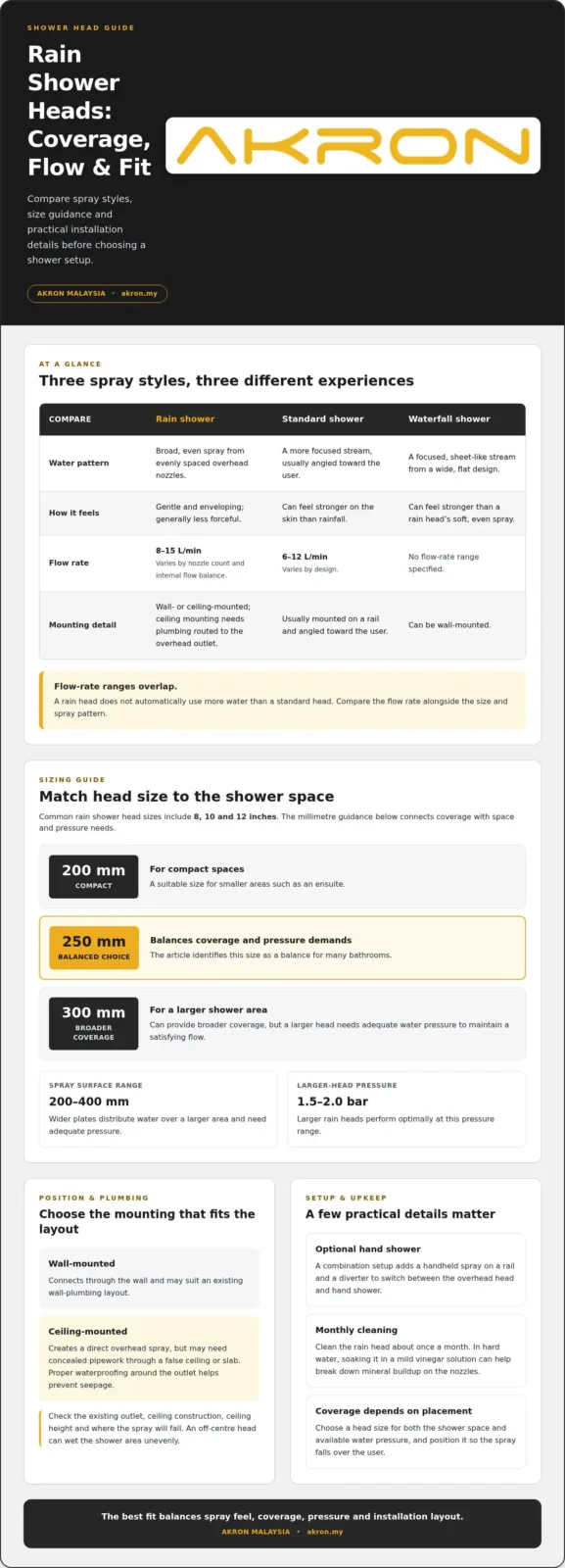
A rain shower head hangs overhead and sends water down across a broad spray surface. Its evenly spaced nozzles distribute water more gently than the concentrated stream of a standard shower head. This pattern can feel enveloping, but coverage depends on the head’s diameter and position above you. A large head positioned off-centre may wet the shower area unevenly, despite its wide spray surface.
Standard shower heads are usually mounted on a rail and angled toward the user. They direct a more focused stream, which can feel stronger on the skin than rainfall. Rain showers aim for a steady, consistent flow over a wider area. Waterfall shower heads also tend to have a wide, flat design, but produce a more focused, sheet-like stream that can feel stronger than a rain head’s soft, even spray.
Common rain shower head sizes include 8, 10 and 12 inches. In millimetres, 200 mm suits compact spaces such as an ensuite, while 250 mm balances coverage and pressure demands for many bathrooms. A 300 mm head can provide broader coverage in a larger shower area. Spray surfaces from 200 mm to 400 mm increase water distribution, but a wider plate needs adequate water pressure to maintain a satisfying flow.
Flow rates vary by design. Rain shower heads use 8-15 litres per minute, depending on nozzle count and internal flow balance; standard shower heads use 6-12 litres per minute, depending on design. These ranges overlap, so a rain head doesn’t automatically use more water. Check the size and spray pattern alongside the flow rate: a wide, gentle rainfall may feel less intense than a standard head, even when both deliver water steadily.
Pressure matters most with a larger head. A rain shower may not deliver satisfying output in a home with weak water pressure, and larger heads perform optimally at 1.5-2.0 bar. If the spray feels weak across a 300 mm head, the issue may be the supply, not the head’s shape. Choose a size that matches both your shower space and the pressure available.
Clean the rain shower head about once a month. Hard water can leave mineral deposits on the nozzles, so soaking the head in a mild vinegar solution can help break down calcium buildup. Regular cleaning helps maintain an even spray across the surface.
Waterfall shower heads: What is a rain shower?
A rain shower system sends water through evenly spaced nozzles in an overhead head, creating a broad, downward spray. Its main parts are the shower head, water supply plumbing and controls, which direct water to the chosen outlet.
Mounting affects the bathroom layout and the plumbing behind the spray. Compare wall and ceiling positions before choosing a design, especially if the shower area is already finished.
Wall and Ceiling Mounting
A wall-mounted rain head connects to plumbing through the wall, while a ceiling-mounted head receives water from above. Position matters because it determines where the water falls and how the plumbing must reach the outlet. A wall-mounted shower may suit an existing layout, while a ceiling-mounted one may require concealed pipework.
For a ceiling installation, pipes may need to run through a false ceiling or slab. If the ceiling has no existing fittings, additional plumbing work behind the drywall may be needed. The outlet area also needs proper waterproofing to help prevent seepage. Consider the ceiling height and shower position so the spray falls over the user, not near the enclosure edge.
A wall-mounted rain head can be a practical choice when the existing plumbing exits through the wall. Ceiling mounting creates a direct overhead effect, but may involve changes to concealed plumbing and ceiling support. The right layout for a relaxing shower depends on the existing outlet, ceiling construction and where you want the water to fall.
System Parts and Operation
The shower head, its evenly spaced nozzles and the plumbing outlet form the core of a rain shower system. Water travels through the supply pipes to the head, then exits through the nozzles as a broad spray. The mounting arm or ceiling outlet holds the head in place, while the shower controls regulate the water supply.
A combination setup adds a hand shower on a rail, with a diverter to switch between the overhead rain head and handheld spray. This gives you two ways to direct water without changing the main plumbing route. Use the broad overhead spray for showering and the hand shower for rinsing.
Waterfall shower heads differ in their outlet design: they produce a more focused, sheet-like stream, while rain shower heads distribute water gently across a wider area. Both can be wall-mounted, but ceiling-mounted rain heads need plumbing routed to the overhead outlet. Explore shower options as you consider which layout suits your bathroom.
Benefits and drawbacks
A rain shower head changes how water feels and covers the shower area. Its broad rainfall pattern can wet your shoulders and body at once, rather than directing a narrow stream at one spot. An overhead head, for example, can create a more even spray while you stand beneath it. That gentle flow suits a slower, relaxing shower, but won’t feel as forceful as a focused spray.
Comfort is a key benefit. A 2021 finding attributed to the University of Manchester Environmental Psychology Group reported a 28% improvement in relaxation with rain showers. Treat that as a reported finding, not a promise that every person will feel the same effect. The practical appeal is simpler: a steady overhead spray can make an everyday shower feel calmer without changing your whole routine.
Design matters, too. A broad spray surface can give the shower area a clean, uncluttered look, especially with a ceiling-mounted head. A standalone rainfall head has a smaller surface area than some more complex setups, making it easier to clean. The finish also affects upkeep: PVD-coated or electroplated showers can help prevent water spots and fingerprints, keeping visible surfaces neater.
Water use depends on the model, not just the rainfall style. Rain shower heads don’t inherently use more water than regular showers, though some models use more. Modern rainfall and waterfall heads may include flow restrictors to reduce water use while maintaining the shower experience. Compare each model’s stated flow and spray pattern instead of assuming a wider head is less efficient.
There are trade-offs. A rain head needs adequate water pressure to deliver a satisfying flow, and its gentle spray may disappoint anyone who prefers a strong, concentrated stream. An overhead-only setup also gives you less control over where water lands. For example, rinsing one area or washing the shower enclosure is easier with a handheld option than with a fixed overhead head.
- Best for: a broad, gentle spray and a calm shower routine.
- Consider another setup: if you prefer forceful, targeted water flow.
- Plan for upkeep: choose a finish that helps limit visible spots and fingerprints.
- Compare efficiency: review each model’s flow features, including any restrictor.
Installation is another practical consideration. A ceiling-mounted head can create a streamlined look, while an overhead-only layout offers less flexibility than a combination shower. Match the design to your routine: choose a broad rainfall spray for full-body coverage, or add a hand shower when targeted rinsing matters.
Choosing a rain shower for a bathroom
Start with how you use the bathroom, then match the shower design to its layout. A rainfall shower creates a broad overhead spray, while a waterfall head produces a more focused, sheet-like stream. If you want both effects, a dual shower setup can pair rainfall and waterfall heads. The right choice balances comfort, water pressure, plumbing and how you prefer the water to reach you.
Next, consider the shower area and pressure together. Compact rain shower plates between 200 mm and 250 mm suit smaller bathrooms, while a 250 mm head balances coverage with pressure demands for many spaces. The ideal pressure range for rain shower heads is 350 to 500 kPa. A larger head can feel underwhelming if the water supply can’t support its flow, so size should follow performance needs, not appearance alone.
Height and mounting shape the daily experience. A rain head installed about 84 inches above the shower floor is recommended to accommodate taller users. For a ceiling-mounted design, consider the ceiling height and the route for concealed plumbing. A wall-mounted head may suit an existing wall outlet. In either layout, position the spray over the person using the shower, not at the enclosure’s edge.
Think about flexibility, too. A combination shower has a rain head and a hand shower on a rail, with a diverter to switch between them. This setup offers a broad overhead spray and a directed stream for rinsing. If you prefer a simpler arrangement, a single rain head keeps the layout focused. Choose based on your routine, especially whether you need to direct water to specific areas.
Finish and shape help tie the fixture into the bathroom’s design. PVD-coated or electroplated showers can help prevent water spots and fingerprints. Square shower heads tend to suit contemporary rooms with angular details, while round heads often complement traditional styles. Match the finish to visible fixtures, then choose a shape that works with the room’s lines.
- For a compact bathroom: consider a 200 mm to 250 mm plate.
- For flexible use: choose a combination setup with a hand shower and diverter.
- For a coordinated look: match head shape and finish to the bathroom’s existing style.
Compare shower options with your bathroom layout, preferred spray and water pressure before settling on a design.
Akron Malaysia: Water Closet
Akron Malaysia offers shower options to help you plan your bathroom. As you choose a rain shower, consider its shower range alongside your bathroom’s needs. You can also consider a wash basin, faucet, water closet and bathroom accessories to plan the room as a whole.
Use the points in this guide to narrow your priorities: spray coverage, water pressure, mounting position and whether you want a hand shower. Then consider which fixtures support your daily routine and the look you want. Akron Malaysia offers affordable, high-quality bathroom products that combine durability with stylish design, giving you options for a comfortable, functional space.
Contact Akron Malaysia to discuss your bathroom fixture needs.
Shape a Bathroom That Works for You
Use your shower choice as a starting point for a cohesive bathroom that supports your daily routine. Consider how you move through the space, which fixtures you use most and the look you want throughout the room. A thoughtful plan can make practical choices feel personal, not purely functional.
Knowing what a rain shower system offers can help you decide whether it belongs in your bathroom plan. Then consider how the rest of the room should work together. Akron Malaysia offers water closets, wash basins and faucets to consider alongside your bathroom design. Focus on the fixtures that suit your needs and help create a comfortable space.
Ready to take the next step with your bathroom plans? Contact Akron Malaysia to explore suitable fixtures for your space. Make choices that feel right for your home, and enjoy shaping a bathroom that’s both useful and welcoming.
Frequently Asked Questions
Are rainfall showers worth it?
Rain showers are worth considering if you value a broad, gentle spray and a streamlined look. If you’re asking, “What is a rain shower system?”, it’s an overhead shower designed to spread water across a wider area. This may suit a bathroom designed for slower, more relaxed showers. It may be less appealing if you prefer a forceful stream or often need to direct water at a specific spot.
How to Choose the Perfect Rain Shower for Your Bathroom?
Choose a head and layout to suit your shower space, water pressure and routine. If you’re still wondering, “What is a rain shower system?” in practical terms, consider how its overhead spray fits your daily use. A household that needs targeted rinsing may prefer a combination setup with a hand shower. Decide whether appearance, flexible use or a broad rainfall experience matters most, then use that priority to narrow your options.
WHY SHOULD I GET A RAINSHOWER HEAD?
Choose a rain shower if you want water to fall from overhead across a wider area rather than arrive as a directed stream. This can make the shower feel more enveloping and create a clean focal point in the bathroom. It’s a personal comfort choice, not a must-have upgrade. If you often rinse a specific area or prefer a strong, targeted spray, a standard or combination shower may suit your habits better.
What Is the Difference Between a Rain Shower and a Standard Shower?
The key difference is how each directs water. A rain shower sends water down from above, while a standard shower head typically angles its spray toward you from a wall rail. Picture standing beneath a ceiling outlet versus adjusting a handheld head on its bracket. The first creates an overhead bathing experience; the second gives you more control over where the stream lands.
What is the difference between a rain shower and a regular shower head?
“Regular shower head” usually refers to a conventional head that concentrates water into a more directed spray. A rain shower head spreads it across an overhead spray surface. This distinction affects how you use the fixture: a directed head can target a shoulder or rinse a corner, while a fixed rainfall head is designed for a more even, downward shower.
What types and sizes of rain shower heads are available?
Rain shower heads come in round and square shapes, with wall-mounted and ceiling-mounted designs. Common diameters include 8, 10 and 12 inches. Compact heads can work in smaller shower areas, while oversized plates need enough space and water supply to suit their broader spray. A combination shower adds a hand shower on a rail, giving you another way to direct water.