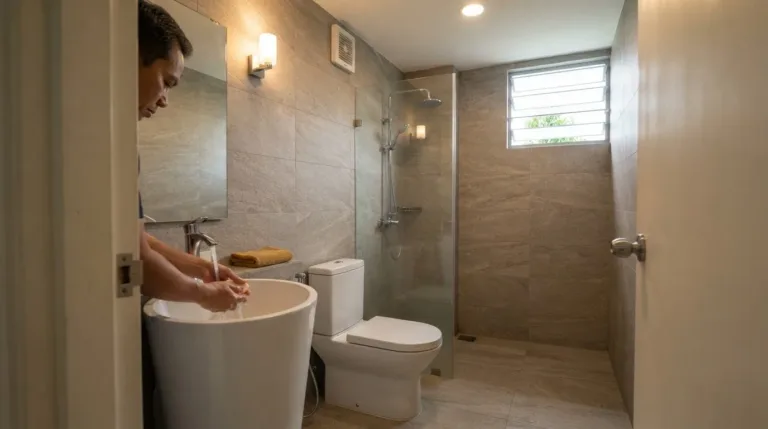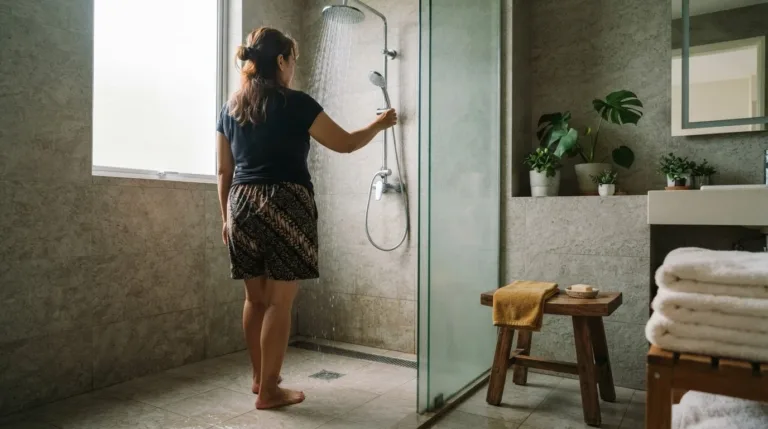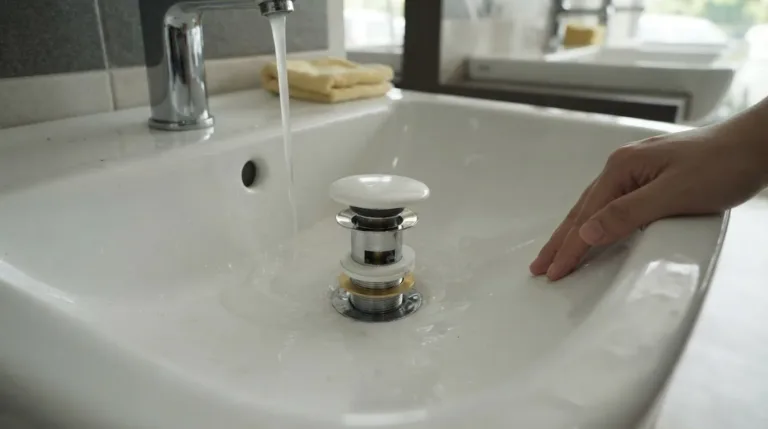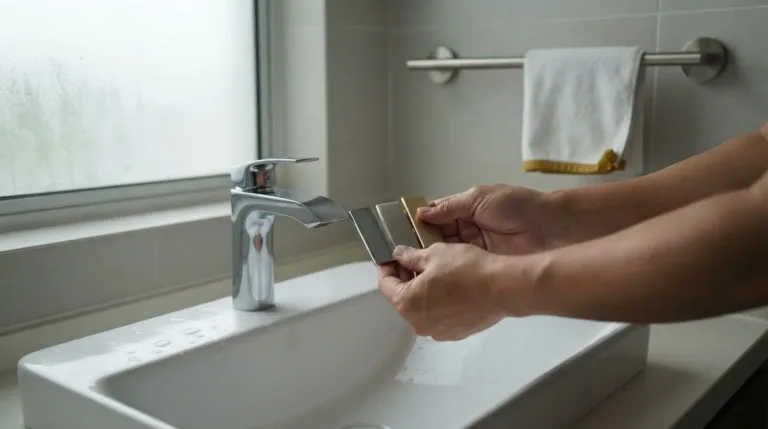
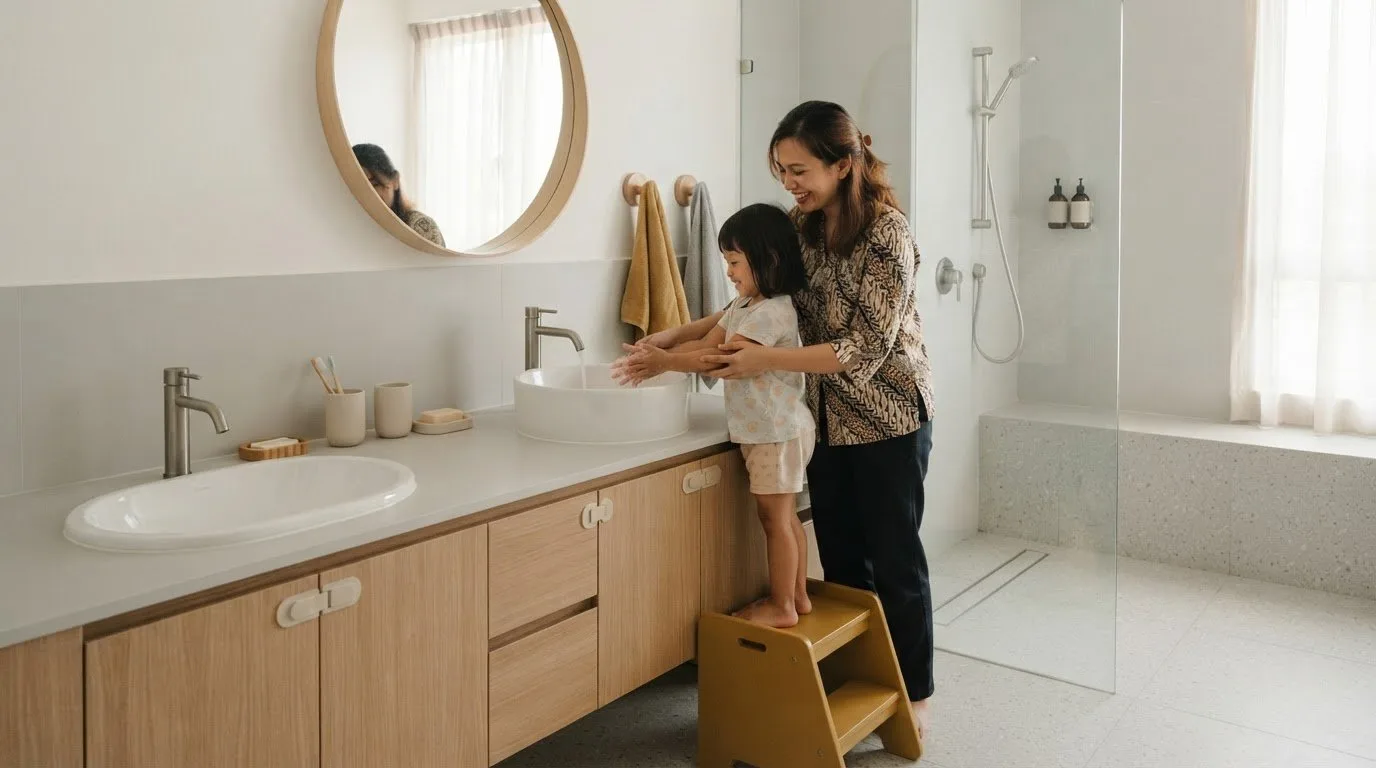
A safer bathroom is not simply a smaller version of an adult’s space. Thoughtful child-friendly bathroom design combines slip-resistant flooring, secure storage, reachable towels and toiletries, and fixtures children can use comfortably. Lever-style faucets and a stable step stool can make handwashing and toothbrushing easier. Keep medicines, cleaning products and sharp items out of reach to reduce common hazards.
Bright colours and playful details can be fun, but safety and daily routines should come first. Plan storage, access to the wash basin and water closet, flooring, shower features and practical fixtures around how children use the room. Small changes can make the bathroom easier to use now, while flexible choices can remain useful as your child grows.
Key Takeaways
- Lock away medicines, cleaning products and razors, while keeping children’s everyday bath items within easy reach.
- Use a stable, non-slip step stool and child-height towel hooks to make sink and toilet routines more manageable.
- Choose textured or matte flooring, and use non-slip mats in the shower or bath and on the floor outside it.
- Consider lever-style faucets and a handheld shower to make washing and rinsing easier for little hands and busy caregivers.
- Plan fixtures around your family’s routines, including separate sink space when siblings need to get ready together.
1. Safe storage for medicines and bathroom products
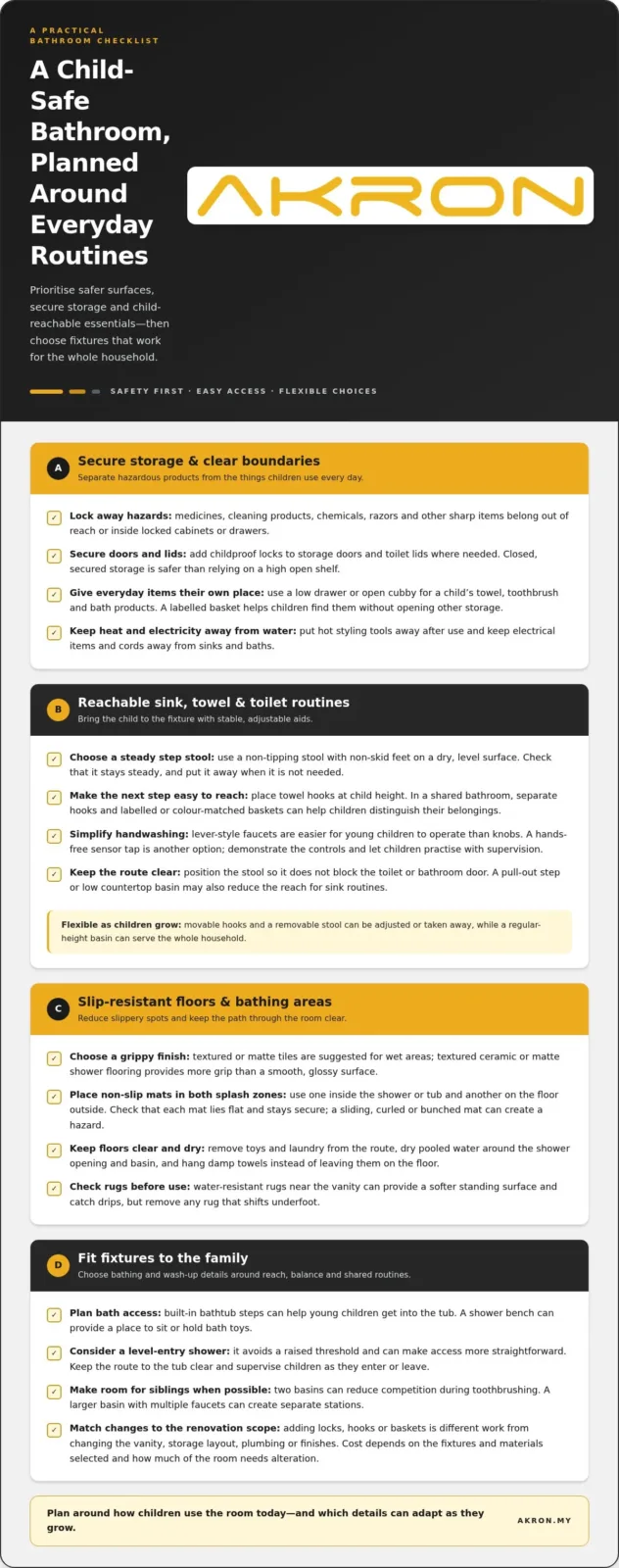
Separate hazardous products from items children use every day. Keep medicines, cleaning products, shampoos, razors and other sharp items out of reach, or secure them inside locked cabinets or drawers. Add childproof locks to toilet lids and storage doors where needed. A bottle on a high, open shelf may still be reachable, so closed, secured storage is safer.
In Malaysian homes, use practical childproofing measures rather than relying on storage height alone. Lock away medicines, chemicals and cleaning products, and keep children away from hot styling tools and electrical cords near water. These are household precautions, not a named Malaysian bathroom safety standard. Plan lighting and switches for safe adult access, and put hot curling or flat irons away in a cabinet or on a shelf after use.
Make the vanity work for adults and children. Use locked cabinets for hazardous supplies, then reserve a low drawer or open cubby for a child’s towel, toothbrush and bath products. A labelled basket helps children find everyday items without opening other storage. Position the mirror so both children and adults can use it comfortably. A tilting mirror can be adjusted as a child grows.
Give children a clear place for their belongings. In a shared bathroom, assign each child a colour and use matching baskets or labels for toiletries. Install separate towel hooks at a reachable height to keep towels off the floor and easy to distinguish. Stacked towel racks use wall space efficiently, while a low shower cubby keeps bath toys within reach during bathing.
Plan for toys and small accessories before they spread across the floor. A basket can collect bath toys after use, while a built-in niche or recessed locker can keep towels and toiletries organised without taking up floor space. Choose storage with rounded edges where possible, and keep electrical items and cords away from sinks and baths. These details make child-friendly bathroom design easier to maintain between routines.
The cost of a child-friendly bathroom renovation in Malaysia depends on its scope. Keeping existing cabinets and adding locks, hooks or baskets involves different work from changing the vanity, storage layout, plumbing or finishes. Key cost factors include the fixtures and materials selected and how much of the room needs alteration.
In Malaysia, Akron Malaysia sells bathroom accessories directly and through local dealers. Its bathroom products are a starting point for exploring available options; the cost depends on the item and its specification.
2. Child-accessible washbasins, toilets, and faucets
Make everyday tasks easier by bringing the child to the fixture, rather than expecting every fixture to suit every age. A stable step stool helps a toddler reach a wash basin, while a child-height towel hook keeps the next step within reach. For children of different ages, combine adjustable or movable aids with fixed fixtures adults can use comfortably.
Choose a non-tipping stool with non-skid feet, and place it on a dry, level surface before use. A stool can help a child reach the basin or toilet without changing either fixture. Check that any step stays steady during use, and put it away when it isn’t needed.
At the basin, a low countertop basin or pull-out step can reduce the reach for handwashing and toothbrushing. Lever-style faucets are easier for young children to operate than knobs; a hands-free sensor tap is another option. A parent can demonstrate how to turn the water on and off, then let the child practise with supervision.
In a small bathroom, try a stable step stool, a child-height towel hook and a non-slip mat before replacing the vanity. A miniature setup, such as a child-sized basin and accessories, can introduce self-care routines without a full renovation. Keep the floor clear so the stool does not block the toilet or bathroom door.
Choose flexible details that remain useful as your child grows. A stool can be removed when the child reaches the basin independently, while a regular-height wash basin serves the whole household. Add a removable towel or bathrobe hook at a reachable height and reposition it as needed. Small accessories can be adapted more readily than fixed fixtures.
Bath access needs its own plan. Built-in bathtub steps can help young children get into the tub, and a shower bench provides a place to sit or hold bath toys. Keep the route to the tub clear and supervise children as they enter or leave. Choose a setup to suit the child’s balance, reach and bathing routine.
In a shared bathroom, provide separate access for siblings where space allows. Two basins can reduce competition during toothbrushing, while a larger basin with multiple faucets can create separate stations. A petite sink with a built-in towel bar can also keep a towel within a child’s reach. Explore wash basins and faucets when planning fixtures around your family’s routines.
3. Non-slip flooring and walk-in showers
A child-safe bathroom combines slip-resistant surfaces, a clear route and supervised bathing. Choose textured or matte tiles for wet areas, then place anti-slip mats inside the shower or tub and on the floor outside. Slippery flooring can challenge children who are still learning to balance, especially when water splashes beyond the bathing area.
Check each mat’s position before a child steps onto it. A mat that slides, curls or bunches can create a trip or slip hazard, so keep it flat and secure. Water-resistant rugs can provide a softer standing surface near the vanity and catch drips. Remove any rug that shifts underfoot, and hang damp towels to dry rather than leaving them on the floor.
For the shower floor, textured ceramic tiles or a matte finish provide more grip than a smooth, glossy surface. Anti-slip mats add protection inside the shower and just outside its entrance. Keep the route clear of toys and laundry. Adults can dry pooled water promptly, especially around the shower opening and basin.
A level-entry walk-in shower avoids a raised threshold and can make access more straightforward. A tub remains practical for smaller children, so consider your child’s bathing needs before converting it. If you choose a walk-in shower, plan its entry, floor finish and drainage together. A colourful shower curtain adds a changeable accent without altering the floor or fixtures.
Water temperature matters too. Set household water temperature no higher than 120 degrees to help protect young children. Thermostatic mixers can prevent water from exceeding a safety limit of 38 degrees Celsius in many cases. An anti-scald valve can also limit the maximum hot-water temperature at outlets. Keep children away from the controls while an adult sets the temperature.
Place bath mats, step stools and toilet training seats securely. A loose mat can slide, while a stool that tips or lacks non-skid feet can move as a child climbs. Choose a non-tipping stool with non-skid feet, and check that a training seat sits securely before use. Stay close during bathing and toilet routines, particularly when the floor is wet.
For a tub, place a non-slip mat on the bottom and check its position before bath time. Keep toys away from the edge, where a child might reach across a wet surface. For a shower, store towels within adult reach but away from the floor. These practical checks help child-friendly bathroom design support safer routines without making every surface difficult to clean.
4. Kid-friendly faucets, sinks and fixtures
Fixtures should make everyday routines easier without limiting how adults use the bathroom. Start with children’s most frequent tasks: washing hands, brushing teeth and rinsing their faces. Then consider faucet reach, basin space and how easily surfaces can be cleaned. These choices provide a practical foundation before you select finishes.
For siblings, two basins can create separate toothbrushing stations and reduce competition during busy times. Side-by-side basins may fit along one countertop, while separate vanity stations give each child a defined space. If there is no room for two vanities, a larger sink with multiple faucets or a double-faucet trough basin can let children share one area.
Consider a faucet’s shape and reach as well as its appearance. A high swivel spout can make it easier to clean the basin or rinse a child’s hair. Leave enough room beneath the spout for hands and a cup, and position the controls where a child can reach them while standing steadily. A parent can show the child how to use the faucet without leaning across the basin.
Plan the countertop around everyday routines. Keep the area around each tap clear enough for a toothbrush cup or hand soap, and avoid placing frequently used items behind the spout. In a shared sink, give each child a small section for daily essentials. This layout helps prevent toiletries from crowding the basin or being knocked onto the floor.
Choose a consistent finish for plumbing fixtures to create a coordinated look. Brushed nickel fixtures are easy to wipe down, and using one metal finish across plumbing can create visual unity. Other metal finishes can be used as accents elsewhere. For a children’s bathroom, choose surfaces that are straightforward to clean after toothpaste splashes, water spots or fingerprints.
Before installing new fixtures, map where each user stands and reaches. Check that the basin leaves room for a step stool if a younger child needs one. Keep towels within easy reach, but away from faucet handles and the basin edge. In a compact bathroom, one well-planned sink may work better than a second basin that restricts movement.
The key is to match each fixture to a routine. A swivel spout supports quick rinsing, while two basins or multiple taps can help siblings get ready together. For households planning a wider remodel, exploring project ideas from experienced renovators such as WDC Services can offer practical inspiration for balancing reach, shared space, and easy cleaning.
Akron Malaysia: Water Closet
Akron Malaysia offers water closets, wash basins, faucets and showers for families planning a more practical bathroom. Once you have identified where children need easier access or simpler routines, compare fixtures based on how your household uses the space. A well-chosen basin or faucet can support everyday handwashing, while a shower suited to your bathing routine completes the layout.
Explore Akron Malaysia’s bathroom fixtures when you’re ready to choose pieces for your family’s needs and preferred look. Review the available options, then contact Akron Malaysia to discuss your enquiry through the contact page.
Make your next bathroom decision count
Before making changes, notice where your child pauses, asks for help or struggles to complete a routine independently. Those moments can reveal which adjustment matters most for your household. Thoughtful child-friendly bathroom design starts with your family’s real habits, not a picture-perfect plan.
Choose a practical improvement to focus on first, then consider how it will fit the room as your child grows. You might prioritise easier daily use, calmer shared routines or a layout that feels comfortable for adults too. Clear priorities help you make considered choices rather than rushed ones.
Ready to explore fixture options for your bathroom? Contact Akron Malaysia for bathroom advice and take the next step towards a space that works for your family. Small, well-chosen changes can make everyday routines feel more manageable.
Frequently Asked Questions
What are the best non-slip bathroom flooring options for kids?
Textured or matte-finish ceramic tiles are practical for wet bathroom areas. Plan flooring across the route children actually use, from the shower or tub to the basin, rather than focusing only on the shower floor. A child stepping out with wet feet needs grip near the shower entrance too. Check that water-resistant rugs lie flat and do not shift underfoot.
What child-friendly bathroom fixtures and fittings are available?
Useful choices include a wash basin and faucet suited to children’s reach, a water closet that meets household needs, and a shower setup that supports supervised bathing. Bathroom accessories such as reachable towel hooks can make routines easier. Akron Malaysia offers these fixture categories for Malaysian homes. Choose based on how your family shares the room, the available space and the routines you want to make easier.
What is the recommended height for a child’s sink, toilet, and towel hooks?
Set fixture and hook positions around a child’s comfortable reach rather than relying on one height for every age. Have the child stand naturally and test whether they can reach the faucet, use the toilet and hang a towel without stretching or climbing. In a shared bathroom, consider adult use too. A stable step can bridge the gap at the basin as the child grows.
What childproofing rules and safety standards apply to bathrooms in Malaysia?
Use practical precautions: lock medicines, chemicals and cleaning products away, add toilet and cabinet locks where needed, keep hot styling tools and electrical cords away from water, and set household water temperature no higher than 120 degrees. The article describes no named Malaysian bathroom safety standard.
How much does a child-friendly bathroom renovation cost in Malaysia?
Cost depends on the renovation’s scope, the fixtures and materials selected, and how much of the room needs alteration. Adding locks, hooks or baskets while keeping existing cabinets involves different work from changing the vanity, storage layout, plumbing or finishes.
Where can I buy child-safe bathroom products in Malaysia, and what do they cost?
Akron Malaysia sells bathroom accessories directly and through local dealers. Cost depends on the item and its specification.