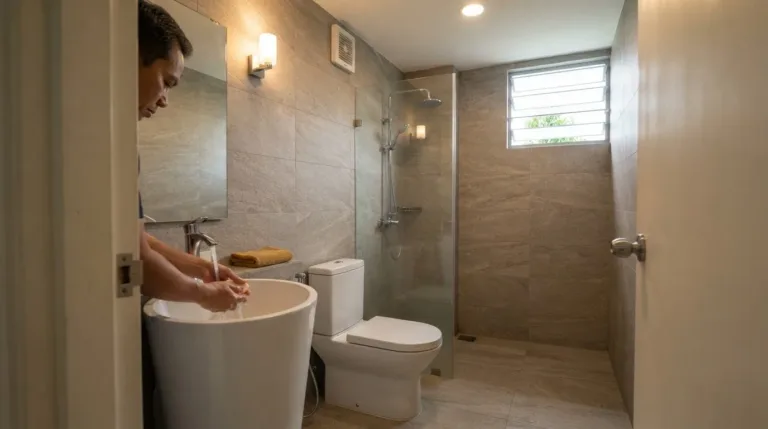
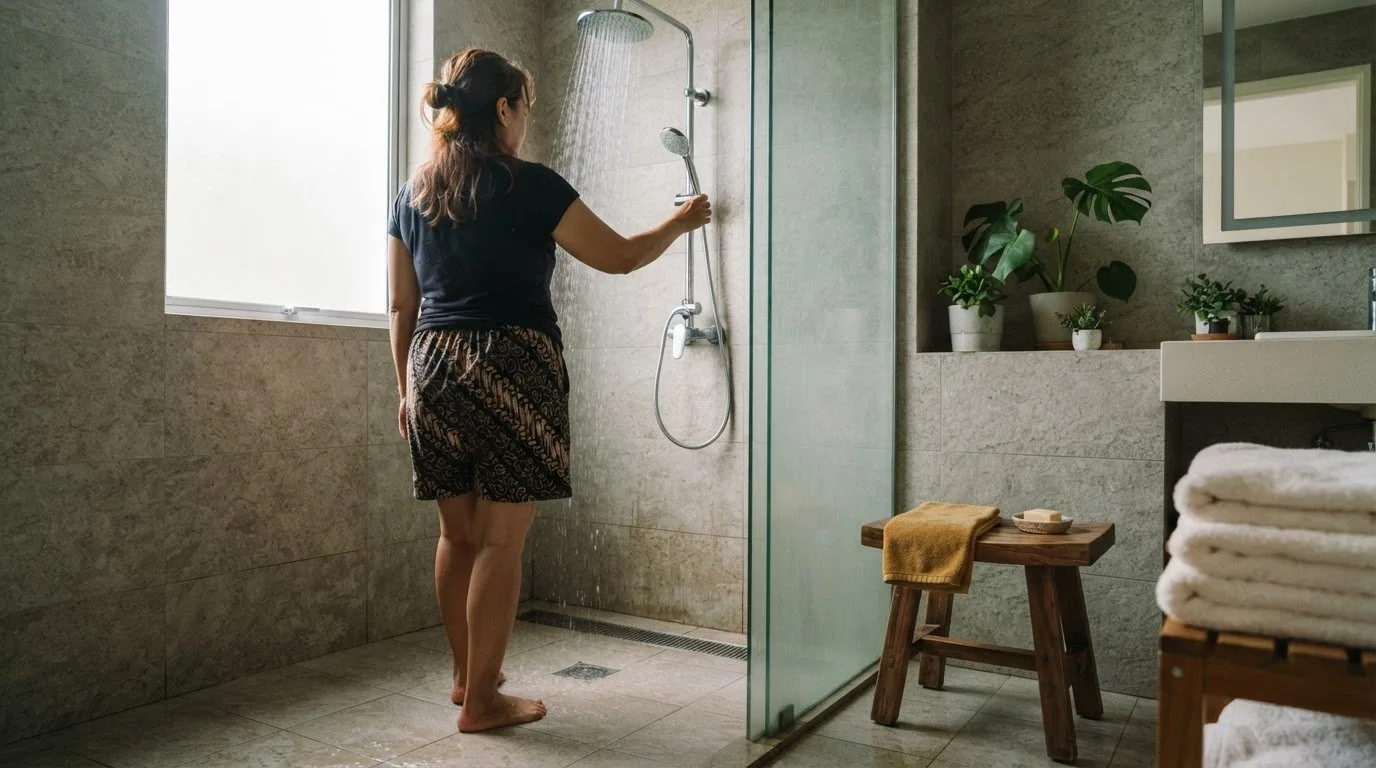
A spa-like bathroom doesn’t require a bathtub or a full renovation. Creating a spa-like bathroom at home means combining comfortable bathing, calming finishes, practical lighting and water-conscious fixtures, then adding sensory details that make everyday routines feel more restful. Soft towels, natural textures and personal touches can make the room feel welcoming as well as functional.
You may picture a rain shower or a freestanding bath, but the right choice depends on your space and how you like to unwind. This guide will help you compare bathing options, choose between natural and ceramic coverings, and make thoughtful choices for comfort and sustainability. You’ll also find simple ideas for lighting, water-saving fixtures and bathroom accessories, so you can shape a relaxing retreat that suits your home and your daily routine.
Key Takeaways
- Build a calming colour and lighting scheme while keeping everyday comfort and efficient use in mind.
- Choose between a walk-in shower and a freestanding bath by weighing your space and bathing preferences.
- Balance the look of natural finishes such as stone, wood and bronze with the practical qualities you need.
- Use soft textiles, thoughtful furniture and sensory details to make daily routines feel more restful.
- Explore how bathroom accessories and fixtures such as showers, faucets, wash basins and water closets can support your design.
1. How can I make my bathroom more comfortable and sustainable?
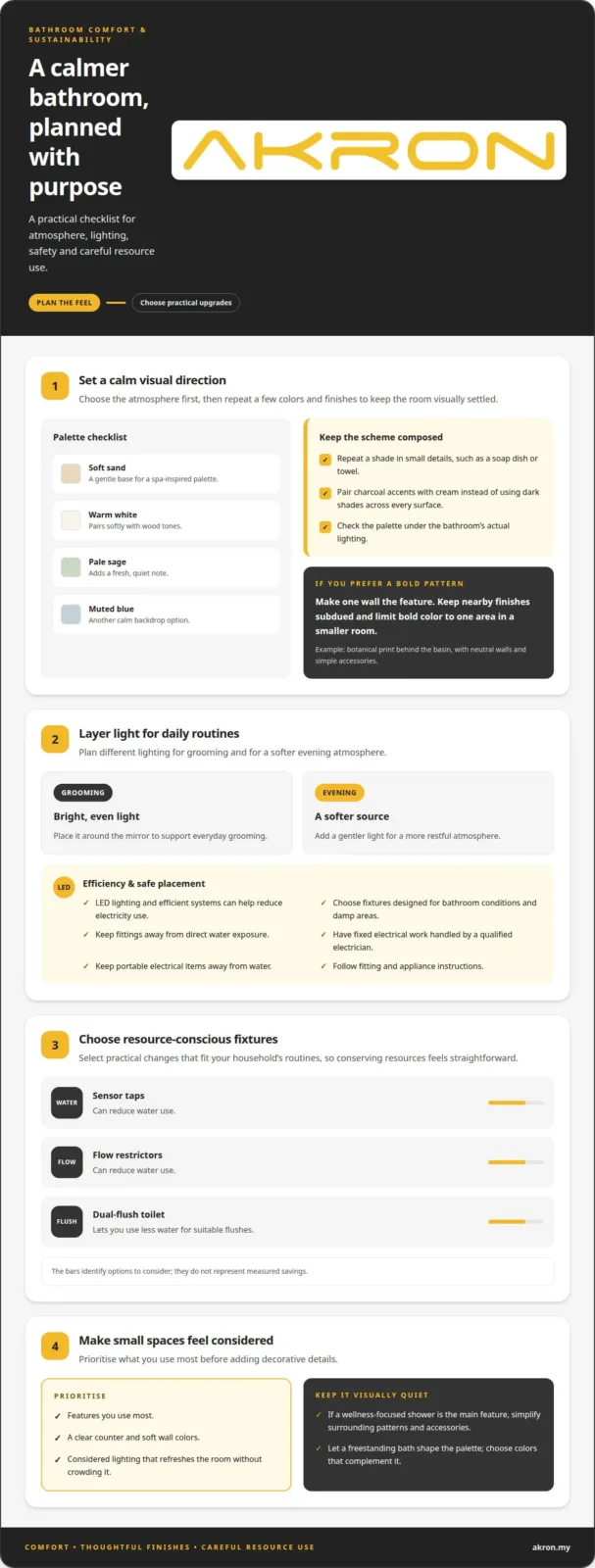
Start with the atmosphere you want: a quiet retreat, a bright morning space or a balance of both. For a spa-inspired palette, choose soft sand, warm white, pale sage or muted blue. These colors create a calm backdrop for daily routines. In a compact bathroom, lighter walls can make the room feel more open without changing its layout.
Use paint to set the mood, then repeat a shade in small details such as a soap dish or towel. Warm white walls paired with wood tones feel gentle, while pale green adds a fresh note. For a more refined look, combine charcoal accents with cream rather than using dark shades across every surface. Check the palette under your bathroom’s actual lighting.
Prefer bold patterns? A statement wallpaper can give one wall character, but keep nearby finishes subdued so the patterns don’t compete. For example, pair a botanical print behind the basin with neutral walls and simple accessories. In a smaller room, limit bold color to one feature area. This creates a focal point while keeping the rest of the space visually quiet.
Plan lighting in layers. Use bright, even light around the mirror for grooming, then add a softer source for a more restful evening atmosphere. LED lighting and efficient systems can help reduce electricity use. Choose fixtures designed for bathroom conditions, and have fixed electrical work handled by a qualified electrician. Keep portable electrical items away from water and follow the product instructions.
For bathroom safety in Malaysia, choose lighting and electrical fittings designed for damp conditions, and keep them away from direct water exposure. Have fixed wiring handled by a qualified electrician, and follow the fitting and appliance instructions. These precautions help you plan for comfort without treating the room like a dry living area.
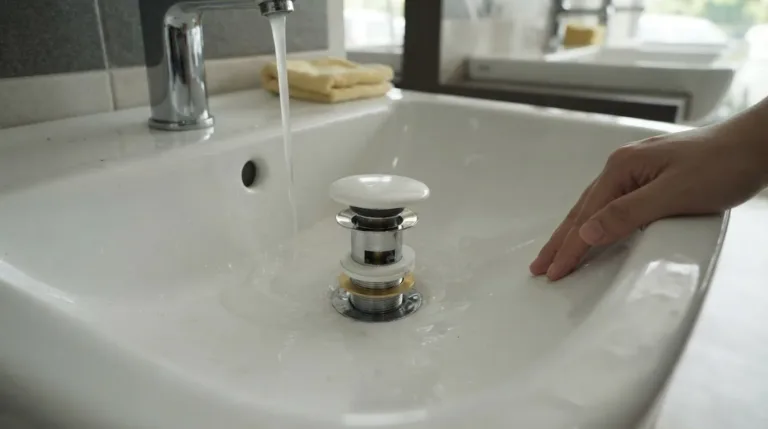
Comfort can go hand in hand with careful resource use. LED lighting is a practical option, and efficient systems can help lower electricity use. Sensor taps and flow restrictors can reduce water use, while a dual-flush toilet lets you use less water for suitable flushes. Choose changes that fit your household’s routines so conserving resources feels straightforward.
In a small bathroom, prioritise the features you use most before adding decorative details. A clear counter, soft wall colors and considered lighting can refresh the room without crowding it. If you want a wellness-focused shower, make it the main feature and keep surrounding patterns and accessories simple. A freestanding bath can also shape the palette, so choose colors that complement rather than compete with it.
2. What are the pros and cons of walk-in showers and freestanding bathtubs?
A useful first decision in creating a spa-like bathroom at home is choosing a bathing feature that fits your routine. A walk-in shower suits quick daily use and can help preserve an open feel. A freestanding bathtub creates a visual statement, but needs room around it for access and cleaning. Consider which option you’ll use most before making it the room’s focal point.
A rain showerhead can make a familiar shower feel more immersive. Hydromassage showers add directed water jets for a focused spray. Consider the experience you want, then plan surrounding fixtures so they don’t compete visually. For an open walk-in design, plan how water will be contained and drained. Position the shower and direct its spray to suit the room, not just the look of the glass enclosure.
Compare convenience with the kind of pause you want to create. A shower may suit busy mornings, while a bathtub offers a place to soak. If you want both, map how each will fit alongside the basin, toilet and doorway. A double wash basin may support shared routines, but in a compact layout, one well-placed basin and a single bathing feature may make it easier to move around.
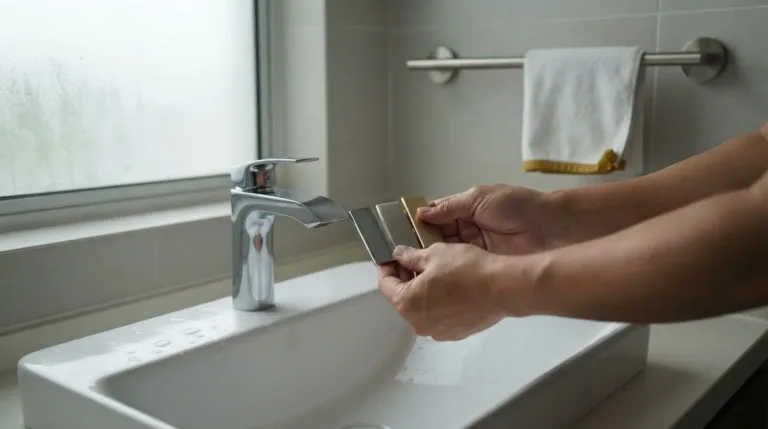
Small fixture updates can refresh the bathing area without changing its layout. A rain-style showerhead can become a focal point, while a basin faucet in a complementary finish helps coordinate the vanity. Match visible fixtures, such as the shower controls and faucet, for a more considered look. Explore shower and bathroom fixtures as you plan the room.
A water-resistant shower bench can provide a seat or a place to set bathing accessories. Choose one that fits the shower footprint without blocking the entry or spray. Consider its position in relation to the shower controls so it remains practical to use. In a smaller room, a simple seat may suit the space better than bulky furniture.
When creating a spa-like bathroom at home, let the main bathing feature guide your finishing touches. Fold a towel within reach, group a few bath accessories and keep candles on a stable surface away from splashes and fabrics. These details can make the space feel personal without distracting from a sculptural bathtub or distinctive showerhead. Keep only what supports your routine.
3. Which covering should I choose: natural material or ceramic?
Choose coverings by balancing the look you want with cleaning and moisture needs. Ceramic comes in a wide range of colors and patterns, from plain neutral tiles to marble-look surfaces. It can create a consistent backdrop across shower walls and floors. Natural stone brings visible variation, while wood adds warmth. Each choice changes how the room feels alongside the mirror, toilet and basin.
For a calm scheme, pair pale ceramic tile with a natural wood surface. A warm wood backdrop can sit alongside an open double vanity and glass walk-in shower, creating contrast without busy patterns. For a softer look, keep the tile neutral and let the grain provide visual interest. Use bronze finishes on selected details to introduce a deeper tone without making every surface compete.
Natural stone, including marble, gives a bathroom distinctive surfaces with patterns that vary from piece to piece. Use it where you want a focal point, such as a vanity wall or shower feature. Stone’s natural markings can provide the decoration, so simpler nearby finishes help keep the room balanced. Wood brings a softer visual effect, especially when repeated in a shelf or vanity detail.
Ceramic and vinyl offer alternatives when you want a more uniform covering. Ceramic suits walls and floors where a tiled finish fits the design. Vinyl provides another surface option, but choose a product intended for the room and follow its care instructions. For any covering, consider how water reaches the surface, how seams are finished and how easily you can clean around fixtures.
Bring natural elements into the room with plants and meaningful objects. Interior designer Vicente Wolf recommends natural surface materials, plants and personal items to connect a bathroom with nature and create a calming effect. A small plant beside the mirror can soften a tiled wall; a keepsake on a shelf adds character without requiring another bold finish.
Before settling on a combination, view samples together under your bathroom lighting. Place a wood sample beside the chosen ceramic, then compare both with bronze details and the visible toilet or basin finish. This shows whether warm and cool tones work together. Keep the palette focused: one dominant covering, one supporting material and a few accent finishes can give the room a considered, spa-inspired feel.
4. Bathroom furniture and sensory accessories
Furniture helps a bathroom feel more relaxing when each piece has a clear purpose. A small bath-side table can hold a drink or neatly folded towel within reach. Choose a shape that fits beside the bath without narrowing the walking space. In a compact room, a slim stool can serve as a temporary surface, then tuck away when you need more floor space.
Keep the countertop useful rather than crowded. Group daily essentials on a tray, such as hand soap, a small dish and a neatly folded face cloth. Store spare toiletries in a drawer or closed basket, leaving open space around the basin for everyday tasks. This balance keeps the vanity calm while making frequently used items easy to reach.
Storage also affects the room’s sensory feel. A wall shelf can hold rolled towels, while a covered basket keeps laundry out of sight. Place items near the routine they support: fresh towels beside the shower, skincare near the mirror and cleaning supplies away from display areas. In a shared bathroom, separate baskets can organise each person’s essentials without filling the countertop.
Textiles add softness through touch and appearance. Large, fluffy white bath sheets and classic white cotton robes create a clean, spa-inspired look. Fold a bath sheet on an open shelf or hang a robe on a hook near the bathing area. Choose a simple towel color scheme, then add one contrasting hand towel for a small accent.
Use scent and sound with restraint. A reed diffuser on a dry shelf can add a gentle fragrance, while a small speaker placed away from splashes can provide quiet music. Keep both clear of the wet countertop area. For another sensory detail, add a leafy plant on a stable ledge or display a meaningful object for a personal touch.
Think vertically before adding more furniture. A hook behind the door, a narrow shelf or a robe hanger can free up space around the basin and floor. Keep the ceiling and upper walls visually open, especially in a small bathroom, so storage doesn’t make the room feel enclosed. Choose accessories that are easy to wipe and move to simplify regular cleaning.
For a coordinated finishing touch, choose bathroom accessories that support your routines and complement the room’s materials. Explore bathroom accessories to find details that bring comfort and order to your space.
Akron Malaysia: Bathroom Accessories
Akron Malaysia can help you bring your bathroom plan together with fixtures that support comfort and everyday use. If you’re refining the bathing area, consider how a shower, wash basin, faucet, and water closet will work with your chosen finishes and accessories. Coordinated choices can make the room feel considered without adding unnecessary decoration.
Turn to Akron Malaysia when you’re choosing these key bathroom elements for a spa-inspired space. Explore the available options and consider which fixtures best suit your layout and routines. For a friendly next step, contact Akron Malaysia to discuss your bathroom needs.
Make your next bathroom choice count
Let the room evolve around how you want to feel each day. Before changing anything, choose one detail that would make your routine more comfortable, such as a calmer countertop or a fixture that better suits your needs. Then build from there, keeping your preferred materials and practical requirements in view. Creating a spa-like bathroom at home can be gradual, shaped by choices that work for your household.
Akron Malaysia offers Water Closets, Wash Basins and Faucets to support your bathroom plans. If you’re ready to explore options for your space, contact Akron Malaysia today. Take the next step at your own pace, and make your bathroom a more personal place to pause and recharge.
Frequently Asked Questions
How Can I Make My Bathroom Look Like a Spa?
Creating a spa-like bathroom at home starts with making the room feel intentional, not simply adding decorative items. Choose one focal point, such as a framed print or textured bath mat, and keep the surrounding surfaces calm. A covered laundry basket and a tray for daily essentials can also reduce visible clutter, helping the room feel composed during everyday routines.
How can I make my bathroom more comfortable and sustainable?
Make the room easier to use by arranging it around your daily habits. Keep hand soap and a hand towel beside the basin, and store backup toiletries where they’re easy to reach but out of sight. For a simple sustainable habit, turn off the tap while brushing your teeth. Small routines like this are practical because they fit into tasks you already do.
What Defines a Luxury Spa Bathroom?
A spa-like bathroom feels cohesive and comfortable to use, rather than defined by a single showpiece. Consider how surfaces, fixtures, storage and textiles work together. For example, a clear counter and matching towel hooks can make a modest room feel more considered. Aim for a setting that supports everyday routines while offering a quieter place to prepare for the day or unwind.
What Is the Best Color for a Spa Bathroom?
The best color is one that suits your existing finishes and the atmosphere you want. Warm white can soften a room with cool-toned tile, while muted green can complement wood details. Test a sample beside the floor and vanity rather than on its own. This shows how the colors work together under your bathroom’s lighting before you commit to a full wall.
What are the pros and cons of walk-in showers and freestanding bathtubs?
A walk-in shower can suit a compact room or a household that prefers quick bathing. A freestanding bathtub can create a strong design feature, but needs space around it for access. Think about who uses the bathroom and how they prefer to bathe. If children or guests share the space, ease of everyday use may matter more than choosing the most dramatic focal point.
What layout is most practical for a spa-like bathroom?
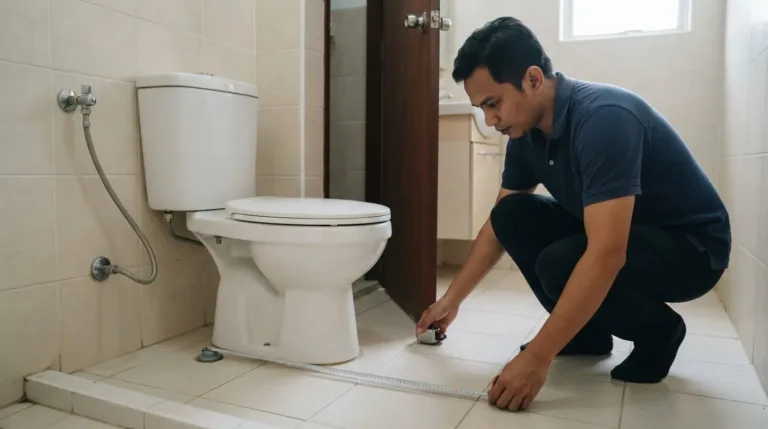
When creating a spa-like bathroom at home, plan clear movement between the entrance and the fixtures you use most. Make sure the door swing doesn’t obstruct the basin or bathing area, and place storage near the task it supports. For instance, keep clean towels near the shower and grooming items by the mirror. A layout that reduces back-and-forth makes the room easier to use.