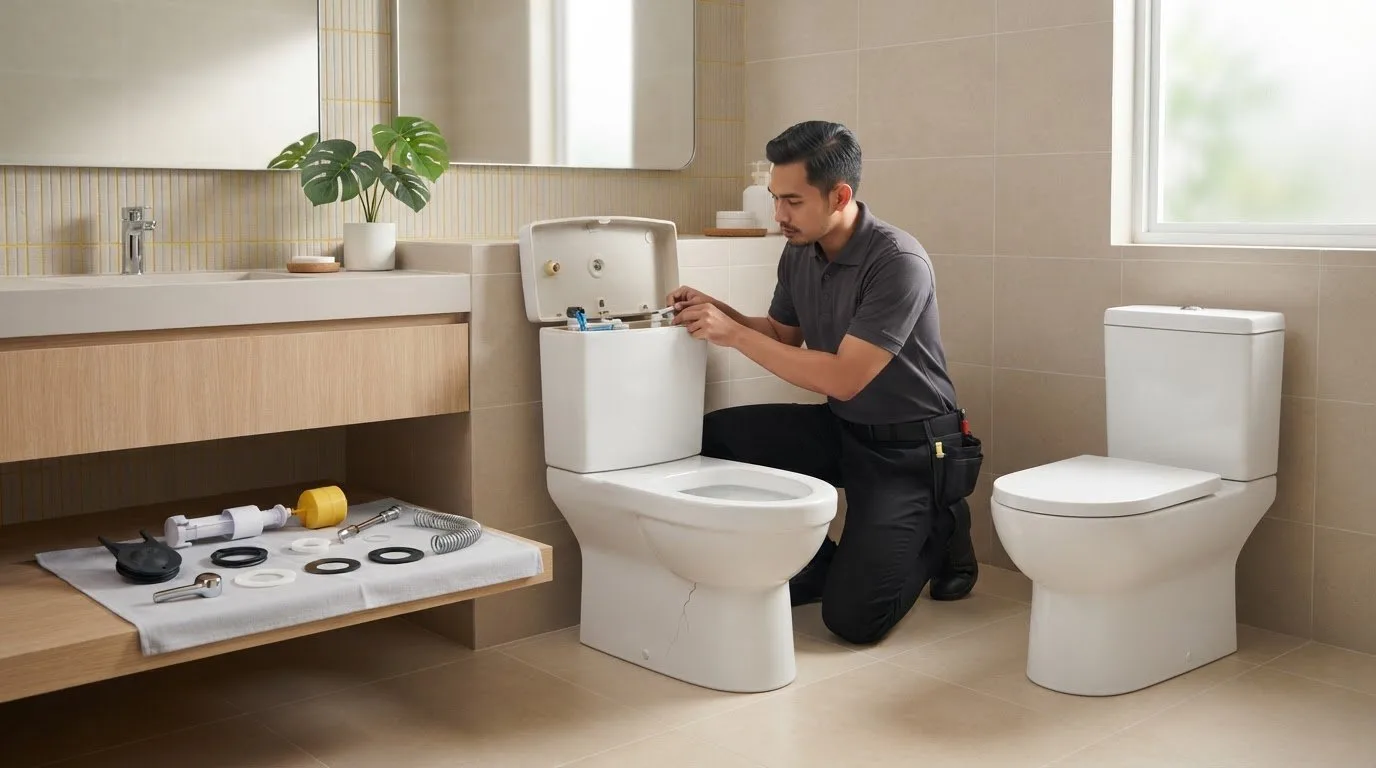
Replacing the whole toilet isn’t always the right fix. If the problem comes from a worn flapper, fill valve, handle, or float, replacing that part can restore normal flushing; a cracked bowl may call for a new fixture. Common toilet problems and solutions start with finding the cause, not replacing the toilet by default. Bubbling deserves special attention because it can signal a partial blockage, venting trouble, or a developing drainage problem.
It makes sense to wonder whether a repair will last or whether it’s better to start fresh. A leak around the base also needs attention, since moisture can affect nearby flooring and walls. This guide explains how to spot common faults, decide when parts can be replaced, prevent recurring clogs, and understand what gurgling or bubbling may mean. You’ll learn which simple checks can help narrow down the cause and when the toilet’s condition points toward replacement. That way, you can make a practical choice for a bathroom that works reliably and feels comfortable to use.
Key Takeaways
- Start with the cause of a weak flush: low tank water, blocked openings, mineral buildup, or a faulty internal part can all reduce flushing performance.
- A running toilet often needs a replacement flapper, fill valve, or float adjustment rather than a whole new fixture.
- Keep unsuitable items out of the toilet, and use a toilet auger carefully when a plunger can’t clear a stubborn clog.
- Bubbling or gurgling can point to trapped air from a partial blockage, venting concern, or drainage issue, especially when other drains are slow.
- Consider replacing the whole toilet when the bowl is cracked; many problems caused by worn or damaged tank components can be addressed by replacing the parts.
Which toilet repair is the most common?
In Malaysian homes, common toilet problems include weak flushing, loose handles, running or leaking tanks, clogs, and bubbling. A bad smell after cleaning can mean a deteriorated seal is letting sewer gases escape where the toilet meets the drain. Address the leak’s source rather than masking the odour.
Follow these steps to identify whether a flushing fault points to a small repair or a wider plumbing issue.
-
Identify weak or incomplete flushing
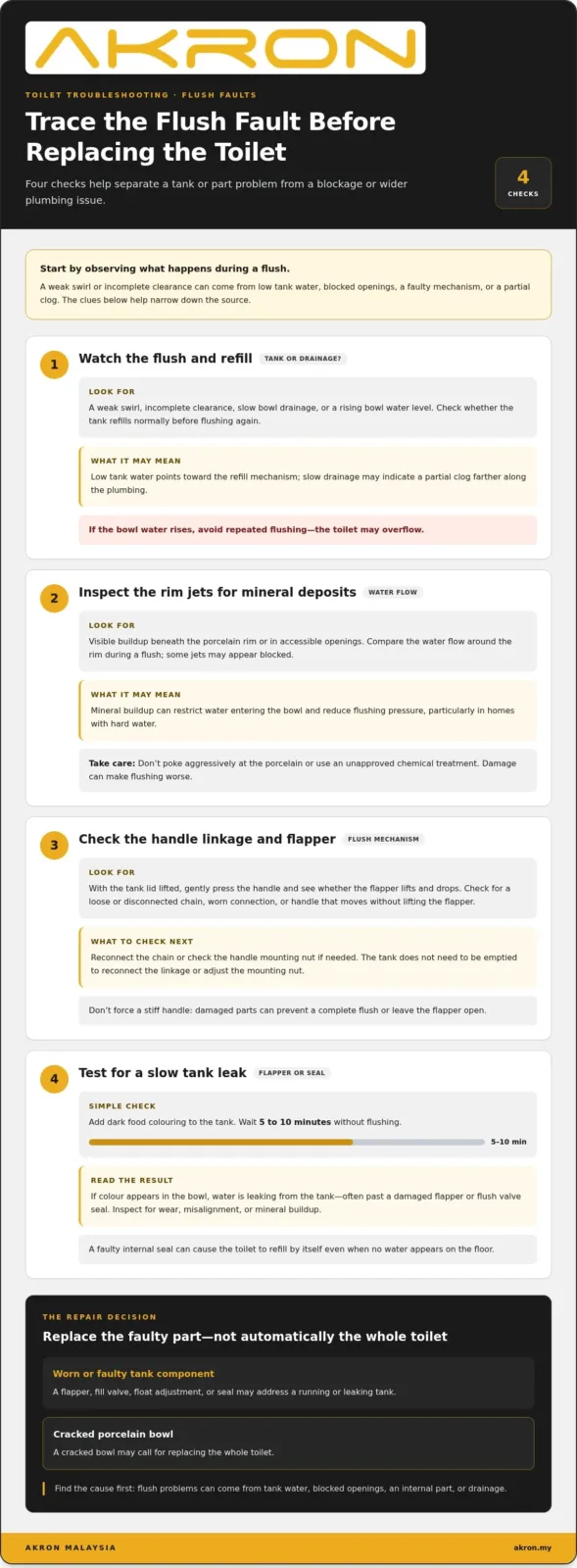
Flush once and watch the bowl: a weak swirl or incomplete clearance can result from low tank water, blocked openings, or faulty internal mechanisms. Check whether the tank refills normally before flushing again. A sluggish flush can also mean a partial clog, so note whether the bowl drains slowly or its water level rises.
These causes call for different fixes. Low tank water points to the refill mechanism, while a partial blockage affects drainage. Avoid repeated flushing if the bowl water rises, since the toilet may overflow. This first check helps distinguish a tank problem from a blockage farther along the plumbing.
-
Check for hard-water deposits
Inspect the rim jets beneath the porcelain rim for mineral deposits, which can restrict water entering the bowl during a flush. Look for visible buildup around the openings and inside accessible passages. Mineral buildup can reduce flushing pressure, particularly in homes with hard water.
Compare the water flow around the rim during a flush. If some jets appear blocked, deposits may be disrupting the flow that carries waste through the bowl. Don’t poke aggressively at the porcelain or use an unapproved chemical treatment; damage to the rim or internal passages can make flushing worse.
-
Inspect the handle and flush mechanism
Open the tank lid and inspect the handle linkage if the handle feels loose, disconnected, or broken. The handle connects to parts that lift the flapper; a disconnected chain can prevent a full flush. You don’t need to empty the tank to reconnect the linkage or adjust the handle mounting nut.
Press the handle gently and see whether the flapper lifts and drops. If the handle moves without lifting it, reconnect the chain or check for worn connections. Don’t force a stiff handle: damaged parts can prevent a complete flush or leave the flapper open.
-
Address leaks at the flush valve
Check for a slow tank leak by adding dark food colouring to the tank, then wait 5 to 10 minutes without flushing. If colour appears in the toilet bowl, water is leaking from the tank, often past a damaged flapper or flush valve seal. This leak can make the toilet refill by itself.
Inspect the flapper and the area where it meets the flush valve for wear, misalignment, or mineral buildup. A faulty seal can cause continuous leaking even when no water appears on the floor. Fixing the internal leak can help the tank hold water between flushes.
Can toilet parts be replaced instead of replacing the entire toilet?
Yes. A running toilet often needs a replacement flapper, fill valve, float adjustment, or seal, rather than a whole new fixture. Check the tank components first, then consider replacing the toilet if the porcelain bowl is cracked.
Work through these steps to find the faulty part and decide what needs attention.
-
Inspect faulty tank components
Lift the tank lid and watch the refill cycle after flushing. The flapper, fill valve, and float work together to control filling and flushing. If water continues into the overflow tube, check whether the float sits too high or the fill valve keeps running. The tank water level should stay at least half an inch below the overflow tube.
Adjust the float only if it moves freely and the tank components look intact. Mineral buildup, worn seals, or a damaged mechanism can prevent the water from shutting off. Avoid forcing a stiff part; recurring running can waste water and may mean the faulty component needs replacing.
-
Check internal toilet parts
Turn off the toilet’s water supply by turning the valve clockwise until tight before handling internal parts. Check the refill tube, which directs water into the bowl during the refill cycle. If it has come unclipped from the overflow tube, the fill valve may shut off before the tank fills adequately. Reattach it securely.
Make sure the refill tube isn’t pushed too far inside the overflow pipe. Reinstalling it outside the pipe can prevent an internal leak and repeated refilling. For a newer-style toilet, identify its make, model, and parts list first. Flushing mechanisms vary, so a mismatched component may not fit or work correctly.
-
Address drips from a faulty fill valve
Listen for a steady hiss or dripping after the tank should have finished filling. A damaged fill valve can affect water levels in both the tank and bowl. If the valve is worn or faulty, replace it rather than repeatedly adjusting a part that can’t shut off the water reliably.
After the repair, check the tank level and confirm that water stops below the overflow tube. Check that the refill tube is properly positioned before replacing other parts. Cleaning mineral deposits may help when buildup obstructs movement, but cracked or deteriorated parts need replacing.
-
Replace a faulty flapper
Look for a flapper that is warped, deteriorated, or not sitting evenly over the flush valve. A poor seal lets water leak from the tank into the bowl, prompting the toilet to refill on its own. Replacing the flapper can solve this recurring fault without replacing the whole toilet.
After fitting a replacement, leave about half an inch of slack in its chain. A chain that is too tight can hold the flapper open; excess slack can tangle and prevent it from lifting. If the bowl itself is cracked, repairing a part won’t fix the porcelain. Explore replacement Water Closet options when the fixture needs replacing.
How can I prevent frequent toilet clogs?
A clog can block drainage and cause an overflow. Stop flushing and turn the supply handle clockwise until tight. Common toilet repair tools in Malaysia include a bell-shaped toilet plunger and a toilet auger; replacement flappers and fill valves are common tank parts.
Follow these steps to clear a blockage and identify recurring causes.
- Keep unsuitable items out of the toilet. Flush toilet paper and human waste only, not wipes, sanitary products, cotton buds, or food scraps. Unsuitable items can lodge in the toilet opening or drain and cause repeated backups. Check the bathroom bin and remind household members that items labelled flushable can still contribute to clogs.
Look for a pattern. If clogs follow the same item being flushed, remove that cause first. Repeated blockages can also point to insufficient flushing power, mineral buildup, or an obstruction farther along the sewer line.
- Use a toilet plunger for a nearby blockage. Choose a bell-shaped toilet plunger, not a flat-bottomed drain plunger. Set the bell over the bowl opening to form a seal, then push and pull steadily without breaking contact. This motion can dislodge a clog near the drain.
Check the bowl water level before plunging. If it is already high, stop flushing to avoid an overflow. After plunging, flush once only if the water drains normally. If it rises again, stop and try another approach.
- Clear stubborn clogs with a toilet auger. Feed the auger’s curved end into the bowl opening, keeping its protective sleeve against the porcelain. Turn the handle as the cable advances, then rotate gently when you meet resistance. The cable can catch a clog farther inside the toilet trap.
Retract the cable slowly and remove any caught material. Don’t force the auger or scrape the bowl with exposed metal, as this can damage the porcelain. Once water drains freely, clean the tool and test the toilet with a single flush.
- Track recurring clogs and respond early. Note whether the toilet clogs after particular items, flushes weakly, or backs up alongside nearby drains. Gurgling, slow drainage in a sink or tub, or sewage odours near bathroom drains can accompany a wider drainage problem.
A plunger or auger may clear the immediate blockage without addressing its underlying cause. If a clog remains after using either tool, or the toilet is overflowing, stop flushing and get plumbing help from maintenance professionals like Synergy Trades Group. Repeated backups can involve sewer-line obstructions, mineral buildup, or tree roots, not just an object near the bowl opening.
Bubbling toilets and vent problems
A bubbling toilet can signal trapped air from a partial blockage, venting problem, or developing sewer-line issue. Note the bubbles and related drain symptoms to narrow down the cause before choosing a repair.
- Note when the bubbling starts. Watch the bowl during a flush and listen for gurgling afterward. Bubbling as water drains can mean air is being pushed back through the toilet by a partial blockage. If the toilet bubbles when a nearby sink or tub drains, the issue may involve shared drainage rather than the toilet alone.
Record which fixture was used and whether the toilet’s water level changes. This pattern helps distinguish a local blockage from a wider plumbing problem. Avoid repeated flushing if the bowl rises, since more water can worsen an overflow.
- Check for signs of a drainage blockage. Look for slow drainage in nearby sinks or tubs, sewage odours near bathroom drains, or recurring gurgles after flushing. These symptoms can accompany a developing sewer-line problem or a clogged section of drain. A plunger may clear a blockage close to the toilet, but it won’t necessarily restore normal water flow if the obstruction is farther away.
If plunging doesn’t stop the bubbling or the toilet backs up again, stop flushing. Repeated attempts can send more water into a restricted drain. Note whether several fixtures are affected, since that points beyond a single toilet trap.
- Consider whether the vent is blocked. Plumbing vents help air move through the drainage system and regulate pressure. A blocked vent can disrupt airflow, causing gurgling, weak flushing, or a low toilet-bowl water level. For example, bubbling accompanied by low bowl water may indicate a venting or drainage issue, not a faulty tank component.
Don’t climb onto a roof or push tools into a vent opening. A professional can inspect the vent and clear an obstruction safely. Avoid installing or replacing vent parts based only on bubbling; the same symptom can come from a drain blockage or sewer-line fault.
- Choose the next repair based on the pattern. A single toilet that bubbles after flushing may have a local blockage. Gurgling across several fixtures, slow drains, or sewage smells suggest a wider drainage or venting concern. Share those details when arranging plumbing repairs, and mention any change in the bowl’s water level.
Replacing a flapper or fill valve won’t correct trapped air in a drain line. If the toilet bowl is cracked, replacement addresses the damaged fixture, but the cause of bubbling still needs to be identified. If a damaged bowl makes replacement necessary, explore Water Closet options.
Akron Malaysia: Water Closet
Akron Malaysia offers Water Closets for homeowners who need a full replacement, such as when the porcelain bowl is cracked. If the fault is limited to a replaceable tank part, such as a flapper or fill valve, replacing that component may be more appropriate. Bubbling, recurring clogs, or slow drains point to a drainage or venting issue, not necessarily a need for a new toilet.
Explore Akron Malaysia’s Water Closet range when a damaged fixture makes replacement the practical next step. Choose a bathroom fixture that suits your space and everyday needs. For product enquiries, contact Akron Malaysia.
Make your next bathroom decision with confidence
Make a clear plan for your bathroom before choosing your next step. Decide whether to maintain the current toilet or consider a replacement, then think about how the fixture should suit your space and everyday routine. Understanding common toilet problems and solutions can help you make that choice and focus on what needs attention.
Akron Malaysia offers Water Closets, Wash Basins, and Faucets for bathroom updates. If you’re considering replacing the toilet, explore the available Water Closet options and choose one that suits your bathroom’s needs.
Contact Akron Malaysia about Water Closets and take the next step toward a bathroom that feels right for your home.
Frequently Asked Questions
Is it more budget-friendly to fix a toilet or replace it?
Repair is often the practical choice when the fault is limited to a replaceable part, such as a flapper or fill valve. Replacement makes more sense when the porcelain bowl is cracked or the fixture itself is damaged. A guide to common toilet problems and solutions can help you match the repair to the fault. Compare the toilet’s condition, how many components are failing, and whether problems return after repairs.
What causes toilet base leaks?
Water at the base can come from a deteriorated wax ring, loose bolts, a cracked bowl, a damaged supply line, or condensation. Notice when the floor gets wet: water appearing mainly after flushing points toward the toilet-to-drain seal, while moisture near the supply connection suggests a line leak. A rocking toilet can weaken its seal. Dry the area and watch where fresh water appears before deciding what needs repair.
When should a toilet leak receive professional attention?
Get professional attention if water keeps appearing after you dry the floor, the toilet bowl is cracked, or moisture is damaging nearby flooring or walls. A failed seal can let water and sewer gases escape where the toilet joins the drainpipe. Don’t ignore a rocking fixture or persistent sewage odour. Trace the source of the leak rather than simply wiping the floor or masking the smell.
When should you call a plumber to fix your toilet?
Call a plumber if the toilet overflows or a clog remains after you’ve tried a toilet plunger or auger. Seek help when several drains slow down together, nearby fixtures gurgle, or sewage odours appear, as these symptoms can point to a shared drainage issue. A cracked bowl also needs attention because porcelain damage can leak onto the floor. Stop flushing a backed-up toilet to avoid adding more water.
Why does my toilet keep running after flushing?
A toilet that runs continuously often has a flapper that doesn’t seal or a fill valve that doesn’t shut off properly. If it stops, then starts filling again without another flush, water is likely escaping from the tank into the bowl. Check that the flapper sits flat and its chain moves freely. If water keeps rising into the overflow tube, the fill mechanism or float needs attention.
Why is my toilet making unusual noises?
When looking for common toilet problems and solutions, distinguish a refill whistle from a drain gurgle. A whistle during refilling often points to a worn fill valve, while gurgling after flushing can result from trapped air, a partial blockage, or a venting concern. Note whether nearby sinks or tubs are draining slowly at the same time. A hiss that continues after the tank refills suggests water is still moving through an internal part.