
What if your weak shower isn’t caused by the showerhead at all? If you’re searching for how to increase water pressure in shower Malaysia, it’s tempting to buy a new fixture or add a pump straight away. But the problem could be limited to one shower, or point to a wider water-supply issue in your home.
A weak flow can make a shower uncomfortable, and guessing at the cause may lead to unnecessary replacements. Start by comparing the shower with other taps and checking a few things safely. This guide explains how to tell whether the issue is isolated or widespread, what to check before changing equipment, and when to arrange a plumber’s assessment. You’ll have a clearer next step before spending money on a new shower or pump.
Key Takeaways
- Compare the shower with other taps to see whether weak flow is isolated or affects the wider home.
- Check the showerhead and note when the flow drops before considering replacement parts or equipment.
- Learn how to increase water pressure in shower Malaysia by matching your next step to the likely cause, rather than assuming a pump is needed.
- Understand why water flow and water pressure are related but different, and why that matters when diagnosing the problem.
- Know when simple checks are no longer enough and the household water-supply system needs a plumber’s assessment.
Increase Shower Pressure in Malaysia: Find the Source
Before replacing the showerhead or considering a pump, find out whether the issue starts at that fixture or affects the wider home. This cause-first approach helps you choose a sensible next step instead of spending money on the wrong fix.
Water pressure is the force that moves water through pipes and out of the shower. What you experience as a weak shower can also reflect how much water is flowing, so a disappointing spray doesn’t identify one cause by itself. There’s no single pressure target that applies to every Malaysian home or plumbing setup.
Is the weak water pressure limited to one shower?
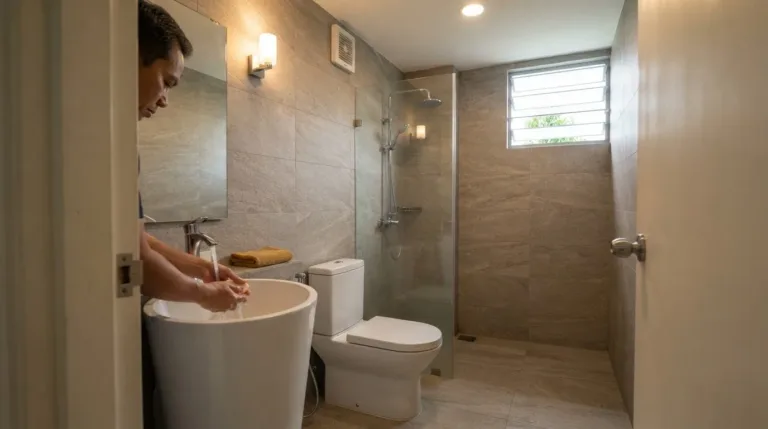
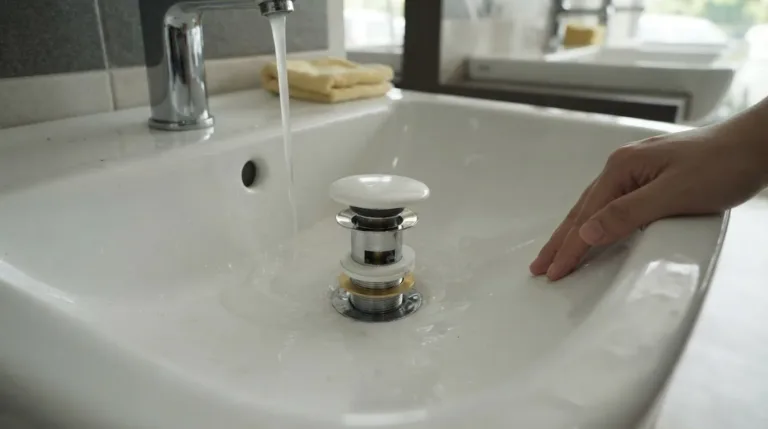
Run the shower and notice its flow, then test a nearby basin or kitchen tap. If those fixtures seem normal while the shower remains weak, the issue may be local to that shower. It’s a useful clue, not a diagnosis: a blockage or another fixture-level problem still needs to be identified.
Check another shower or tap too, if you have one. If several fixtures have weaker flow than usual, the cause may be beyond the shower itself. Note which fixtures are affected. This can help you describe the pattern clearly if the problem needs further assessment.
What Malaysian home water setups can change the diagnosis?
Homes in Malaysia don’t all receive and distribute water in the same way. Depending on the property, water may flow directly from the supply or pass through storage and pumping equipment before reaching a bathroom. A shower on an upper floor may also behave differently from one on a lower floor. Don’t assume a neighbour’s setup, or a generic online fix, matches yours.
Notice whether the shower changes at different times. Compare the flow during a quiet period with a time when household taps or showers are in use. If the weakness comes and goes, timing is useful evidence. If it stays consistent across several fixtures, that points to a different pattern than one shower that struggles on its own. For wider context, Water supply and sanitation in Malaysia outlines the country’s water infrastructure and related challenges.
These observations give you a practical starting point for how to increase water pressure in shower Malaysia. First identify the pattern, then focus on the likely source instead of assuming a new shower or pump will solve it.
Why Shower Water Pressure Drops: Blockages, Leaks, Valves, and Supply
Once you’ve noticed which fixtures are affected, consider causes from the shower outward. A restricted showerhead may explain one weak spray, while a change across several taps could point to a household supply or plumbing issue. The pattern matters more than the symptom alone.
Pressure and flow are connected, but they aren’t the same measurement. Pressure is the force pushing water through the system; flow is the amount of water coming out over time. A restriction can reduce flow at the shower even when the wider supply hasn’t changed. Using several taps or showers at once can also leave less flow available at one fixture, without proving the home has a permanent pressure problem.
Could scale, debris, or a shower component be restricting flow?
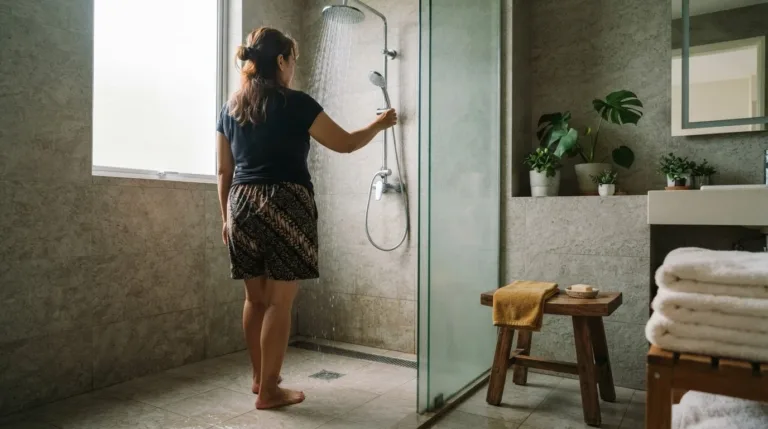
Mineral scale or debris can build up in a showerhead and partly block its outlets. The spray may become uneven or weaker, especially if the change happened gradually. A sudden drop may suggest a recent blockage or another change, but timing alone can’t identify the cause. If other fixtures still run as usual, focus your observations on the shower and its components before suspecting a whole-home issue.
When might valves, leaks, or a pump need professional attention?
System components can affect more than one fixture. A shut-off valve that isn’t fully open, a leak, or a faulty pressure-reducing valve may change the water reaching the shower. A pressure-reducing valve controls incoming pressure to help keep it within a set range. Don’t try to adjust system valves yourself. Note the symptoms and arrange a plumbing assessment if a valve fault or leak seems possible.
Don’t treat a pump as the automatic answer. Whether one is suitable depends on how your home receives and stores water, how its plumbing is arranged, and where the problem occurs. Choosing a pump without understanding that setup may not address the cause. A professional can assess suspected pump-system concerns alongside the rest of the supply.
Use these clues to narrow down your next step before acting on how to increase water pressure in shower Malaysia advice. If checks point to a damaged or unsuitable shower fixture rather than a supply problem, explore shower and bathroom fixture options as part of planning a replacement.
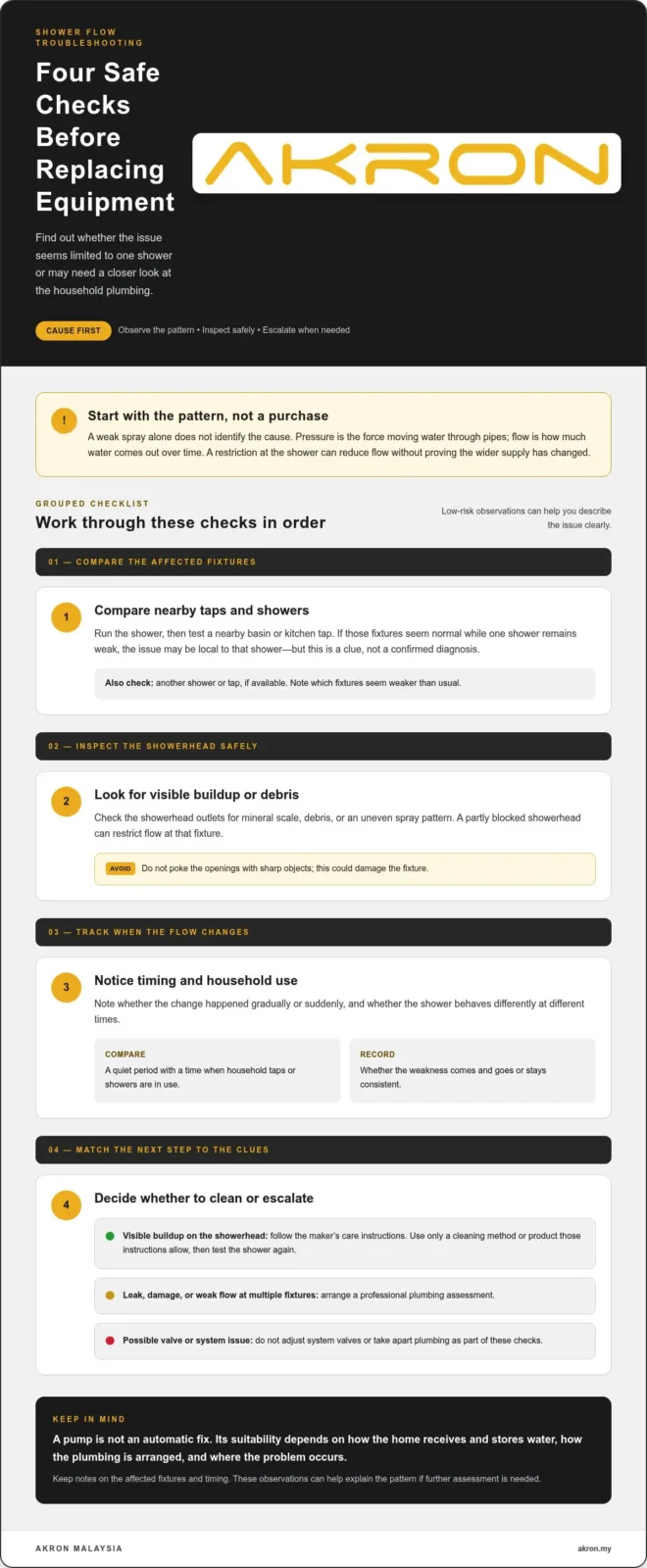
How to Troubleshoot Weak Shower Flow: Safe Checks Before Replacing Equipment
Work through a few low-risk checks before buying a new showerhead or considering a pump. The aim is to spot a likely fixture issue and know when the plumbing needs a closer look. Don’t adjust system valves or take apart plumbing as part of these checks.
- Compare fixtures. Notice whether nearby taps or other showers also seem weaker than usual. If only one shower is affected, a fixture restriction is more likely, though this check can’t confirm the cause.
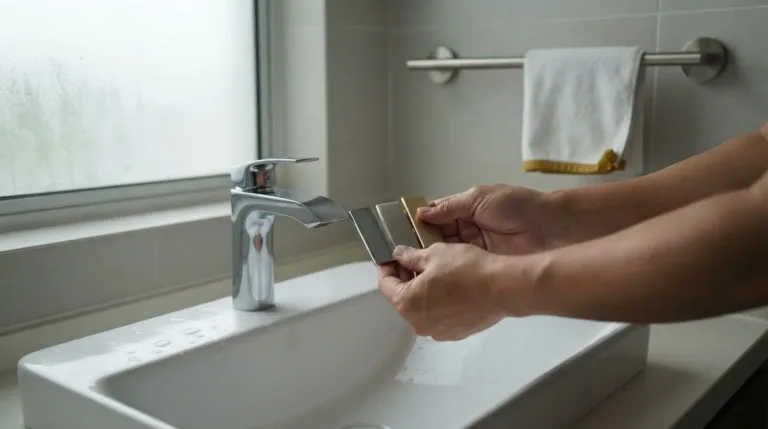
- Look over the showerhead. Check the visible outlets for buildup, debris, or an uneven spray pattern. Avoid poking the openings with sharp objects, which could damage the fixture.
- Notice the timing. Record whether the flow changed gradually or suddenly, and whether it varies at different times or when other water fixtures are being used.
- Decide whether to escalate. A visible showerhead issue may call for cleaning, while leaks, damage, or weak flow at multiple fixtures warrant professional assessment.
Which showerhead checks can you do yourself?
If you see buildup, follow the showerhead maker’s care instructions. Don’t use a method or cleaning product unless the instructions allow it. Test the shower again afterwards and compare its spray with what you noticed before. If the head is damaged or cleaning doesn’t resolve a fixture-only problem, replacement may be worth considering. A new showerhead isn’t a guaranteed way to increase pressure.
If replacement makes sense, explore Akron shower products as you consider options for your bathroom.
When should you stop troubleshooting and call a plumber?
Stop at visual checks if you suspect a leak, see damaged plumbing, or find that several fixtures are affected. These signs may involve the home’s supply system rather than one showerhead. Leave pressure-regulator adjustments and pump installation to a qualified professional. Changing system settings without understanding the setup could worsen the issue. A shower valve can also affect how water is delivered, but diagnosis and repair are separate from routine showerhead care.
Quick guide: Check other fixtures, inspect the showerhead, follow its care instructions, and note when the problem occurs. Leave suspected leaks, damaged pipes, valve adjustments, and pump concerns to a plumber. This boundary helps you decide how to increase water pressure in shower Malaysia without replacing equipment before you know what’s causing the weak flow.
Choosing the Right Next Step for Low Shower Pressure in Malaysia
The right solution depends on where the restriction is. A weak showerhead, a problem in the home’s plumbing, and a change in the wider supply call for different next steps. A pump isn’t automatically the answer to every weak shower. Match what you’ve observed to the likely source, then decide whether a fixture check is enough or the system needs professional assessment.
Should you clean, repair, replace, or assess the water system?
If you can see buildup on the showerhead and other fixtures seem unaffected, follow the manufacturer’s care instructions and check whether cleaning changes the spray. Avoid improvised methods that could damage the fixture. If the showerhead is visibly damaged, replacement may be sensible, but only if that component is the restriction.
Weak flow from several fixtures, signs of a leak, or concerns about valves point beyond routine showerhead care. Arrange a professional plumbing assessment rather than adjusting system valves yourself. Consider a pump only after the home’s supply, storage, and plumbing arrangement have been understood. Choosing equipment without that context may leave the actual cause unresolved.
When does choosing a new shower fixture make sense?
A new shower fixture is worth considering if the existing component is damaged, unsuitable for your setup, or still restricts flow after appropriate care. But replacing a fixture won’t resolve a wider supply problem. Keep that distinction in mind as you decide how to increase water pressure in shower Malaysia without making an unnecessary purchase.
When choosing a replacement, consider how the shower fits your bathroom and needs. You can explore shower and bathroom fixtures as part of planning. Choose based on suitability and design, not on an assumption that a new fixture will boost pressure.
Keep your next steps simple: clean visible buildup as directed, note whether other fixtures are affected, and seek a plumber’s assessment for suspected leaks, valve concerns, or wider system issues. Consider replacement only when the shower component itself is the likely problem. This cause-first approach helps you make an informed choice and create a bathroom that feels comfortable and works well for your home.
Make Your Next Shower Upgrade Count
A more comfortable shower starts with a clear decision, not a rushed purchase. Use what you’ve observed to guide your next move: address a fixture issue if that’s where the restriction lies, or seek an assessment if the signs point beyond the shower. That way, your effort and budget go toward the problem that needs attention.
If replacing a shower is the right step, choose a fixture that suits your bathroom and the way you use it. Akron Malaysia offers showers and other bathroom fixtures, with affordable, high-quality products designed to be stylish and durable. Consider comfort and design, while treating water pressure as a separate issue to diagnose.
Explore Akron Malaysia’s bathroom fixtures for your home and choose a shower that suits your space and style.
Frequently Asked Questions
Can a clogged showerhead cause low water pressure?
Yes. Scale or debris can block some showerhead outlets, making the spray uneven, with a few streams weaker or missing. Follow the maker’s cleaning guidance and check whether the spray pattern changes afterwards. If it doesn’t, or the showerhead looks clear, avoid repeatedly scrubbing or poking its openings. The restriction could be elsewhere, especially if other fixtures in the home have also changed.
How can I tell if low water pressure affects my whole house?
Compare more than one fixture under similar conditions. For example, check a basin tap and another shower while household water use is low, then note which ones seem affected. A shared change across several fixtures suggests the issue may extend beyond one shower. If only one shower is affected, a local cause is more plausible. These observations can help a plumber understand the pattern, but they can’t identify a hidden fault.
Will replacing my showerhead increase water pressure?
It may help if the existing showerhead is damaged or is the source of the restriction, but a replacement can’t resolve every cause. If weak flow also appears at other fixtures, changing the showerhead alone may not address the underlying issue. Before choosing another fixture, consider how it suits your bathroom and keep the old showerhead until you’ve confirmed whether the change made a difference.
Should I install a water pressure booster pump for a weak shower?
Not without first understanding the cause and the home’s water arrangement. A pump may be relevant for some setups, but it won’t necessarily help if a blocked showerhead or another fault is responsible. Share whether the issue affects one fixture or several, and whether it varies by floor or time of day, with a qualified plumbing professional. That context helps determine whether a pump is suitable before installation is considered.
Is it safe to adjust a pressure-reducing valve myself?
No. Don’t change the valve setting based only on a weak shower, since the valve may not be the cause and an incorrect adjustment can affect other fixtures. If several taps have changed, record which ones and whether the issue is constant or intermittent. A qualified plumbing professional can assess the system and determine whether the valve needs attention, rather than relying on generic pressure figures that may not suit your home.