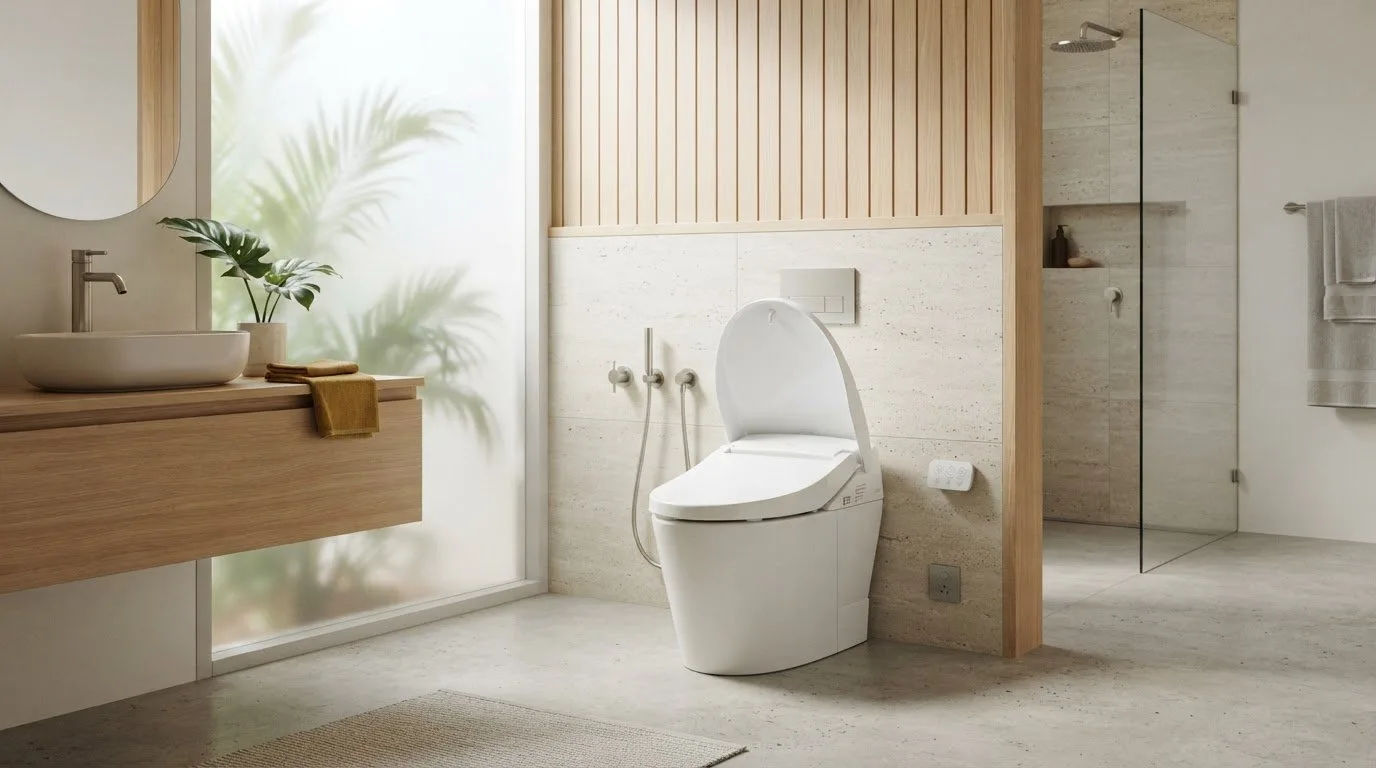
A traditional toilet may handle the basics, but a smart toilet adds electronic comfort and cleansing functions. The smart toilet features and benefits vary by model, but commonly include bidet washing, adjustable settings and, on some models, a heated seat or warm air drying. The key difference is how these features change everyday use, not simply how modern the toilet looks.
If you’re weighing an upgrade, it’s natural to wonder how the controls work and whether the extra functions suit your bathroom. This guide explains what smart toilets do, how remote and side controls operate, and what to consider for space, electrical and water connections, installation and budget. It also compares smart and traditional toilets so you can decide which option fits your comfort preferences and home.
Key Takeaways
- Compare integrated smart toilets with bidet seats and standard toilets to see which setup best matches your comfort needs.
- Smart toilet functions vary by model, so focus on the features you’ll use and how their controls are operated.
- Before choosing a model, consider bathroom clearance, the toilet’s rough-in, and nearby water and electrical connections.
- Weigh the higher upfront cost of smart functions against the simpler maintenance of a traditional toilet.
- Explore how a suitable water closet can support a bathroom that feels practical, comfortable and cohesive.
What is a smart toilet?
A smart toilet combines a toilet with electronic functions such as bidet washing, adjustable settings, and, depending on the model, a heated seat or air drying. The difference from a regular toilet is the added comfort and cleaning features, not simply a more modern appearance.
Smart Toilets Versus Other Toilet Types
A regular toilet provides flushing, while a bidet seat adds washing to a compatible toilet and a smart toilet integrates electronic functions into the toilet or its seat. A bidet toilet generally has an integrated bidet wash; a smart toilet typically adds other electronic features, such as adjustable controls or drying. These categories can overlap, so compare the actual functions rather than relying on the product label.
That distinction matters if you’re deciding between replacing the whole toilet and adding a wash function to an existing one. A bidet seat may provide washing without replacing the toilet, while an integrated smart model brings several functions together in one unit. For example, a model with a heated seat, bidet wash, and automatic flushing offers a different experience from a basic toilet with a separate hand bidet.
Built-In Bidet Washing Features
Built-in bidet washing uses a water nozzle to cleanse, with controls on some models allowing you to adjust water temperature, pressure, and spray position. Smart toilet bidet cleaning systems described in the available market information deliver water at 0.5-1.5 litres per minute. This gives you control over the wash, rather than relying on toilet paper alone.
Akron Malaysia’s Intelligent Water Closet features a self-cleaning nozzle, rear wash and lady wash, with adjustable water pressure and nozzle position. Other listed features include adjustable water temperature, warm air drying and heated seating. Compare the controls and functions you want to use, rather than assuming every model includes the same combination.
Safety and Hygiene for Different Users
Smart toilets can support personal hygiene for children, older adults, and people with disabilities by offering bidet washing and adjustable controls. They aren’t automatically suitable for every user; comfort and safe use depend on features such as control accessibility, the person’s mobility, and whether they can sit and transfer comfortably. Choose settings that the intended user can operate reliably.
For children, a caregiver can guide control use and select gentle wash settings where available. Older adults or people with limited mobility may find remote controls easier to reach than side-panel buttons, depending on the model and bathroom layout. For hygiene, retractable nozzles and self-cleaning functions are useful features to compare. Warm air drying, when included, can reduce reliance on wiping, but users should understand the controls before using it independently.
Bathroom space, installation and budget considerations
A smart toilet needs more than floor space: its fit depends on the existing plumbing, water pressure, and nearby power. In Malaysia, check those connections alongside the model’s rough-in and clearance before planning the change.
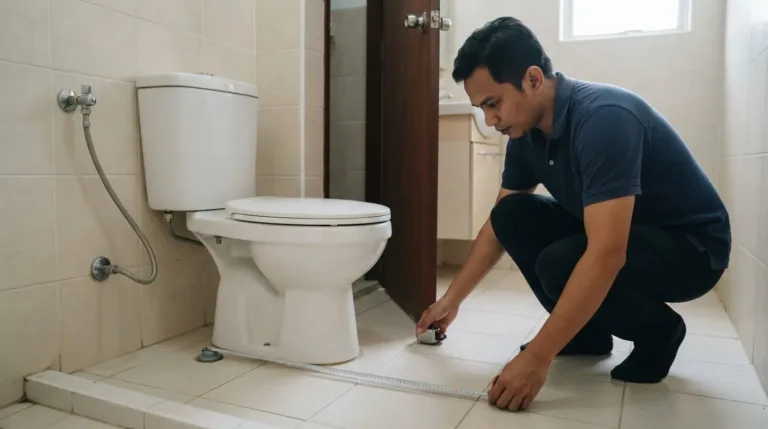
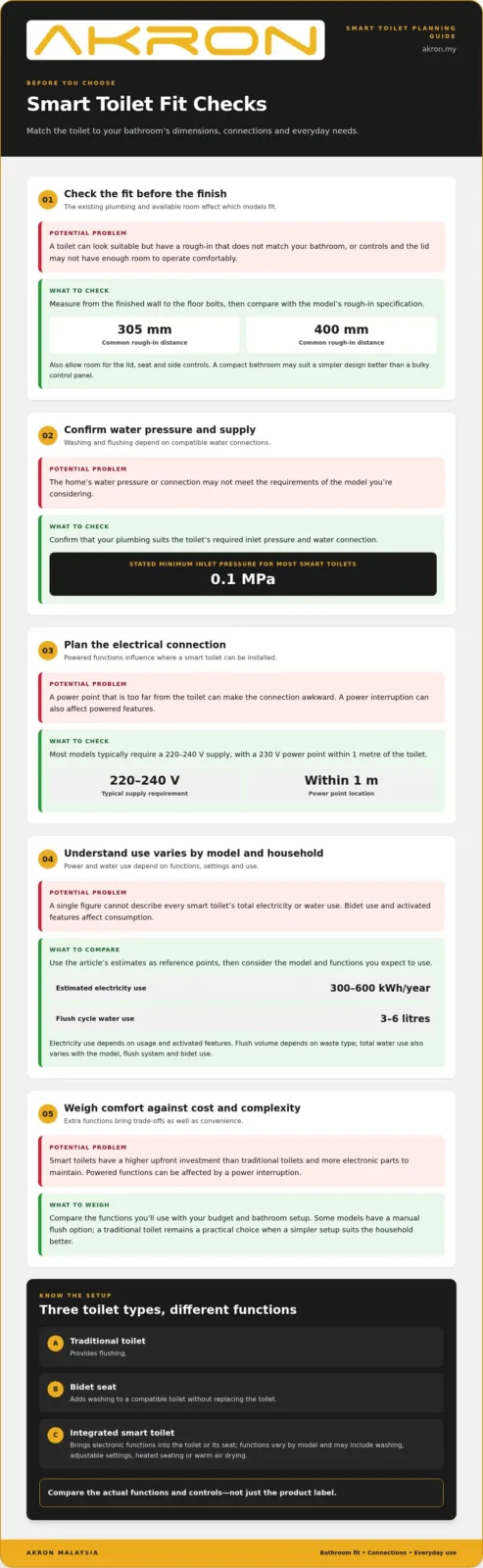
Measure from the finished wall to the floor bolts, then compare that distance with the toilet’s rough-in specification. Common rough-in distances in Malaysia are 305 mm and 400 mm. Also consider the room around the toilet: the lid, seat, and any side controls need room to operate comfortably. A compact bathroom may suit a simpler design better than a model with a bulky control panel.
Water pressure matters too. Most smart toilets need at least 0.1 MPa of inlet pressure for washing and flushing to work properly. Confirm that the water connection and the toilet’s required pressure suit the home’s plumbing. If you’re comparing toilet styles for a bathroom update, browse water closet options as part of your planning.
Electrical and Water Use
Electrical and water requirements affect where a smart toilet can be installed and how it performs. Most models typically require a 220-240 V supply, with a 230 V power point within 1 metre of the toilet. That location lets the toilet connect without stretching a cord across the bathroom.
Smart toilet electricity use is estimated at 300-600 kWh per year, depending on usage and activated features. Flush cycles use 3-6 litres, depending on waste type; total water use also varies with the model, flush system, and bidet use. A heated seat and warm air drying add electrical functions, so consider which you’ll use regularly.
Budget and Potential Drawbacks
When planning a bathroom update, consider the product itself and any work needed to fit it into the existing space. An electronic intelligent water closet and a non-electric bidet seat have different requirements. Akron Malaysia offers both, so compare the product type and listed functions with your bathroom setup before deciding.
The trade-offs include a higher upfront investment than a traditional toilet, plus more electronic parts to maintain. A power interruption can also affect powered features, while a manual flush option is available on some models. Consider whether the comfort functions justify the extra complexity for your household. If a simpler setup better suits your space or budget, a traditional toilet remains a practical choice.
Digital controls, remote controls and mobile apps
Controls determine how easily you can use a smart toilet’s washing, temperature, drying, and flushing functions. The interface varies by model, so compare the controls alongside the features themselves.
Smart Toilet Controls and Sensors
The Intelligent Water Closet’s controls include a remote, side button and knob control. Listed features also include a foot sensor and automatic flushing. The control layout matters because it determines how you access the functions during use.
Akron Malaysia’s Intelligent Water Closet offers adjustable water pressure, nozzle position, water temperature, heated seating and wind-drying temperature. It also includes a digital display and remote control. These listed functions show what you can adjust, so review them when choosing a model.
Most full-featured models need electricity for functions such as bidet washing, heated seats, warm air drying, sensors, and electronic controls. That means the remote or panel operates powered features, not the basic idea of a toilet alone. Sensor functions also depend on the model: automatic flushing may be included, but it should not be assumed for every unit.
Remote Controls and Mobile Apps
A remote control lets you operate selected functions without using buttons on the toilet itself. Akron Malaysia’s Intelligent Water Closet includes remote control, giving you a separate way to access its listed functions.
Control methods vary by product. Akron Malaysia’s Intelligent Water Closet includes remote control, a side button, knob control and a digital display. Its listed functions include washing, adjustable water pressure, temperature settings and warm air drying. Review the controls and features together to understand how the product works.
App control is not among the listed features of Akron Malaysia’s Intelligent Water Closet. Its listed controls include a remote, side button, knob control and digital display. Compare the functions provided by the product rather than assuming that electronic controls include a mobile app.
Try picturing a normal visit: you sit down, select a wash setting, adjust water pressure, and choose drying if available. A remote can make those steps easier to reach, while a side panel keeps them attached to the toilet. Consider who will use the controls, whether labels are easy to understand, and whether each person can adjust settings comfortably.
Features vary, so compare the control method for every function you expect to use. A model might offer adjustable washing and a heated seat but use manual flushing. Another may add automatic flushing or user settings. Treat each function as a separate choice, and base your decision on the controls you’ll actually use, not the number of buttons or the word “advanced.”
Smart toilet and traditional toilet comparison
The main difference is what happens beyond flushing. A traditional toilet handles waste removal, while a smart model can add electronic washing, drying, and automatic functions. That can change daily comfort and upkeep, but also means more features to learn and maintain. The smart toilet features and benefits worth considering depend on whether those extras fit your household’s routine.
A conventional toilet has a straightforward primary function: flushing. Akron Malaysia’s Intelligent Water Closet adds features including rear and lady wash, heated seating, warm air drying, automatic flushing and adjustable settings. The exact combination of features matters, so review the listed functions rather than assuming every intelligent water closet includes the same package.
Cleaning is another point of difference. Some smart toilets have self-cleaning bidet nozzles, pre-wash functions, or deodorizing systems. Certain models also disinfect the seat and water nozzles automatically after use. These options can reduce some manual tasks, but they don’t eliminate the need to clean external surfaces. A traditional toilet has fewer electronic parts and generally simpler maintenance and repairs.
Consider the toilet seat and controls, too. Depending on the model, a smart toilet may have a heated seat, a lid that opens as someone approaches, or a manual flush option alongside sensor-activated flushing. Those functions can add convenience, but they rely on electronic features. A traditional toilet avoids that added complexity and may suit households that prefer straightforward operation.
Water and paper use depend on the model and household habits. Smart toilets use water for bidet washing as well as flushing, and flush volumes vary by system. Some market estimates describe smart toilets as using roughly 50% less water than traditional toilets, but that isn’t a universal result for every model. Bidet washing and an air dryer may reduce toilet paper use, though actual savings depend on how each person uses them.
The clearest trade-off is a higher upfront investment for smart toilets versus a more budget-friendly traditional toilet. A smart model may combine several bathroom functions and adjustable settings. A traditional toilet can be a better fit if you value simpler maintenance and fewer powered features. The smart toilet features and benefits matter most when the functions you’ll use outweigh the added cost and complexity.
To make your choice, consider which functions would improve your daily routine, then balance them against the level of simplicity you prefer. For a conventional fixture, compare water closet options as you shape your bathroom plan.
Akron Malaysia: Water Closet
Akron Malaysia offers water closets to help you choose a practical foundation for your bathroom. If a traditional fixture better suits your space or preferences than an electronic model, compare water closet options alongside your bathroom’s layout and daily needs. A wash basin, faucet, or shower can also help create a coordinated, functional space.
Consider the look and use of the whole bathroom before settling on a fixture. Akron Malaysia offers water closets, wash basins, faucets, showers and bathroom accessories, helping you balance style with everyday function. Smart features are one option, not the only route to a comfortable bathroom.
Explore the product range, or contact Akron Malaysia to discuss your bathroom plans.
Shape a bathroom that works for you
Choose a bathroom fixture around the routines you want to make easier. An intelligent water closet can be a considered upgrade, but it does not need to define the whole room. Think about which functions matter to your household, then consider how they fit your preferred style and everyday use. The smart toilet features and benefits matter most when they answer a real need.
For a wider bathroom refresh, Akron Malaysia offers water closets, wash basins, faucets, showers and bathroom accessories. Choose fixtures that suit how you use the space, whether you prefer a familiar setup or are exploring an electronic option. Compare the products and features that fit your priorities.
Contact Akron Malaysia for smart toilet advice as you consider what will work for your bathroom. A thoughtful choice can help make your space feel more personal, comfortable and ready for daily life.
Frequently Asked Questions
Key Features to Look For?
Prioritize the functions you expect to use, then compare what each product offers. Akron Malaysia’s Intelligent Water Closet includes a night light, deodorizer system, adjustable washing and drying, and automatic flushing. It also offers a manual lever. Review the listed functions to see which suit your routine.
What About Installation and Cost?
Installation and overall budget depend on whether you’re replacing a complete toilet or adding a smart seat, plus how well the existing plumbing and electrical setup match. In a Malaysian bathroom, include the toilet’s fit, required connections, any changes to those connections, and ongoing electricity use in your planning. A model that matches the current layout may involve a different scope from one requiring adjustments.
What features do smart toilets typically have?
Akron Malaysia’s Intelligent Water Closet includes rear and lady wash, adjustable settings, heated seating and warm air drying. Other listed features include a night light, deodorizer system, auto seat and cover, and automatic flushing. Features differ by product, so compare the specific functions rather than assuming every intelligent water closet offers the same combination.
What are the main benefits of a smart toilet?
An intelligent water closet can bring washing and other comfort functions together in one fixture. Akron Malaysia’s Intelligent Water Closet includes rear and lady wash, adjustable water pressure, a self-cleaning nozzle, heated seating and warm air drying. Consider which of these listed features suit your routine, rather than choosing extra functions you may not use.
How do smart toilets compare with conventional toilets?
A conventional toilet focuses on flushing and usually has simpler operation, while a smart model adds electronic functions that can support washing and personal comfort. The choice depends on your priorities. If you want fewer controls and straightforward upkeep, a conventional model may suit you better. If you expect to use electronic cleansing or drying regularly, consider whether those functions justify learning and maintaining a more feature-rich toilet.
How much do smart toilets cost in Malaysia?
In Malaysia, the purchase budget varies with the type of setup and the functions included. A smart seat added to an existing toilet differs from replacing the complete unit, and models with more electronic features may involve different costs. Compare the product format, desired functions, and any bathroom changes needed before setting a budget. Include expected electricity use in your household’s ownership considerations.