The best way to keep chrome looking bright isn’t to scrub harder. It’s to stop water from drying on the surface. If spots return soon after cleaning, preventing water stains on chrome fixtures starts with a small, consistent habit. Many marks are mineral residue, including deposits associated with calcium and magnesium, left behind as water evaporates.
It’s reasonable to wonder which cloth or cleaner is safe. Rough scrubbing and unsuitable products can damage a finish, so begin with the fixture maker’s care instructions. This guide explains why water marks appear, how to clean chrome gently and how to build a practical bathroom routine. It also covers what to do when a spot doesn’t lift with everyday care.
Key Takeaways
- Start with the fixture’s care instructions and a clean, soft cloth when cleaning chrome water marks.
- If the instructions permit a cleaner, test it on a hidden area first and follow the product label.
- Reduce residue by wiping away splashes and drying visible droplets.
- Keep a clean, soft cloth within reach, but don’t leave it wet against the fixture.
- Recurring marks may be surface residue, while persistent dullness, peeling or roughness calls for a more cautious approach.
Why Do Water Stains Appear on Chrome Fixtures?
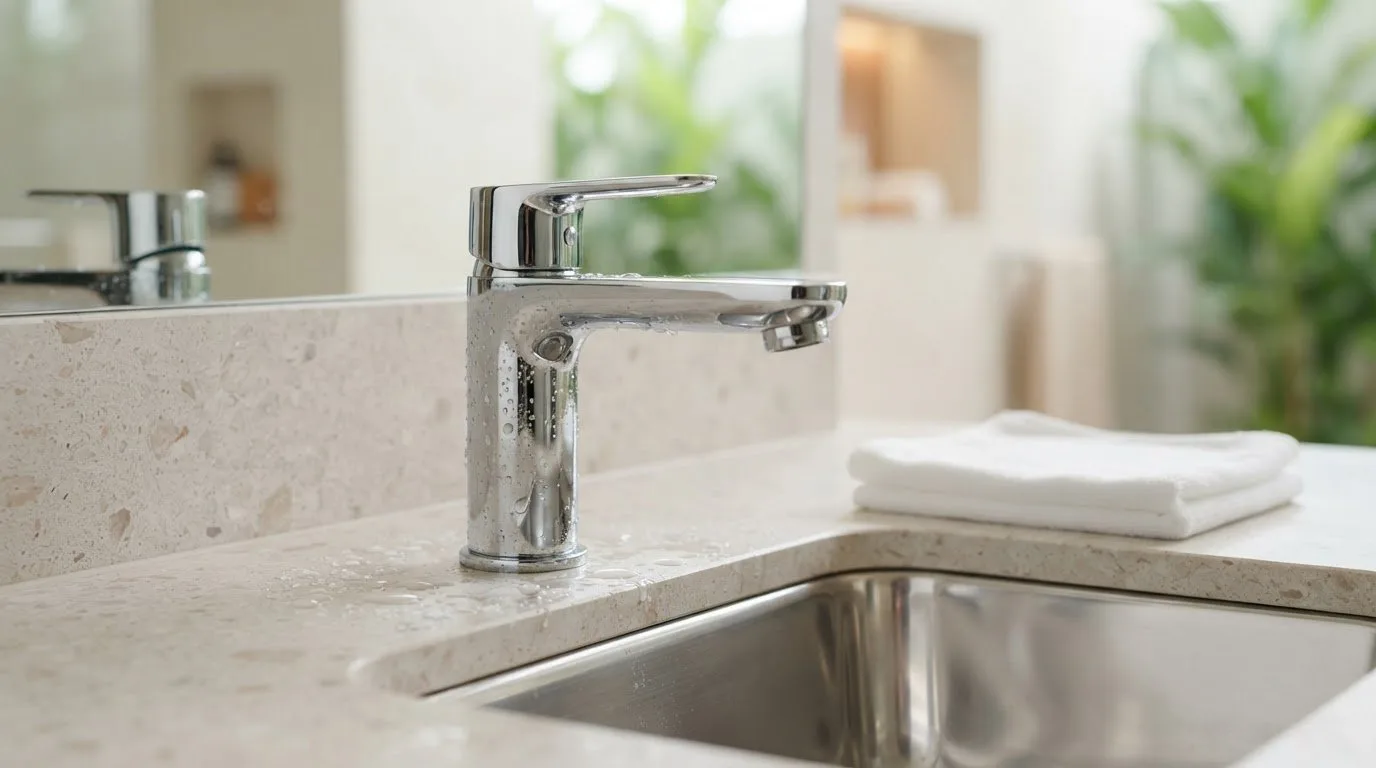
A water stain is a visible mark left when a droplet dries on a fixture, sometimes with dissolved minerals remaining on the surface. It may look like a pale spot, ring or cloudy film. A mark isn’t automatically damage to the chrome finish. Identifying it as possible surface residue first can help you avoid using a stronger product unnecessarily.
Splashes around a faucet, condensation on nearby surfaces and droplets left to dry can all contribute to marks. Preventing water stains on chrome fixtures starts with noticing where moisture collects, rather than assuming every spot has the same cause.
What Causes Water Spots on Chrome?
As water evaporates, dissolved minerals may remain as visible residue. Some mineral deposits are associated with limescale. Read more about what limescale is and how it forms. On a reflective fixture, even a small deposit can stand out, especially around a spout or handle where droplets collect.
Water spots can follow everyday splashes or condensation, and may become more noticeable when droplets dry repeatedly in the same place. Appearance alone can’t identify the exact minerals or water chemistry behind a mark. Treat it as surface residue first, and don’t assume its colour or shape reveals a precise cause.
Are Water Stains Different from Chrome Damage?
A surface mark may be removable residue rather than damaged plating. If it changes or lifts with gentle cleaning, that may suggest it was sitting on the surface. Don’t scrub aggressively to test it. Chrome can be scratched, and harsh cleaning may make an existing finish problem worse.
Persistent dullness, peeling or roughness may point to a finish issue rather than an ordinary water spot. These signs don’t confirm the cause on their own. Check the fixture maker’s care guidance before trying stronger cleaners or abrasive tools. If an approved gentle method doesn’t improve the appearance, pause and seek product-specific advice. This helps distinguish routine residue from a possible finish concern without risking unnecessary damage.
How to Clean Chrome Water Stains Without Scratching the Finish
Start with the fixture maker’s care instructions. Chrome finishes can have different care requirements, so don’t assume a cleaner that worked on another fixture is suitable. If the instructions permit a cleaner, test it on a small, inconspicuous area first and follow its label.
A Gentle Step-by-Step Cleaning Method
For routine marks, dampen a clean, soft microfiber cloth with water and wipe lightly. Rinse if the care instructions call for it, then dry the fixture with a clean cloth. This limits rubbing and helps prevent leftover moisture from drying on the surface.
- Check the manufacturer’s instructions before choosing a cleaner or deciding whether to rinse.
- Dampen the cloth. Avoid rubbing residue with a dry cloth.
- Wipe gently with light pressure instead of scraping or repeatedly rubbing one spot.
- Rinse only as directed, then dry with a separate, clean cloth.
A fresh water mark may lift with this gentle pass. If it remains, don’t immediately scrub harder. Pause and check the care guidance before trying another method. Residue and finish wear can look similar, so a cautious approach is better than risking scratches.
Which Cleaners and Tools Should You Avoid?
Avoid abrasive pads, scouring powders and scraping tools unless the fixture maker specifically permits them. They can scratch a reflective surface. Don’t treat acids, bleach or mixed cleaners as universally safe for chrome. Follow the fixture’s specific instructions, and never combine cleaning products. If guidance is unavailable or unclear, stick to a soft, damp cloth and seek product-specific advice before using a stronger cleaner.
Gentle care supports preventing water stains on chrome fixtures, but the right method depends on the particular fixture. If you’re exploring bathroom options, you can view Akron Malaysia’s bathroom products, including faucets. Check the care instructions for the specific fixture rather than assuming a finish or cleaning requirement.

How to Prevent Water Stains on Chrome Fixtures Every Day
A small drying habit can make bathroom upkeep easier. Water left on a faucet or around its base may dry and leave visible residue. When convenient, wipe away splashes after handwashing or cleaning the basin. Regular gentle care can reduce residue buildup, although it can’t guarantee that marks will never appear.
A Quick After-Use Routine
Keep a clean, soft cloth somewhere handy, such as near the basin, so drying doesn’t become a separate chore. Gently wipe visible droplets around the faucet, handles and base, as well as nearby splash zones. Don’t leave the cloth draped over or pressed against the fixture while it’s wet. Wash or replace it when it’s no longer clean.
Use this simple checklist:
- Wipe visible splashes from the faucet after use.
- Check around the base and nearby surfaces for droplets.
- Dry gently with a clean, soft cloth.
- Put the cloth away instead of leaving it damp against the fixture.
A Simple Weekly Maintenance Check
Once a week, look around handles, seams and the faucet base, where early residue can be easy to miss. If you spot a mark, use the fixture maker’s approved care method instead of defaulting to a stronger cleaner. Notice where marks recur. A repeated spot near the spout or basin may be linked to regular splashing or the direction of water flow.
Changing how you use the faucet or wiping a splash-prone area can make the routine better suited to your bathroom. These small steps support preventing water stains on chrome fixtures without adding a lengthy cleaning task or promising a spotless finish every time.
Looking for bathroom fixture options? Explore Akron’s bathroom products, including faucets, and check the care guidance for any fixture you’re considering.
What to Do When Water Stains Keep Returning
If a mark reappears, look for a pattern before changing your cleaning method. Does it show up around the faucet base after handwashing, or in the same spot beneath the spout? Repeated droplets in one area may explain why residue keeps returning. A mark that remains after gentle, approved cleaning may need a closer look.
Troubleshooting Marks That Reappear
Check whether water regularly splashes onto that part of the fixture, then review the care instructions and confirm your cloth and cleaner are suitable. A surface mark may be residue, while persistent dullness, peeling or roughness could indicate a finish concern. Appearance alone can’t confirm the cause. Don’t keep escalating to stronger treatments when you’re unsure what you’re seeing.
Stop cleaning if the surface changes or if your next step isn’t permitted by the fixture’s care guidance. Repeated rubbing and unapproved products may worsen a finish issue rather than remove a stain. Note where the mark returns and which gentle method you’ve tried. Those details can help the fixture supplier or manufacturer provide more useful product-specific guidance.
When to Check Product Guidance or Ask for Help
Consult the manufacturer or supplier if marks persist after an approved gentle clean, or if the finish looks different from the surrounding surface. Follow the fixture’s own care instructions rather than assuming every chrome-looking surface responds in the same way. A recurring spot doesn’t automatically mean the fixture is damaged, but uncertainty is a good reason to pause.
For general browsing, see Akron’s faucet range. No specific chrome finish is implied. If you have a product question, you can also contact Akron. Following approved care methods is a sensible part of preventing water stains on chrome fixtures without risking damage through repeated trial and error.
Make Gentle Fixture Care Part of Your Routine
Keeping chrome looking its best doesn’t require a complicated cleaning schedule. Water spots can form as droplets dry, so wipe away splashes and dry visible moisture when you can. For marks that remain, follow the fixture maker’s care instructions and use a gentle method. Avoid repeated or stronger treatments if the surface looks dull, rough or begins to peel.
The key to preventing water stains on chrome fixtures is consistency, not force. A clean, soft cloth and a quick check around the faucet base can help limit residue buildup, while product-specific guidance helps you care for the finish with confidence.
If you’re considering bathroom updates, Akron offers faucets and other bathroom fixtures. You can inquire directly or purchase through authorized dealers across Malaysia. Explore Akron’s bathroom fixture range for general product information, and check product guidance before choosing a cleaning method.
A few gentle habits can make bathroom care feel easier. Start with a routine that works for your home, and adjust it as needed.
Frequently Asked Questions
Can vinegar remove water stains from chrome fixtures?
Vinegar may help with mineral residue, but don’t assume it’s safe for every chrome fixture. Check the fixture maker’s care instructions first, and use vinegar only if they permit it. Test the approved method on an inconspicuous area, then follow directions for rinsing and drying. If the marks don’t lift with gentle cleaning, don’t leave vinegar on longer or scrub harder without product-specific guidance.
Is it safe to use a microfiber cloth on chrome faucets?
A clean, soft microfiber cloth is a gentle option for wiping a faucet, provided the fixture’s care instructions don’t advise otherwise. Dampen it to lift surface residue, use light pressure and avoid rubbing repeatedly over the same spot. A dirty cloth may carry grit that can scratch the finish. After cleaning, rinse if the product instructions call for it, then dry with a separate clean cloth.
How do I prevent water spots on chrome bathroom fixtures?
Wipe away splashes and dry visible droplets with a clean, soft cloth after use. Pay attention to the faucet base, handles and nearby areas where water collects. Keep the cloth accessible, but don’t leave it wet against the fixture. This simple routine supports preventing water stains on chrome fixtures by reducing the time droplets sit and dry on the surface. It can limit residue, though it can’t guarantee spots will never appear.
What causes white marks on chrome taps?
White marks can be mineral residue left behind as water droplets dry. Dissolved minerals may contribute to these spots, but their appearance alone can’t identify the exact water chemistry or confirm what caused a particular mark. Start with the fixture maker’s recommended gentle cleaning method. If the marks remain, or the surface looks dull, rough or peeled, pause before trying a stronger cleaner and check the product guidance.
Can hard water leave stains on chrome fixtures?
Yes. Water containing dissolved minerals can leave visible residue as droplets evaporate, and hard water is associated with mineral deposits such as limescale. Spots on a fixture, however, don’t prove the water is hard or reveal its exact composition. Avoid drawing conclusions from appearance alone. If you’re unsure whether a mark is residue or a finish issue, follow the fixture’s care instructions and use a gentle, approved cleaning method.
When should I stop cleaning a stained chrome fixture?
Stop if the surface changes during cleaning or if the next product or method isn’t allowed by the fixture maker. Persistent dullness, peeling or roughness may signal a finish concern rather than removable residue. Don’t keep scrubbing or move to stronger cleaners when the cause is uncertain. Check the product’s care guidance, then ask the manufacturer or supplier for advice if the mark persists or the finish appears altered.