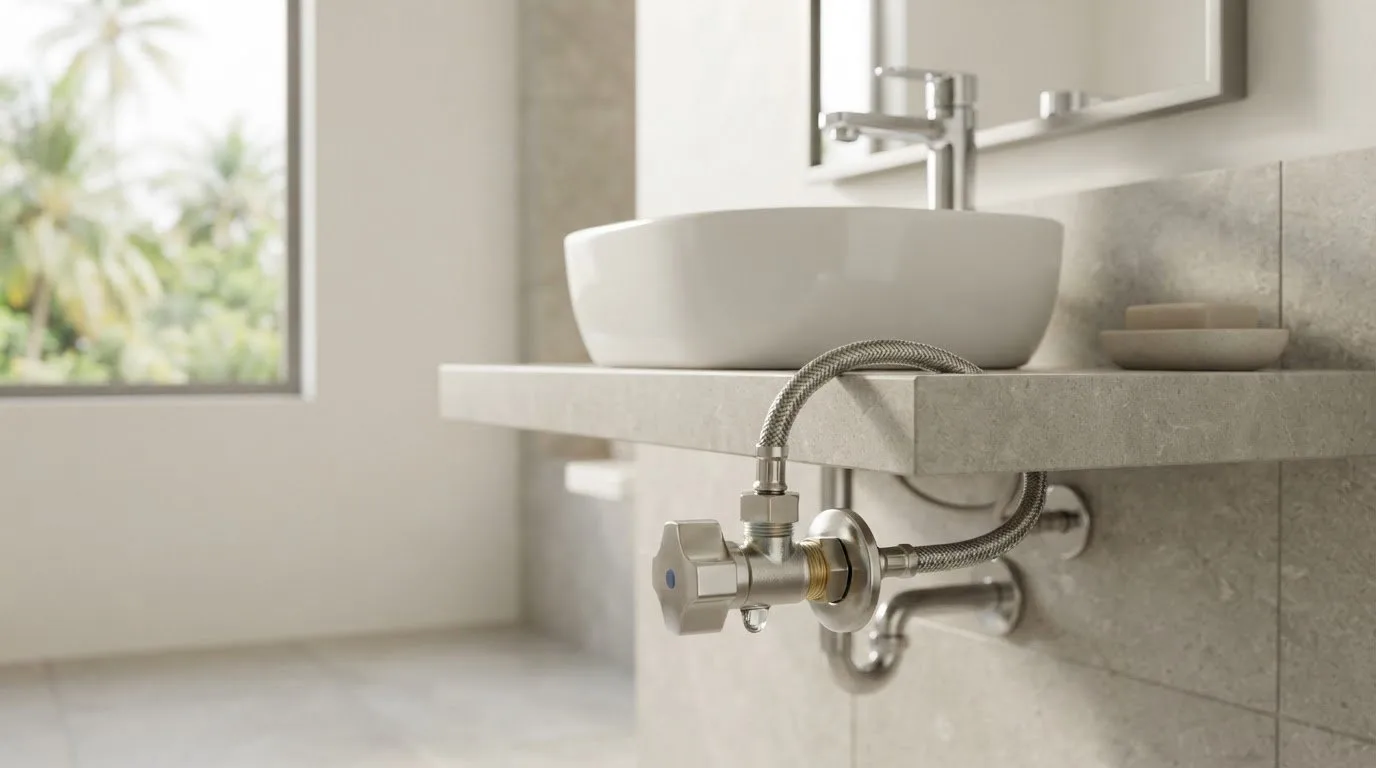
A small leak beneath the basin or beside the toilet can quickly raise a practical question: which fitting should you turn off? An angle valve controls water to an individual fixture, but choosing a replacement isn’t just about appearance. Its connections need to match your plumbing, and you need to be able to reach it when water must be shut off.
If you’re unsure what the valve controls or whether a replacement will fit, you’re not alone. The shape and connection details can be confusing, especially when you’re comparing options for a bathroom setup.
This guide explains how an angle valve works and what to check before choosing one for your home in Malaysia. You’ll learn how to identify the fixture it serves, compare connection details, check available space, and consider the shutoff you need. We’ll also cover when to ask a qualified plumber to assess the setup, so you can avoid guesswork before buying or arranging work.
Key Takeaways
- An angle valve lets you control water to one fixture without shutting off supply to the whole home, depending on the plumbing layout.
- Check the inlet and outlet connections against your existing pipework and fixture before choosing a replacement.
- Compare the valve’s size and shape with the available space, and make sure you can reach its handle easily.
- Installation and leak checks depend on the plumbing and valve design. Ask a qualified plumber to assess anything you’re unsure about.
Angle Valve: Uses in Malaysian Homes
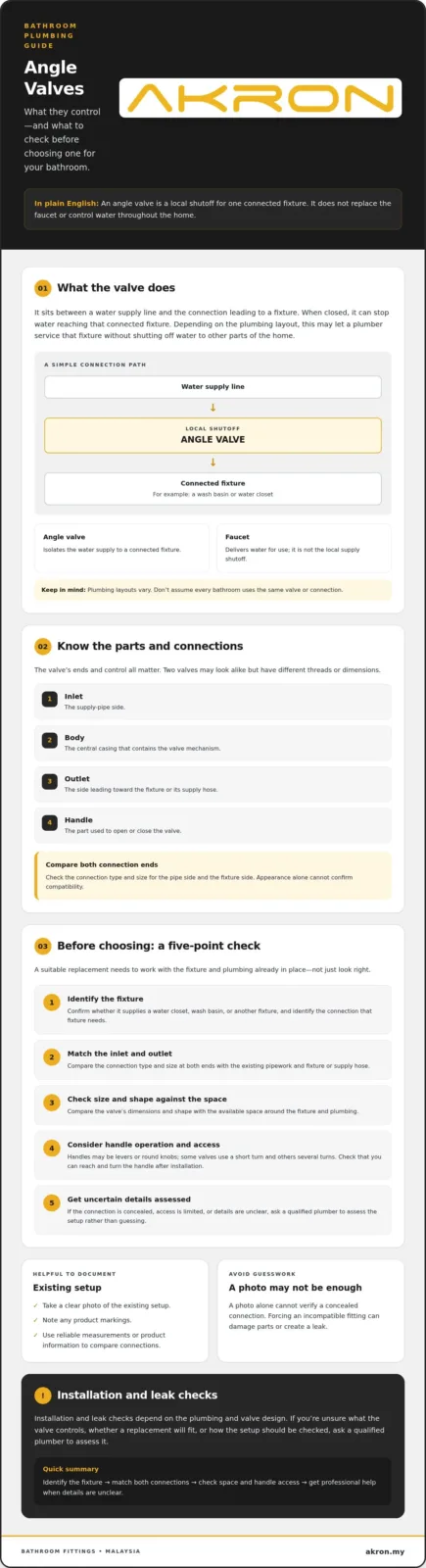
An angle valve controls water flow to an individual fixture. It typically sits between a water supply line and the connection leading to a fixture, providing a local shutoff point. The exact arrangement depends on the home’s plumbing, so don’t assume every bathroom uses the same valve or connection.
Its job is different from a faucet’s. The valve isolates the water supply; the faucet delivers water for use. For a general overview of how stopcock valves start or stop flow, see the stopcock section of Wikipedia’s valve article.
How an angle valve controls water to a fixture
Turn the valve to its closed position, and it can stop water reaching the connected fixture. Depending on the plumbing layout, this may let a plumber service that fixture without shutting off water to other parts of the home. For example, a valve supplying a wash basin may allow its water feed to be isolated while the basin faucet is checked.
In plain English, an angle valve is a local switch for stopping water to one connected fixture. It doesn’t replace the faucet or control water throughout the home.
Common bathroom locations for an angle valve
You may find a valve near the water supply connection for a water closet or wash basin. Its position varies. It could be visible beside the fixture or tucked into a harder-to-reach space. Check whether you can locate and reach it comfortably. A valve blocked by a fixture or stored items may be difficult to operate when you need to shut off the water.
When planning a toilet upgrade, consider how the water closet’s supply connection relates to the existing plumbing. The water closet selection guide can help you think through fixture choice as part of a bathroom update.
Before replacing or selecting a valve, compare the existing connections with the new fixture’s requirements. Connection styles and sizes can differ even when valves look similar. If the pipework is concealed, access is limited, or you can’t identify the connection confidently, ask a qualified plumber to assess it before you buy or arrange installation.
Angle Valve Parts, Connections, and Shutoff Types Explained
Knowing the parts makes it easier to compare options and spot a mismatch before purchase. The body is the main casing that holds the shutoff mechanism. The inlet connects to the water supply, while the outlet leads toward the fixture. The handle is the part you operate to open or close the valve.
Simple connection guide
- Inlet: Supply-pipe side.
- Body: Central section containing the valve mechanism.
- Outlet: Fixture-connection side.
- Handle: The control used to operate the shutoff.
Which connection details should you check?
Identify both ends of the existing setup: the connection from the pipe and the connection to the fixture or its supply hose. Check the stated connection type and size for each side. Two valves can look alike but use different threads or dimensions, so appearance alone can’t confirm compatibility.
Before buying, compare the product specifications with the existing valve and plumbing details. If needed, ask a qualified plumbing professional to confirm measurements. Take a clear photo of the existing setup and note any product markings, but don’t rely on a photo alone to verify a concealed connection. If the details are difficult to identify, ask for help rather than guessing. Forcing an incompatible fitting can damage parts or create a leak.
How handles and shutoff operation differ
Handles come in different styles, such as a lever or a round knob. Some valves operate with a short turn, while others require several turns. These are examples of operating styles, not a promise of better performance. Check the product information to understand how its handle works, then consider whether there’s enough room to reach and turn it after installation.
Before purchase, match the inlet, outlet, connection size, operating style, and available handle access. This check helps narrow your options without relying on appearance alone.
If you’re planning a wider bathroom update, you can also browse Akron’s bathroom fixtures to explore its water closets, wash basins, faucets, and showers.
How to Choose an Angle Valve for Your Malaysian Bathroom
A suitable replacement must work with the fixture and plumbing already in place. Use this five-step check before buying. Don’t choose by finish or appearance alone.
A five-step compatibility check
- Identify the fixture. Confirm whether the valve will supply a water closet, wash basin, or another fixture. Identify the connection the fixture needs.
- Check the existing connection. Look for product documentation or reliable measurements for both ends. If the details are unclear, ask a qualified plumbing professional to assess them.
- Measure the available space. Consider how the valve will sit beside the fixture and whether nearby surfaces or fittings could obstruct it.
- Confirm access. Make sure the handle will remain reachable and can be operated once the fixture is in place.
- Consider shutoff needs. Think about which supply you need to isolate and whether the valve’s operating style suits the space and your needs.
Compare the candidate valve’s specifications with the current valve or plumbing measurements confirmed by a professional. If you’re updating a fixture at the same time, check that its supply connection is compatible too. Requirements can depend on the installation, so verify any applicable Malaysian plumbing requirements with a qualified professional or relevant authority rather than assuming one rule fits every home.
When to ask a plumber before choosing
Get a professional assessment if the connection is concealed, damaged, hard to reach, or difficult to identify. Don’t force a fitting that seems mismatched, and don’t rely on a visual comparison to confirm size or thread type. A wrong choice can lead to leaks or make the fixture difficult to service.
If you’re also planning a fixture update, explore Akron’s bathroom fixture range as you consider the rest of your bathroom setup.
Angle Valve Installation, Leak Checks, and Maintenance: What to Know
Fitting a replacement isn’t a one-size-fits-all task. The right approach depends on the existing pipework, the valve design, and how the connections are made. Before work begins, confirm that the water supply can be safely isolated and that the replacement matches the verified pipe and fixture connections. If you can’t identify the correct isolation point, pause and ask a qualified plumber to assess the setup.
What to confirm before an angle valve is fitted
Share the valve details and any available measurements with the person carrying out the work. A qualified plumber can assess whether the chosen model suits the existing connections and whether the supply can be shut off safely. Don’t treat a valve’s appearance as proof that it will fit. If the plumbing is concealed, damaged, or unfamiliar, professional assessment can help prevent a poor fit and unnecessary disruption.
Installation steps vary. Follow the product’s instructions and the plumber’s advice for that specific setup rather than copying a procedure intended for another valve. Avoid attempting work if you’re unsure how to isolate the supply or safely reconnect the fixture.
How to spot a leak and know when to get help
After the work is complete and the water supply is restored, look closely around the valve and connected joints. Check for visible drips, dampness, or moisture that reappears after the area has been dried. A visual check can help you notice a problem early, but don’t overtighten a connection or dismantle a valve you don’t understand. Either action could make the issue worse.
If leakage continues, the valve won’t shut off, or you’re uncertain about what you see, contact a qualified plumber. Keep the area accessible so it can be inspected, and explain what you noticed and when it started. Don’t assume a small, persistent drip will resolve on its own.
Your next steps are straightforward: verify the connections, confirm safe isolation, and arrange a professional assessment if anything is unclear. Once the valve is fitted, check the surrounding joints visually and seek help promptly if a leak persists. These checks can help you avoid guesswork when maintaining your bathroom setup.
Make Your Bathroom Choices with Confidence
A dependable bathroom setup starts with understanding what each fitting does. An angle valve provides a local water shutoff, but the right choice depends on matching its connections to your plumbing, allowing room to operate the handle, and keeping it accessible. Before work begins, confirm that the supply can be safely isolated. If connections are unclear or a leak persists, ask a qualified plumber to assess the setup.
Use the details from this guide to check your existing plumbing before choosing a replacement. That preparation can help you avoid a poor fit and make future maintenance easier.
If you’re planning a broader bathroom update, Akron offers water closets, wash basins, faucets, and showers. Products are available through direct inquiries and a nationwide dealer network. Explore Akron’s bathroom fixtures and take the next step in planning your bathroom update.
Frequently Asked Questions
What does an angle valve do?
An angle valve controls water flow to one connected fixture, such as a wash basin or water closet. Closing it can isolate that fixture’s water supply for inspection or servicing, depending on the home’s plumbing layout. It doesn’t deliver water like a faucet does. Think of the valve as a local shutoff point between the supply line and the fixture connection.
Where is an angle valve usually installed?
It’s usually fitted between a water supply line and the connection serving a fixture. In a bathroom, you may find one near a water closet or wash basin, though the exact location depends on the plumbing and fixture layout. Check whether the handle is visible and reachable. If the valve is concealed or difficult to access, ask a qualified plumber to identify it.
Are all angle valves the same size?
No. Connection sizes and types can differ between valves and plumbing setups. Two valves may look similar but have different threads or dimensions, so don’t choose a replacement by appearance alone. Compare the product specifications with the existing valve or confirmed measurements for both the pipe-side and fixture-side connections. If you can’t confirm them, ask a qualified plumbing professional before buying.
Can I install an angle valve myself?
That depends on your plumbing experience and the installation. The work requires safely isolating the water supply and matching the valve to the existing connections. Installation steps also vary with the valve design and pipework. If you can’t identify the isolation point, the connections are unclear, or the work involves concealed or damaged plumbing, have a qualified plumber assess and carry out the job.
How do I know if an angle valve is leaking?
Look for visible drips or moisture around the valve body and the connected joints. You can dry the area, then check whether dampness returns while the fixture is in use. If water continues to appear, the valve won’t shut off, or you can’t tell where the moisture comes from, contact a qualified plumber. Don’t overtighten connections or dismantle a valve you’re unfamiliar with.
Should I replace an angle valve when replacing a water closet?
Not automatically. Check whether the existing valve is damaged, leaking, difficult to operate, or unable to shut off the supply. Also confirm that its connection suits the replacement water closet and that it remains accessible once the fixture is fitted. If you’re unsure about its condition or compatibility, ask a qualified plumber to inspect it before deciding whether it should be replaced.