The luxe choice isn’t always the smart rental choice. For durable bathroom fixtures for a rental property, make standardized, replaceable pieces the foundation, then add upscale touches where they won’t make future repairs harder. Safety and accessibility features deserve priority when they make the bathroom more comfortable and usable.
It makes sense to want a bathroom that looks polished and holds up to regular use. The key is balancing appearance with practical details: how easily a fixture can be replaced, how simple it is to maintain, and whether it suits the people using the space.
This guide compares practical fixture choices with style-focused upgrades, then covers design considerations for comfort and everyday use. Use the criteria to weigh durability, maintenance, accessibility, and appearance before deciding what belongs in your rental bathroom.
Key Takeaways
- Choose standardized fixtures with replaceable parts to make future repairs more straightforward.
- Give safety and accessibility features practical weight alongside appearance, especially where they support comfortable everyday use.
- Compare bathroom materials by how they handle moisture, corrosion, mould and hard-water marks in local conditions.
- Assess toilet options for repairable components and water use, not style alone.
- Use coordinated bathroom accessories and core fixtures to create a rental bathroom that feels polished and practical.
1. Robust, standardized fixtures and replacement parts
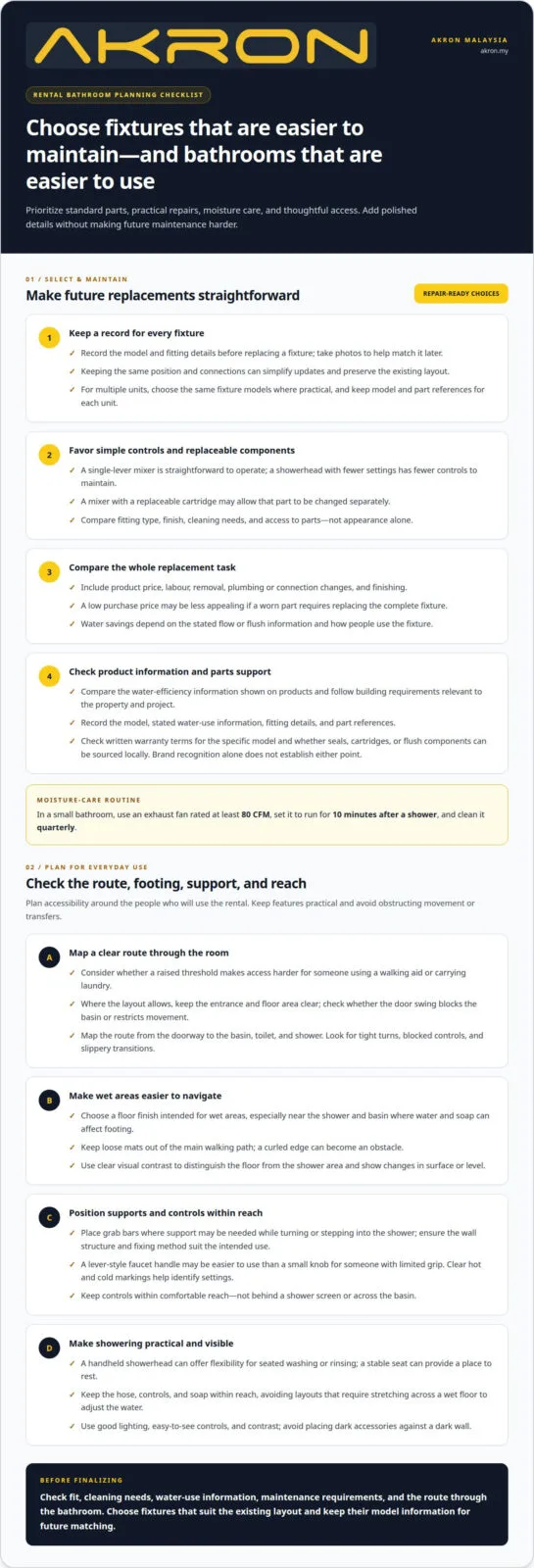
Choosing durable bathroom fixtures for a rental property starts with the room’s layout and existing connections. Before replacing a fixture, record its model and fitting details, and take photos to help match the replacement. Keeping the same position and connections can simplify updates and preserve the existing layout. For multiple units, choosing the same fixture models can also make future replacements easier to match.
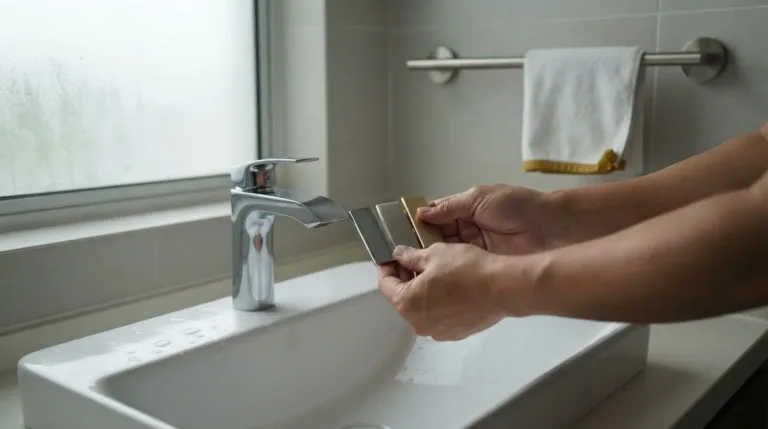
For taps, showerheads, and mixers, favour simple controls and replaceable components. A single-lever mixer is straightforward to operate, while a showerhead with fewer settings has fewer controls to maintain. A mixer with a replaceable cartridge may allow that component to be changed separately. Compare the fitting type, finish, cleaning needs, and parts access, rather than choosing by appearance alone.
Balance upfront cost against likely maintenance by considering the full replacement task. A low purchase price can become less appealing if a worn part requires a complete fixture replacement. Include the cost of labour, removal, connection changes, and finishing in the comparison. Water savings also depend on the fixture’s stated flow or flush information and how people use it. The best choice fits the bathroom and remains practical to service.
For Malaysian water-efficiency labels, compare the information displayed on each product and apply building requirements relevant to the property and project. Don’t assume one label replaces project-specific requirements. A useful selection record should include the model, its stated water-use information, and the fitting details. This makes future replacements easier to match without relying on memory.
Installation costs depend on the fixture and the work involved. Replacing a faucet in its existing position is different from changing pipe connections or altering the basin. Compare removal, labour, plumbing changes, and finishing alongside the product price, since the total task varies from one rental bathroom to another.
Warranty length and local replacement-part access both matter. Compare the written warranty terms for the specific model, then consider whether parts such as seals, cartridges, or flush components can be sourced locally. Brand recognition alone doesn’t establish either point. A clear model reference and parts list can make later maintenance easier. For durable bathroom fixtures for rental property, documented support and replaceable components are useful selection criteria.
Standardization works best when the bathroom has simple maintenance needs. Keep a record of fixture models and part references for each unit. In a small bathroom, moisture management also protects fittings and finishes. Use an exhaust fan rated at least 80 CFM, set it to run for 10 minutes after a shower, and clean it quarterly. Those steps help limit lingering moisture around fixtures.
Before deciding, compare fit, cleaning needs, water-use information, and maintenance requirements. Durable bathroom fixtures for a rental property should suit the existing layout and make routine upkeep manageable. Keep the model information so you can identify a matching replacement if needed.
2. Safety and accessibility features
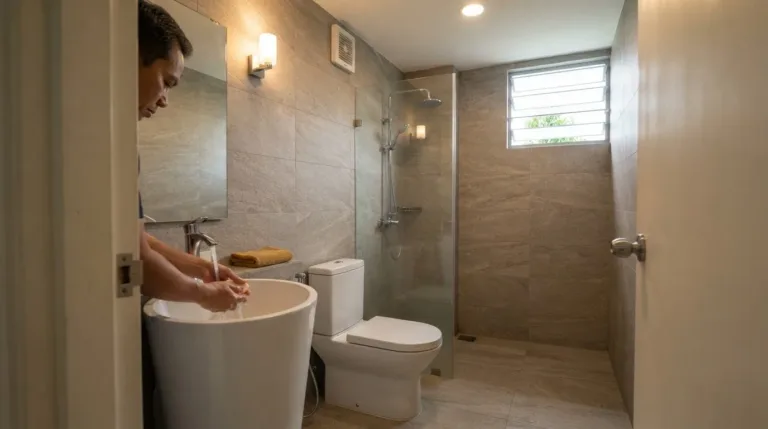
Start with the route into the bathroom. A raised threshold can make access harder for someone using a walking aid or carrying laundry. Where the layout allows, keep the entrance and floor area clear. Also consider whether the door swing blocks the basin or restricts movement.
Pay attention to the floor near the shower and basin, where water and soap can make footing less secure. Choose a floor finish intended for wet areas and keep loose mats out of the main walking path. A mat with a curled edge can create an obstacle instead of helping.
Grab bars can support a more accessible layout, but their position and installation matter. Place them where someone may need support while turning or stepping into the shower. The wall structure and fixing method should suit the intended use.
Choose controls that are easy to see and operate. A lever-style faucet handle may be easier to use than a small knob for someone with limited grip. Clear hot and cold markings can help users identify settings. Keep controls within comfortable reach, rather than behind a shower screen or across the basin.
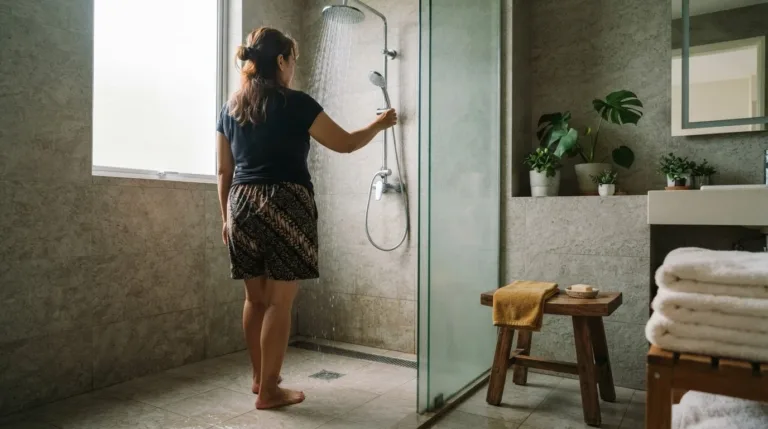
Consider shower access as a whole. A handheld showerhead can offer flexibility for seated washing or rinsing, while a stable seat can provide a place to rest. Keep the hose, controls, and soap within reach, and avoid layouts that require someone to stretch across a wet floor to adjust the water.
Good lighting and clear contrast can make bathroom features easier to locate. A visible distinction between the floor and shower area can help show changes in surface or level. Choose easy-to-see controls and avoid placing dark accessories against a dark wall. Clear design can help guests unfamiliar with the room use it more easily.
Plan accessibility around the people who will use the rental. A family bathroom may benefit from clear floor space and a handheld showerhead. A bathroom intended for older guests may need carefully positioned grab bars. Keep the layout practical and avoid features that obstruct movement or transfers.
Before finalizing the layout, map the route from the doorway to the basin, toilet, and shower. Look for tight turns, blocked controls, and slippery transitions. Then choose suitable fixtures and bathroom accessories for the room’s intended use. A thoughtful arrangement can make a rental bathroom easier to use while keeping it polished.
3. What materials resist corrosion, mould and hard-water stains in Malaysian bathrooms?
Material choice matters in a bathroom exposed to frequent moisture. For taps and shower fittings, consider stainless steel or brass bodies with a durable surface finish. These materials are practical choices, but construction and finish quality still matter. Inspect joints, edges, and exposed fasteners, where water can linger and marks may collect. A smooth finish is generally easier to wipe than a deeply textured one.
Different finishes can give water marks a different appearance, so choose one that suits your preferences and care routine. Both need regular care. Wipe faucets with a soft cloth and clean around the base where it meets the basin. Avoid harsh abrasives that may scratch a surface, and follow the manufacturer’s cleaning instructions.
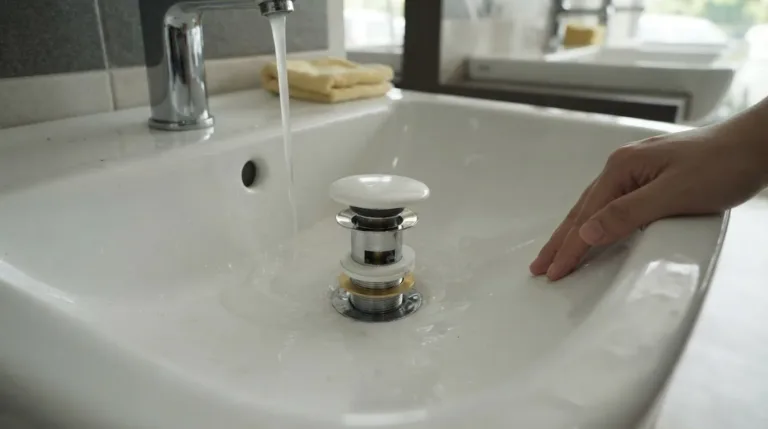
For basins and Water Closets, glazed ceramic and porcelain are common options with smooth surfaces that are straightforward to clean. Check around basin edges and the Water Closet bowl for chips or damage. Simple shapes with fewer narrow grooves can leave fewer places for residue to collect during routine cleaning.
On floors and walls, select tiles intended for wet bathroom use. A textured floor can offer more grip, while glossy wall tiles are easy to wipe. Grout needs attention because it can collect soap residue and moisture. Inspect bathroom grout periodically and reseal it when needed. Replace cracked or missing grout promptly, since gaps allow water to reach the surface beneath the tile.
Sealant also protects joints around a basin, shower, and bathtub. Check the caulk for cracking, peeling, or dark spots. Replace bathroom caulk every 24 months. Remove old sealant before applying a fresh bead, and allow it to cure as directed. A neat, continuous seal helps limit water entering gaps around fixtures.
Water marks can appear where droplets dry on faucets, glass, and tile. Wipe these areas with a soft cloth before deposits build up, and use a cleaner suitable for each surface. Some acidic products may damage stone or metal finishes. Follow the care guidance for each material, especially when cleaning near natural stone.
Keep rental-bathroom maintenance straightforward. Pair smooth surfaces with accessible joints and maintain sealant as needed. Choose finishes that suit the cleaning routine instead of relying on a coating to prevent every mark. Regularly inspect grout, caulk, faucet bases, and basin surfaces to spot wear early.
4. Which toilet models are reliable, water-efficient and easy to repair?
For a rental, choose a toilet configuration that suits the existing bathroom and can be maintained practically. In a close-coupled model, the cistern sits directly on the bowl. A wall-hung design can create a cleaner look, but its concealed cistern may make repairs more involved. The right option depends on the layout and access to components.
Compare one-piece and two-piece designs by maintenance needs. A one-piece toilet has fewer joins between cistern and bowl, while a two-piece model separates those components. With a two-piece unit, a damaged cistern or bowl may be replaceable separately, depending on compatibility. Look for clear part references for items such as the flush valve, fill valve, and seals.
Water efficiency is best assessed through the model’s stated flush volume and performance information. Compare those details across toilets rather than relying on terms such as “eco” alone. A dual-flush model offers separate flush options, but its value depends on clear controls and users choosing the appropriate setting. Keep the flush mechanism simple enough for tenants to understand.
Fit affects both reliability and repair work. Before selecting a replacement, identify the existing outlet position, water inlet location, and available floor space. For example, a toilet with a different outlet arrangement may require plumbing changes. Matching the existing connections can make replacement more straightforward and help preserve the bathroom layout.
Check whether the cistern components can be accessed and adjusted straightforwardly. A mechanism reached through the cistern lid may be easier to inspect than one that requires removing surrounding finishes. Make sure the flush control and lid are easy to operate, and keep the model information with the property’s maintenance records.
For a shared or frequently used rental, consider a glazed bowl with a simple shape, as fewer tight curves and decorative grooves can make cleaning easier. A close-coupled toilet with a familiar flush mechanism may suit a home where straightforward access and operation matter. A concealed cistern can suit a renovation where appearance is a priority and service access is planned.
Before purchase, compare connection compatibility, stated flush information, access to components, and cleaning needs. Don’t choose on appearance alone. A compact, familiar model can work well where space is limited, while a more refined design can also be practical if maintenance access remains clear.
Choose a Water Closet that fits the room and its maintenance needs. Prioritize accessible components and a configuration that works with the existing plumbing.
Akron Malaysia: Bathroom Accessories
Akron Malaysia offers bathroom fixtures for rental updates, including Water Closets, Wash Basins, Faucets, Showers, and Bathroom Accessories. Compare options based on the room’s layout, everyday use, and ease of upkeep. The range is designed to combine affordability, quality, style, and durability.
For example, pair a Wash Basin and Faucet with Bathroom Accessories that help create a tidy, functional space. If you are replacing a toilet, compare Water Closet options with the existing bathroom layout. Akron Malaysia products are available through direct purchase and a network of local dealers across Malaysia.
To discuss bathroom fixture options for your rental, contact Akron Malaysia.
Make your next fixture choice with confidence
A rental bathroom can feel welcoming without making upkeep complicated. As you plan an update, consider how each choice will serve the people using the space and fit your longer-term property plans. Durable bathroom fixtures for a rental property should support a comfortable, practical room while leaving room for your preferred style.
Explore Akron Malaysia’s Water Closets, Wash Basins, Faucets, Showers, and Bathroom Accessories to find options that suit your layout and priorities. Choose the pieces that make sense for your property and create a bathroom that feels considered and practical.
Have a fixture choice in mind, or still weighing options? Contact Akron Malaysia to discuss your bathroom fixture options and take the next step toward a rental bathroom that works for you.
Frequently Asked Questions
How do pragmatic picks compare to luxe features?
Practical fixtures make upkeep easier, while style-focused details can enhance appearance and comfort. For a rental, choose upgrades that won’t complicate cleaning or maintenance. A refined finish can elevate a room, while a more complex control system may require extra attention. Keep frequently used fixtures simple and practical to care for.
What maintenance routine helps keep bathroom fixtures lasting longer?
Include a regular inspection in your cleaning routine. Look beneath the basin and around the toilet base for dampness, and notice whether faucets drip or handles feel loose. Clear hair from the shower drain before water backs up, and clean faucet aerators if the flow becomes uneven. Use a soft cloth and a suitable cleaner, and record recurring issues so they are easier to track.
What are the top benefits of a hard-wearing bathroom?
A hard-wearing bathroom can help keep a rental presentable through regular use. Fixtures that are practical to maintain can make it easier to address wear without changing the whole room. Smooth surfaces also help keep routine cleaning manageable. For example, a smooth basin and straightforward faucet are easier to wipe than designs with narrow grooves or hard-to-reach edges.
Why prioritize lasting solutions in 2026?
In 2026, plan bathroom choices around the property’s expected use, not just its immediate appearance. A rental may see different occupants with different cleaning habits, so straightforward controls and replaceable components can make upkeep more predictable. Lasting choices also help avoid repeated redesigns whenever one part wears out. Match the investment to the room, and reserve decorative upgrades for areas that won’t hinder access or maintenance.
Which bathroom fixtures are most durable for rental properties in Malaysia?
Choose fixtures with smooth, cleanable surfaces and parts that can be serviced or replaced. A glazed Water Closet and Wash Basin are practical examples, while a Faucet with accessible internal components can simplify upkeep. In Malaysia’s humid conditions, also consider how quickly surfaces dry and whether joints are easy to inspect. The room’s layout, plumbing connections, and cleaning routine should guide the final selection.
What installation and maintenance steps help prevent leaks, clogs, and fixture damage?
During installation, match the fixture to existing connections and follow its manufacturer’s instructions. Avoid forcing fittings or overtightening joints, which can damage components. After fitting, run water and inspect visible connections for seepage. For ongoing care, keep hair and debris out of drains, avoid flushing wipes, and use cleaners suited to each surface. If a leak appears, stop using the affected fixture and address the source promptly.