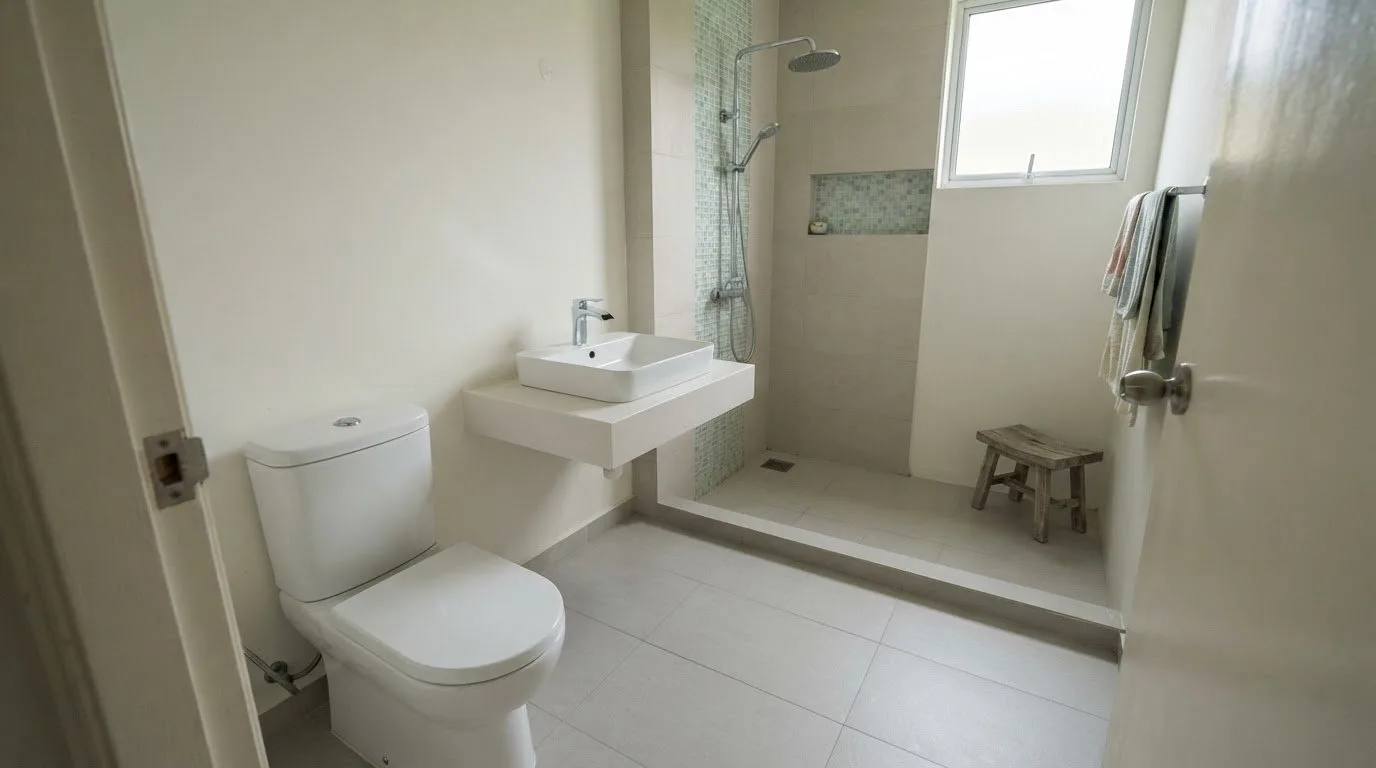
A greener bathroom doesn’t have to look plain. For eco-friendly bathroom products in Malaysia, start with water-saving fixtures and durable, thoughtfully chosen materials. High-efficiency toilets use less than one gallon of water per flush, while bamboo and recycled glass can bring a natural touch to everyday accessories.
It makes sense to want products that feel good to use and look right at home, without treating style and sustainability as a trade-off. This guide will help you explore chic product options, materials, water-saving faucets and showers, and ways to shop in Malaysia. You’ll also get practical ideas for choosing pieces that suit your space and your routine.
Key Takeaways
- Compare low-flow and dual-flush toilet designs to find an option that suits your bathroom and everyday needs.
- Choose materials and accessories for both their look and care needs, so your greener design stays practical over time.
- Look for flow-control features on faucets and showers, and consider how your daily water habits shape your choices.
- Explore shopping options in Malaysia, including direct purchase and local dealers, when planning your bathroom refresh.
- Use Akron Malaysia’s bathroom accessories, water closets, wash basins and faucets as options to consider for a coordinated space.
1. What Are Chic Eco-Friendly Brands In Malaysia?
Chic, environmentally thoughtful choices start with the products you use every day. In Malaysia, look beyond a brand’s green messaging and compare the toilet, toiletries, and taps by their practical features. For a useful starting point, browse a bathroom product range alongside reusable and lower-waste bathroom essentials.
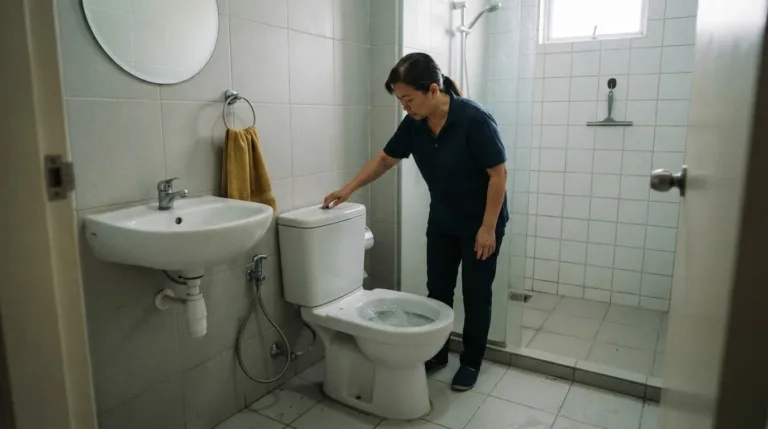
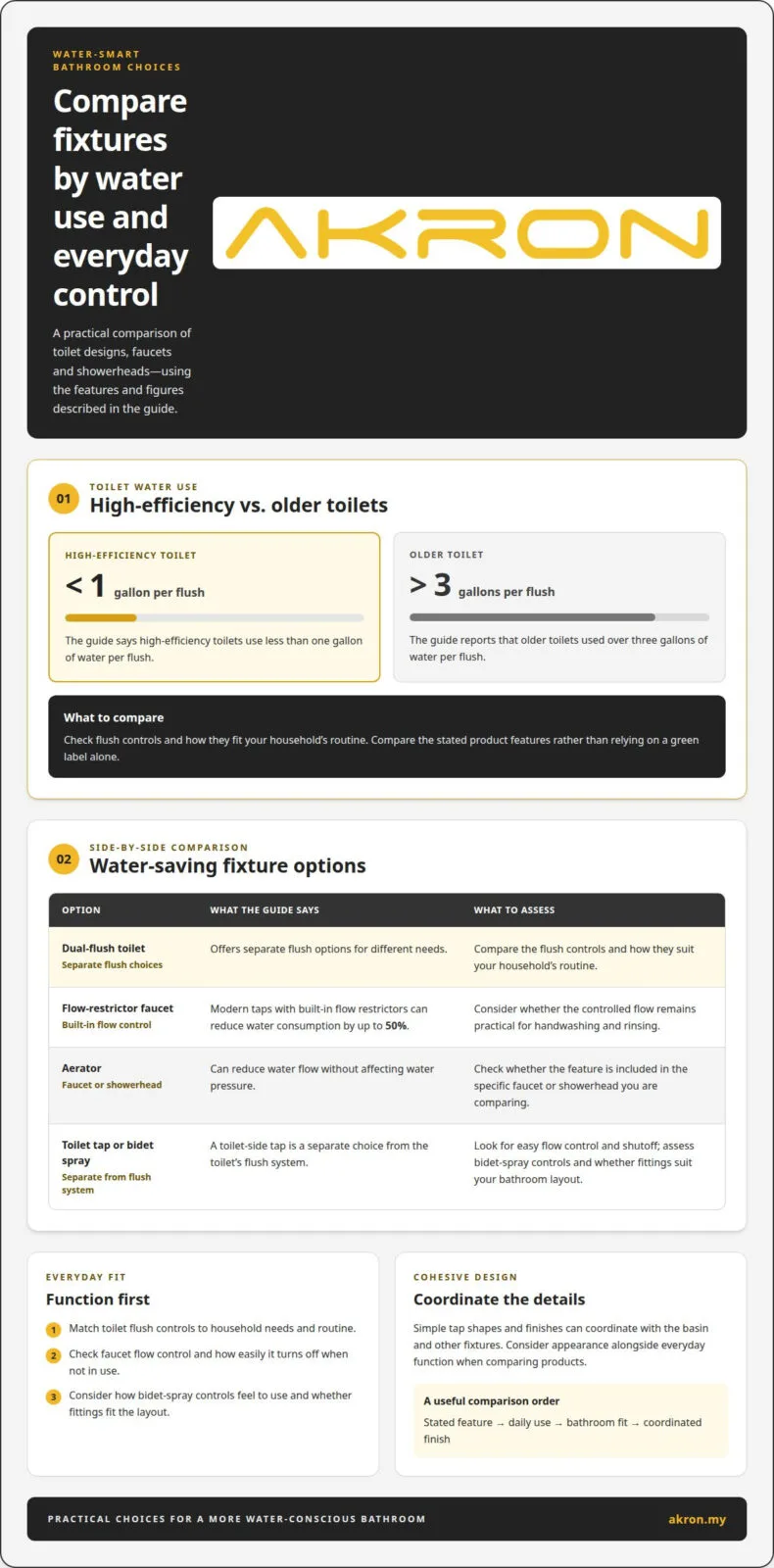
Low-flow and dual-flush toilets are worth considering for water saving. A high-efficiency toilet uses less than one gallon of water per flush, while older toilets used over 3 gallons per flush. Dual-flush designs offer separate flush options for different needs. Compare the flush controls and how they fit your household’s routine, rather than relying on a green label alone. A Water Closet is one of the key fixtures to assess when planning a more efficient bathroom.
Water-saving toilet taps can also make daily routines more deliberate. Consider the tap or faucet beside the toilet as a separate choice from the toilet’s flush system. Look for a design that makes it easy to control water flow and turn it off when not in use. For a bidet spray, consider how its controls feel to use and whether the fittings suit your bathroom layout. A tap’s appearance matters, too: simple shapes and finishes can coordinate with the basin and other fixtures.
Hotel toiletries offer a practical example of reducing packaging waste. Refillable dispensers can replace individually packaged shampoo and body wash in guest bathrooms, while compact formats may suit travel. Biodegradable toiletries may also be an option, but read the packaging carefully. “Biodegradable” describes a disposal-related claim, so follow the product’s stated disposal guidance rather than assuming it belongs in household compost or down the drain.
What should Malaysian consumers check for when choosing non-toxic bathroom products? Read ingredient and material labels, and look for clear product information rather than relying on broad claims such as “natural.” The European Union says environmental labels can help consumers identify cleaning products that restrict or ban substances harmful to health and the environment. That guidance concerns cleaning products, so assess toiletries through their own ingredient and label information.
For a cohesive look, pair practical choices with a clear style direction. Coordinate taps and refillable dispensers with the toilet, then choose accessories that are easy to clean. When comparing eco-friendly bathroom products in Malaysia, assess each product’s stated features, everyday function, and disposal guidance. This makes it easier to choose items that suit your bathroom and your habits.
2. Sustainable materials and smart bathroom design
A more considered bathroom combines useful design with materials chosen for the way you live. Start with everyday items such as soap dispensers, toothbrush holders, and bath trays. Bamboo holders and recycled-glass dispensers are examples of alternatives to consider, while wooden trays and stone dispensers can add natural texture without changing the room’s layout.
Material choice affects care and use. Bamboo products should be dried after washing and kept in a clean, dry place with good airflow, which helps reduce mould risk in Malaysia’s humid conditions. Recycled plastic reuses existing material, while conventional plastic does not include recycled content by definition. Compare each item’s construction, cleaning needs, expected use, and disposal guidance.
Bamboo, recycled plastic, and conventional plastic differ in sourcing and care. Bamboo is plant-based, but needs airflow and drying to reduce mould risk. Recycled plastic reuses existing material, while conventional plastic does not contain recycled content by definition. How long an item lasts depends on its construction and bathroom conditions, so assess the specific product rather than assuming one material always lasts longer.
Smart design can reduce clutter and help a bathroom work better. Pair a wall-mounted soap dispenser with a neat storage area, or use floating shelves to keep everyday items accessible. Sensor-activated faucets are another technology-integrated example. For forest-based materials, FSC certification promotes responsible forest management through eco-labelling. Look for clear material information and consider whether each feature serves a real daily need.
Sustainable dry amenities sets can suit guest bathrooms, travel, or hospitality spaces. A set might group dry essentials such as a toothbrush, comb, or reusable grooming item. Choose only the pieces people will use, and favour reusable items where practical. For disposable components, read the material and disposal instructions. A compact set with fewer, useful items can avoid unnecessary packaging and unused products.
Clear information about materials, care, and packaging makes product comparisons easier. Look for specific details, such as recycled content or a stated certification, rather than relying on broad words like “green.” Compare equivalent products by checking dispenser materials, refill formats, cleaning needs, and packaging. For a coordinated look, match the finishes of a soap dispenser, towel rack, and bath tray.
In Malaysia, sustainable bathroom product costs depend on material, construction, design, brand, and whether items are sold individually or as a set. Compare products within the same category, then weigh upfront cost against care needs and replacement frequency. This gives you a more useful comparison than choosing by a “sustainable” label alone.
Build the room around a few purposeful choices, such as a recycled-glass dispenser, an airflow-friendly bamboo holder, and a durable bath tray. Explore bathroom design options as you plan a coordinated space.
3. Water-efficient faucets and showerheads
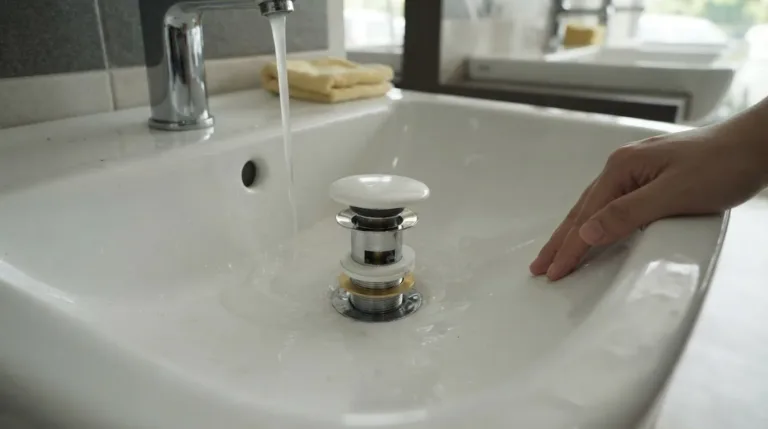
Small fixture choices can shape how much water your bathroom uses. Modern taps with built-in flow restrictors can reduce water consumption by up to 50%. These controls limit flow while keeping a faucet practical for handwashing and rinsing. An aerator is another option for a faucet or showerhead. It can reduce water flow without affecting water pressure, making it useful when replacing a fixture isn’t part of your plan.
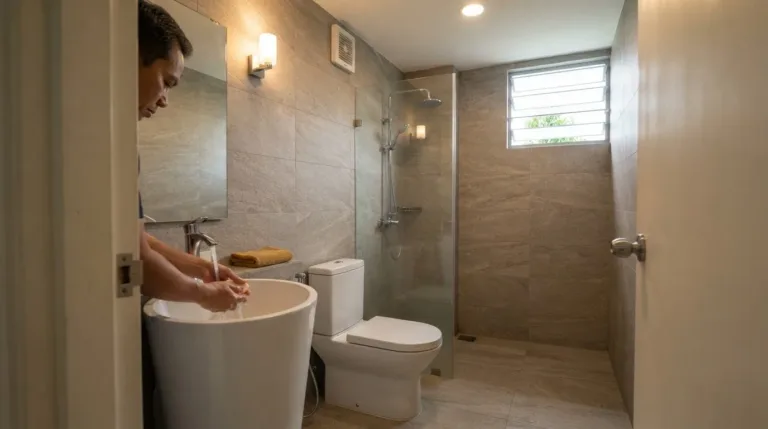
Compare faucets by their control, flow features, and daily purpose. A basin faucet needs to support comfortable handwashing, while a shower fixture should provide a usable rinse. Modern bathroom taps also have controls for adjusting water flow and temperature. Choose settings that are easy to operate, so you can lower the flow when a full stream isn’t needed. Simple controls can make water-saving choices easier to maintain as part of your routine.
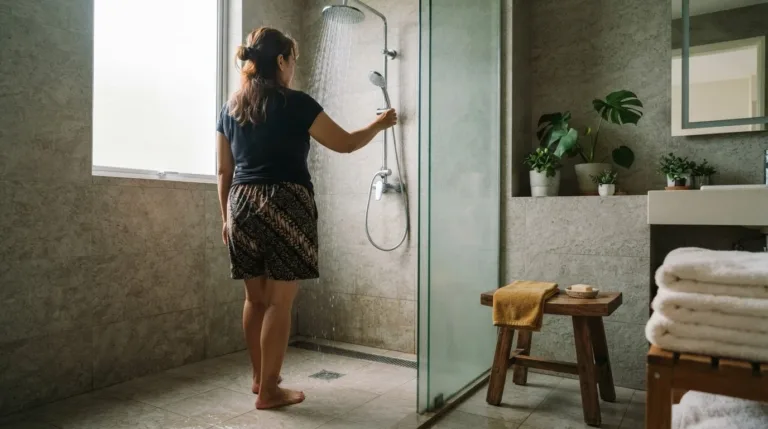
Shower duration matters alongside the fixture. A ten-minute shower uses 25 gallons of water. An efficient showerhead can help manage flow, but your routine still affects total use. Consider whether the spray feels comfortable at a reduced flow. The best choice balances a satisfying rinse with water-conscious use, rather than relying on a product label alone. An aerator or flow restrictor can be part of that assessment.
Water-efficient Orin water closets can be another option to compare when planning a coordinated bathroom. Assess the stated flush performance and the controls that determine how water is used. A water closet, faucet, and shower all serve different tasks, so evaluate their features separately. That makes it easier to select fixtures based on actual use instead of assuming one efficient product offsets higher water use elsewhere.
Water and energy efficiency connect through hot-water use. Nearly one-fifth of home energy is used for water heating. An energy-efficient water heater can support a more thoughtful bathroom plan, while efficient faucets and showerheads can help reduce the hot water drawn during daily routines. Consider the heater and fixtures together: water flow, temperature settings, and how long hot water runs all shape the overall demand.
Before choosing, write down the features that matter to you. Check product information for details such as flow restrictors, aerator compatibility, temperature controls, and shower patterns. Then consider how often each fixture will be used and whether it draws heated water. This helps you assess faucets, showerheads, water closets, and heaters as parts of one bathroom system.
4. Where to find eco-friendly bathroom products in Malaysia
In Malaysia, compare bathroom products through retailers, local dealers, and online catalogues. Use product descriptions to identify materials, stated water-related features, care instructions, and packaging details. If a listing only says “green” or “eco,” look for specific information that explains the claim.
A showroom or dealer can help you assess a product’s finish, size, and feel before choosing. Bring a short list of priorities, such as a faucet with stated flow features, a refillable dispenser, or a bamboo holder. Compare products in the same category and note their care and disposal guidance. This keeps the decision focused on your bathroom’s needs, not attractive wording alone.
Online catalogues are useful for comparing product information and narrowing choices from home. Search by product type, then read the full listing rather than relying on a thumbnail or title. For a shower fixture, review its stated controls and flow features; for an accessory, check its material and cleaning guidance. Compare the details that matter with your bathroom’s space and existing fixtures.
Before buying, record each product’s name, material, stated environmental claim, care needs, and disposal instructions. For example, compare soap dispensers by refill format, construction, and cleaning routine. For a larger fixture, consider how its controls and intended use fit your household. Clear product information helps distinguish a practical choice from packaging that relies on broad claims.
Recycling and take-back options for bathroom packaging and products depend on the material and collection routes available in your area. Sort packaging by material and follow local collection instructions. For take-back, look for a programme with clear details about accepted items, preparation, and drop-off. Don’t assume a product or its packaging is accepted simply because it carries an environmental claim.
Think beyond the initial purchase, too. Choose accessories that fit your routine, and keep their care instructions so they remain usable. For online orders, review the listing’s product details and packaging information before placing an order. A useful final step is to compare suitable fixtures and accessories in a dedicated product catalogue. Explore bathroom product options as you plan your greener space.
Akron Malaysia: Bathroom Accessories
Akron Malaysia offers bathroom accessories, water closets, wash basins, and faucets for homeowners planning a more considered bathroom. Explore these product categories when you’re ready to turn your ideas into a practical selection, whether you’re updating one area or coordinating several elements.
Start with the fixture that matters most to your routine. A water closet shapes everyday water use, while a wash basin and faucet influence how you use the space. Bathroom accessories can help complete the look. Compare each product’s stated features and finish with your priorities, and don’t assume environmental performance without specific product information to support the claim.
For help taking the next step with your bathroom product choices, contact Akron Malaysia.
Make your next bathroom choice count
A greener bathroom can take shape one considered choice at a time. Start with the fixture or detail that matters most to your daily routine, then choose materials and designs that suit your space. When exploring eco-friendly bathroom products in Malaysia, focus on clear product information and practical features that match your priorities.
Akron Malaysia offers water closets, wash basins, and faucets for planning essential parts of your bathroom. Consider how each fixture suits the room and your routine, then build a look that feels comfortable and personal. You don’t need to update everything at once. Begin with one purposeful change and let the rest follow at your pace.
Contact Akron Malaysia for bathroom advice as you plan your next step. Your greener, more welcoming bathroom can start with a choice that feels right for home.
Frequently Asked Questions
What Are Chic Eco-Friendly Brands In Malaysia?
Akron Malaysia is one local bathroom brand to consider for stylish fixtures. Its range includes water closets, wash basins, faucets, showers, and bathroom accessories, with varied styles and colours. Treat style and environmental performance as separate considerations: a coordinated design doesn’t prove a product saves water or uses recycled materials. Compare the individual product’s stated features with your priorities before choosing.
What Are Some Examples Of Eco-Friendly Products?
Options to consider include bathroom fixtures, reusable personal-care items, and accessories made with recycled or plant-based materials. For a practical update, choose a fixture suited to a frequently used bathroom, then consider reusable items for travel or guest use. Check the product’s materials, care instructions, and disposal guidance to decide whether it suits your household and intended use.
What eco-friendly bathroom products are available in Malaysia?
In Malaysia, bathroom product choices include water closets, wash basins, faucets, showers, and bathroom accessories, alongside lower-waste personal-care items. Akron Malaysia offers these fixture and accessory categories. Assess each product’s details rather than assuming every item in a category has the same environmental benefits. Consider its purpose, frequency of use, and the product information supporting its claims.
Which Malaysian brands sell sustainable bathroom products?
Akron Malaysia offers a range of bathroom fixtures and accessories to help you plan a coordinated space. Sustainability depends on the specific product and its stated features, so compare descriptions for relevant material or water-efficiency information. You can purchase Akron products directly or through local dealers across Malaysia.
Where can I buy eco-friendly bathroom products in Malaysia, online and in-store?
You can explore Akron Malaysia’s bathroom range through direct purchase or local dealers across Malaysia. Online product information can help you shortlist suitable categories, while seeing a product in person can help you assess how its appearance fits your space. Keep your priorities in mind, including finish, daily use, and the product features you value.
Which bathroom products in Malaysia are plastic-free, refillable, or made from recycled materials?
Bamboo accessories, recycled-glass dispensers, and refillable containers are options to consider for materials or packaging. Check each product’s construction and description, since a material named in a listing may not describe every component. For refillable containers, consider whether they suit products you regularly buy. Follow disposal guidance for packaging rather than assuming every item belongs in the same recycling stream.