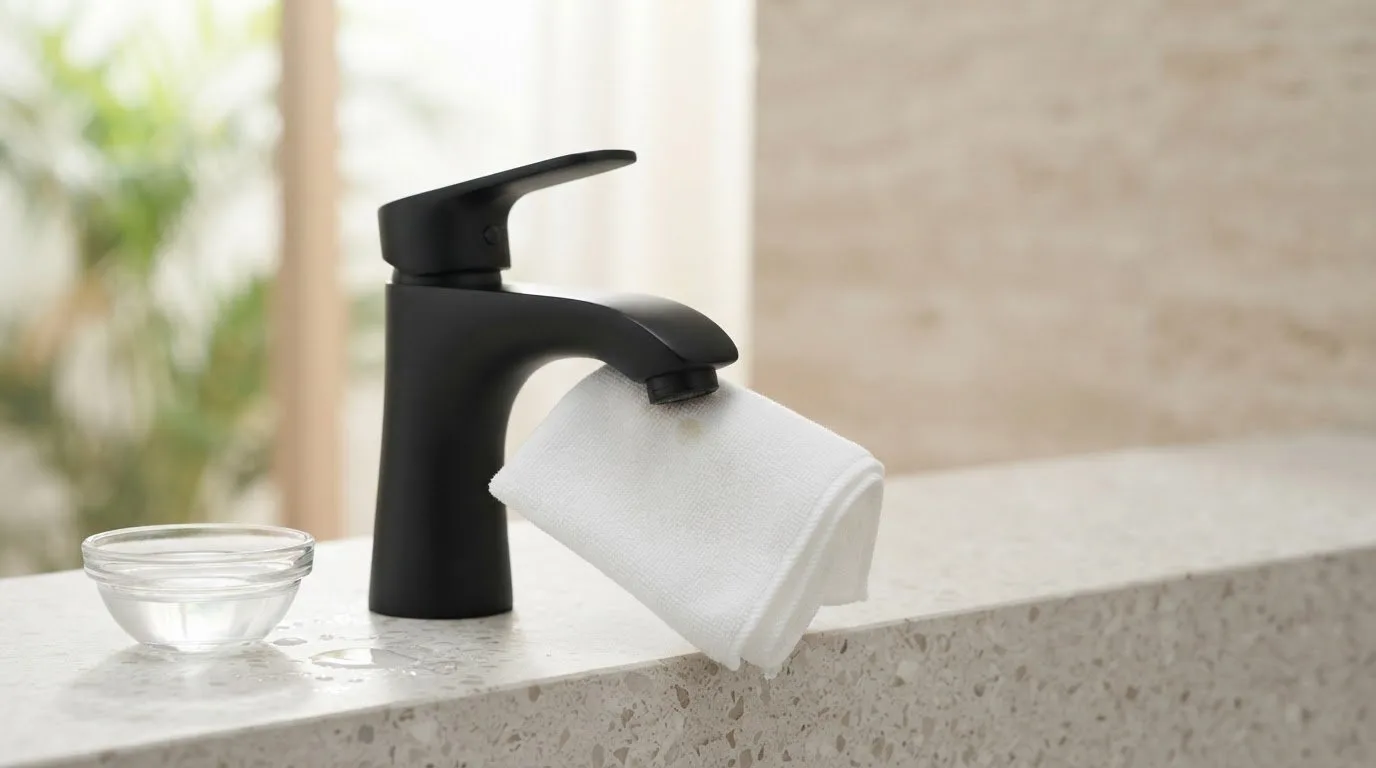
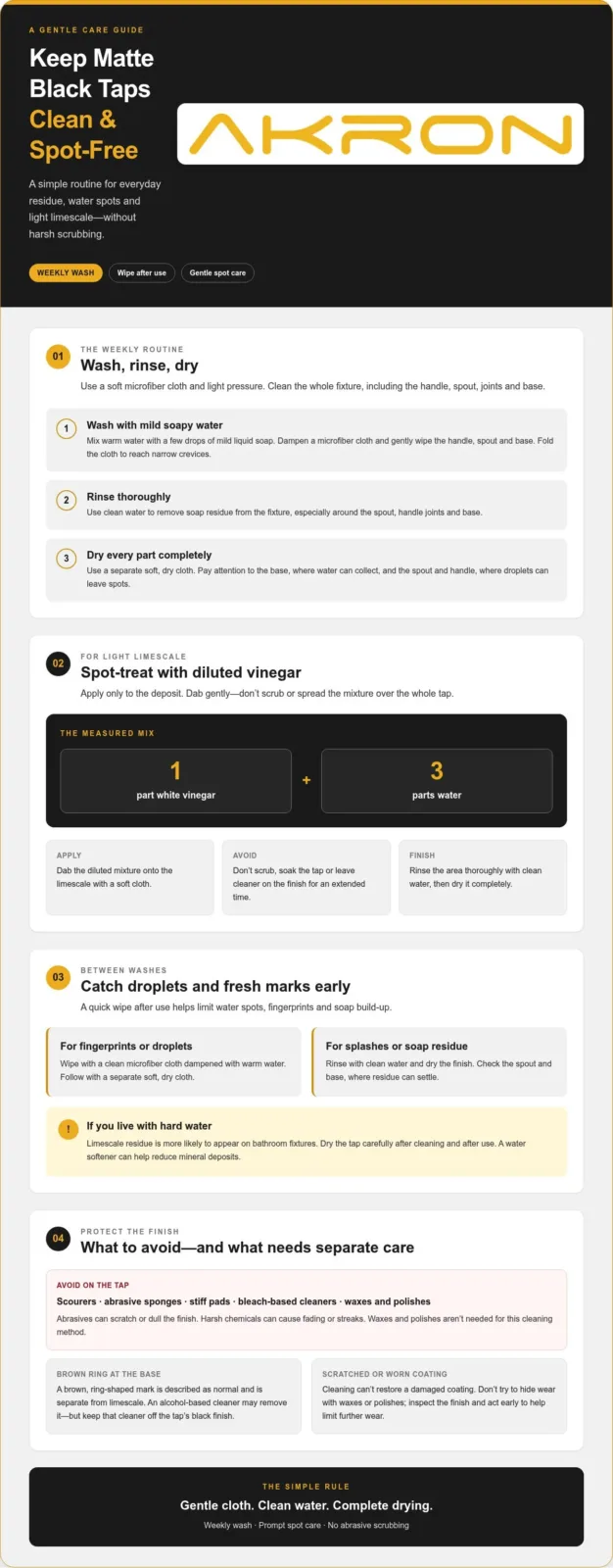
Matte black taps need gentle cleaning, not hard scrubbing. To learn how to clean matte black taps, wash them weekly with warm water and a few drops of mild liquid soap, then rinse and dry them completely. For light limescale, dab the mark with a soft cloth and a mixture of one part white vinegar to three parts water.
When white marks appear, it can be tempting to reach for a scourer or strong cleaner. These may scratch, dull or fade the finish. A gentler approach removes residue while helping protect the tap’s appearance.
This guide explains how to clean matte black taps with soapy water, treat limescale and help prevent water spots with regular care. It also covers the areas that often need extra attention, such as the spout and base, and the cleaning habits to avoid. A soft cloth and a consistent routine make tap care simple.
Key Takeaways
- Use gentle methods for limescale: dilute white vinegar with three parts water for every one part vinegar, then dab stubborn spots instead of scrubbing.
- Avoid abrasive sponges, scourers and bleach-based cleaners, which can scratch, dull or streak a matte black finish.
- Clean crevices and the tap’s base with a microfiber cloth and warm water mixed with a few drops of mild liquid soap.
- Rinse away soap residue and dry the tap with a soft cloth to help prevent water spots and white marks.
- Build a gentle weekly routine, and deal with new stains promptly to help limit lasting marks.
How do you remove limescale from black taps?
For light limescale, use diluted white vinegar and a soft cloth. Work gently: abrasive tools and harsh chemicals can scratch, dull or streak a matte black finish.
-
Avoid Harsh Cleaners and Abrasive Tools
Put away scourers, abrasive sponges and stiff cleaning pads before cleaning your tap. They can scratch or dull the finish, while harsh chemicals, including bleach-based cleaners, may cause fading or streaks. Skip waxes and polishes, too; they aren’t needed for this cleaning method. Use a clean, soft cloth and avoid products that could affect the tap’s appearance.
-
Consider Vinegar or Lemon Use
For light mineral deposits, use diluted white vinegar rather than lemon. Mix one part vinegar with three parts water, and apply it only to the limescale spot. Lemon juice isn’t part of this method, so use the measured vinegar mixture instead of substituting it. Keep the solution diluted and avoid spreading it across the entire tap.
- Dab the diluted vinegar onto a stubborn spot with a soft cloth. Avoid scrubbing if the residue doesn’t lift straight away, as repeated friction can dull or mark the finish. Treat a small deposit on the spout as a spot-cleaning task, not a reason to use a scourer. Once the mark loosens, rinse the area thoroughly with clean water and dry it with a soft cloth.
- Don’t leave vinegar or other cleaning products on the tap for an extended time. Apply the diluted mixture to a cloth and dab the affected area rather than soaking the fixture. This keeps the cleaner where it’s needed. Rinse away any remaining solution with clean water, including around the spout and base, then dry those areas completely.
- Treat a brown, ring-shaped mark around the base separately from limescale. This type of ring is described as completely normal, and an alcohol-based cleaner may remove it. Keep the cleaner off the tap itself, as it could damage the black finish. For ongoing care, deep-clean matte black tapware once a month and inspect the surface for wear or damage.
Cleaning black taps with warm soapy water
For routine cleaning, use warm water, a few drops of mild liquid soap and a microfiber cloth. These gentle materials lift everyday residue without the need for a strong cleaner.
-
Wash with Mild Dish Soap and Warm Water
Dampen a microfiber cloth with warm water and add a few drops of mild liquid soap. Gently wipe the spout, handle and base. For narrow crevices, fold the cloth to reach the edges without using a rough brush. Use enough soapy water to remove fingerprints and soap residue, but don’t leave cleaning liquid sitting on the tap.
After washing, rinse the whole fixture thoroughly with clean water. Soap left around the spout or handle can contribute to white residue. Dry every part completely with a separate soft cloth, including the base, where water can collect. Rinsing and drying help prevent water spots as the surface dries.
-
Address Water Spots and Fingerprints
Wipe fresh fingerprints and droplets with a clean microfiber cloth dampened with warm water. Pay particular attention to the handle and spout, where hands and splashes can leave visible marks. Follow with a separate soft, dry cloth so water doesn’t evaporate on the finish and leave spots.
If a mark remains, wash the area with warm water and a few drops of mild liquid soap, then rinse and dry it. Don’t rub harder to remove a fingerprint; use a clean section of cloth and gentle strokes. Quick wiping after use helps limit water spots and soap build-up.
- Clean the tap’s small details as part of your regular wash. Dip a corner of the microfiber cloth in warm, soapy water and gently wipe around the handle joints, spout edges and base. Soap residue can collect in these crevices and show up as pale marks. Rinse them carefully with clean water, then use a dry corner of the cloth to remove any remaining moisture.
- Adjust your routine if you live in a hard-water area, where limescale residue is more likely to appear on bathroom fixtures. Dry the tap carefully after cleaning and after use. A water softener can help reduce mineral deposits in homes with hard water, while drying helps remove droplets left on the surface.
- Make washing the tap a weekly habit, even when it looks clean. Warm, soapy water helps prevent staining and limescale build-up around the spout and base. Rinse away the soap, then dry the fixture completely with a soft cloth. Clean fresh marks promptly rather than letting residue remain between washes.
Weekly cleaning to prevent staining and limescale
Wash the tap weekly and wipe it briefly after use to help limit residue on matte black surfaces.
Cleaning can’t restore a scratched or worn coating. Don’t try to hide damage with waxes or polishes. Inspect the finish and act early to help limit further wear.
- Use a clean microfiber cloth for each wipe-down. After using the tap, dampen the cloth with warm water and wipe away droplets, fingerprints and fresh soap marks. Immediately follow with a separate soft, dry cloth. Drying helps prevent water spots as droplets evaporate, especially around the spout and handle.
- Rinse the tap with clean water if soap or bathroom products splash onto it. Soap residue can dry into pale build-up, so pay attention to the spout and base, where splashes often settle. Wipe away moisture with a soft cloth instead of leaving water or cleaning products on the finish.
- Set aside time for a weekly wash with warm water and a few drops of mild liquid soap. Gently clean the handle, spout and base with a microfiber cloth. Rinse thoroughly with clean water, then dry the fixture completely. Regular washing helps prevent staining and limescale from building up around the spout and base.
- Wipe the finish with light pressure and a clean section of cloth. Abrasive sponges and scourers can scratch or dull matte black tapware, so don’t use them on stubborn marks. If the cloth picks up grit from the sink or bathroom surface, rinse or replace it before continuing. This helps stop particles from scraping the tap.
- Inspect the finish during your weekly clean. Look around the base, handle joints and spout for new marks, water residue or signs of wear. Clean stains promptly, since leaving them may increase the risk of permanent marks. If the coating looks scratched or damaged, don’t apply polish or wax; gentle cleaning won’t repair a damaged finish.
- Adjust your routine to your home’s water conditions. Limescale is more likely to appear on bathroom fixtures in hard-water areas. Drying the tap after use helps remove surface droplets, while a water softener can help reduce mineral deposits. Keep inspecting the finish so you can spot new residue before it builds up.
Why matte black taps need gentle care
Clean gently because harsh products and rough tools can damage a black tap’s finish. Follow the care instructions supplied with your tap, as recommendations may vary by finish.
-
Handle Matte Black Finishes Gently
Clean the tap with a soft cloth and avoid abrasive sponges, scourers and harsh chemicals. Black fixtures often have a thin coating or film applied to the metal. Scrubbing and strong cleaners can scratch or dull that surface, while harsh chemicals may cause fading or streaking.
Keep the cloth clean as you work. Grit caught in its fibres can scratch the finish, even if you wipe lightly. Use a separate cloth for the tap rather than one used on the sink or nearby surfaces. Rinse the fixture after washing, and don’t leave water or cleaning products on it.
-
Check Manufacturer Care Recommendations
Read the care instructions supplied with your tap before choosing a cleaning product. Follow any finish-specific guidance and use gentle cleaning for routine care. Don’t assume waxes, polishes or strong bathroom cleaners suit every matte black surface.
If the instructions recommend a particular method, follow it carefully and don’t let cleaners linger on the tap. For routine care, use a microfiber cloth, warm water and mild liquid soap. Rinse away the soap and dry the surface completely.
- Inspect the finish regularly for changes. Check the spout, handle and base for scratches, dull areas, peeling or other signs of wear. Early attention helps you notice damage before it spreads across a larger visible area. Don’t try to conceal a damaged coating with polish or wax, which would add another product to the surface.
- Clean marks and residue promptly. Don’t leave water or cleaning products on matte black tapware for an extended time. Remove droplets and soap residue, rinse with clean water, then dry the tap with a soft cloth. This limits how long moisture and cleaning products remain against the coating.
- Let the finish guide how you clean. If a cloth catches on a rough spot, or you notice peeling or a new scratch, stop rubbing that area. Switch to gentle wiping and inspect it during routine cleaning. These checks help you respond early without adding more friction or stronger products.
Planning a bathroom refresh? Explore bathroom fixture options to find pieces that suit your space.
Akron Malaysia: Water Closet
Akron Malaysia offers faucets for homeowners choosing bathroom fixtures that complement a matte black tap. If you’re refreshing the space, consider how the faucet works with your wash basin, shower and overall bathroom style. A coordinated choice can help the room feel considered while keeping everyday function in view. Akron Malaysia also offers water closets, giving you options to consider as part of a broader bathroom update. Think about the fixtures you use most and the look you want before deciding what to change. For help exploring bathroom fixture options, contact Akron Malaysia.
Make Your Bathroom Feel Like Yours
A well-chosen tap can help tie a bathroom’s look together, so consider how its finish works with the rest of the space. Knowing how to clean matte black taps also helps you understand the care they need in everyday use. If you’re planning a refresh, consider the balance between style and daily use across the room.
Akron Malaysia offers Water Closets, Wash Basins and Faucets to help you explore bathroom fixture choices for your home. Choose pieces that suit your room and the way you use it, then build a space that feels comfortable and personal. For questions as you consider your next bathroom update, contact Akron Malaysia for tap advice.
Small, considered choices can make your bathroom feel more complete. Take the next step at a pace that works for you and enjoy shaping a space that feels like home.
Frequently Asked Questions
Why is my black tap paint coming off?
Peeling or flaking can indicate damage to the tap’s surface coating. Black fixtures often have a thin coating or film over the metal, which can be affected by harsh cleaners, abrasive tools or prolonged exposure to cleaning products. Stop scrubbing the damaged area and check the rest of the tap for scratches or dull patches. Gentle cleaning may help prevent further wear, but it won’t restore coating that has already peeled.
How to clean matte black taps step by step?
Wet a clean microfiber cloth with warm water and a few drops of mild liquid soap. Wipe the handle, spout and base, using a folded corner for tight joints. Rinse the tap with clean water, then dry it with a separate soft cloth. For light limescale, dab the mark with a mixture of one part white vinegar to three parts water, then rinse and dry the area.
What products should you avoid on matte black tap finishes?
Avoid bleach-based cleaners, harsh chemicals, abrasive sponges, scourers, waxes and polishes. They can scratch, dull, fade or streak the finish. Don’t apply an alcohol-based cleaner to the tap itself, as it could damage the surface. To treat a brown ring around the base, keep the cleaner off the tap and apply it only to the stained area around it.
How do you remove limescale and water spots from matte black taps safely?
For light limescale, dab diluted white vinegar onto the deposit with a soft cloth, then rinse the spot with clean water and dry it. Mix one part vinegar with three parts water. To deal with water spots, wipe the tap with a clean, damp microfiber cloth and dry it straight away. Avoid scrubbing deposits: repeated friction can mark the finish, and dried water can leave new spots.
How often should matte black taps be cleaned?
Wash the tap weekly with warm water and mild liquid soap, and deep-clean matte black tapware once a month. Between washes, wipe away splashes and residue after use so they don’t dry on the surface. A quick wipe more often can help in hard-water homes, where mineral deposits are more likely to appear on bathroom fixtures.
How do you prevent fingerprints and water marks on matte black taps?
After use, wipe the tap with a microfiber cloth dampened with warm water, then dry it with a separate soft cloth. This helps remove fingerprints and droplets before they leave visible marks. Rinse away soap splashes to limit pale residue around the spout or handle. Keep the cloth clean, too: grit from nearby bathroom surfaces can scratch the finish.