The basin that looks easiest to live with may not be the simplest to clean. When weighing countertop basin vs undermount basin, consider more than appearance: your vanity surface, tapware placement and daily routine all affect how each style fits your bathroom.
A countertop basin can make a feature of your vanity, while an undermount basin leaves the counter looking more continuous. The rim, countertop material and space around the tap can all affect the fit and the areas you’ll need to wipe.
This guide compares the two styles for appearance, cleaning, installation fit and everyday use. Before browsing wash basins, check your vanity and tapware layout, then use those practical details to narrow down a style that suits your bathroom.
Key Takeaways
- In the countertop basin vs undermount basin comparison, the main trade-off is a visible design feature versus a more open counter surface.
- Look at where each basin meets the vanity to identify the edges and joins you’ll need to clean.
- Start with your existing or planned countertop. Its material and opening can affect which basin style will fit.
- Consider tapware placement, usable counter space and basin position before choosing a layout.
- Note your measurements and cleaning preferences before browsing wash basins, so you can focus on options that suit your bathroom.
Countertop Basin vs Undermount Basin: What Is the Difference?
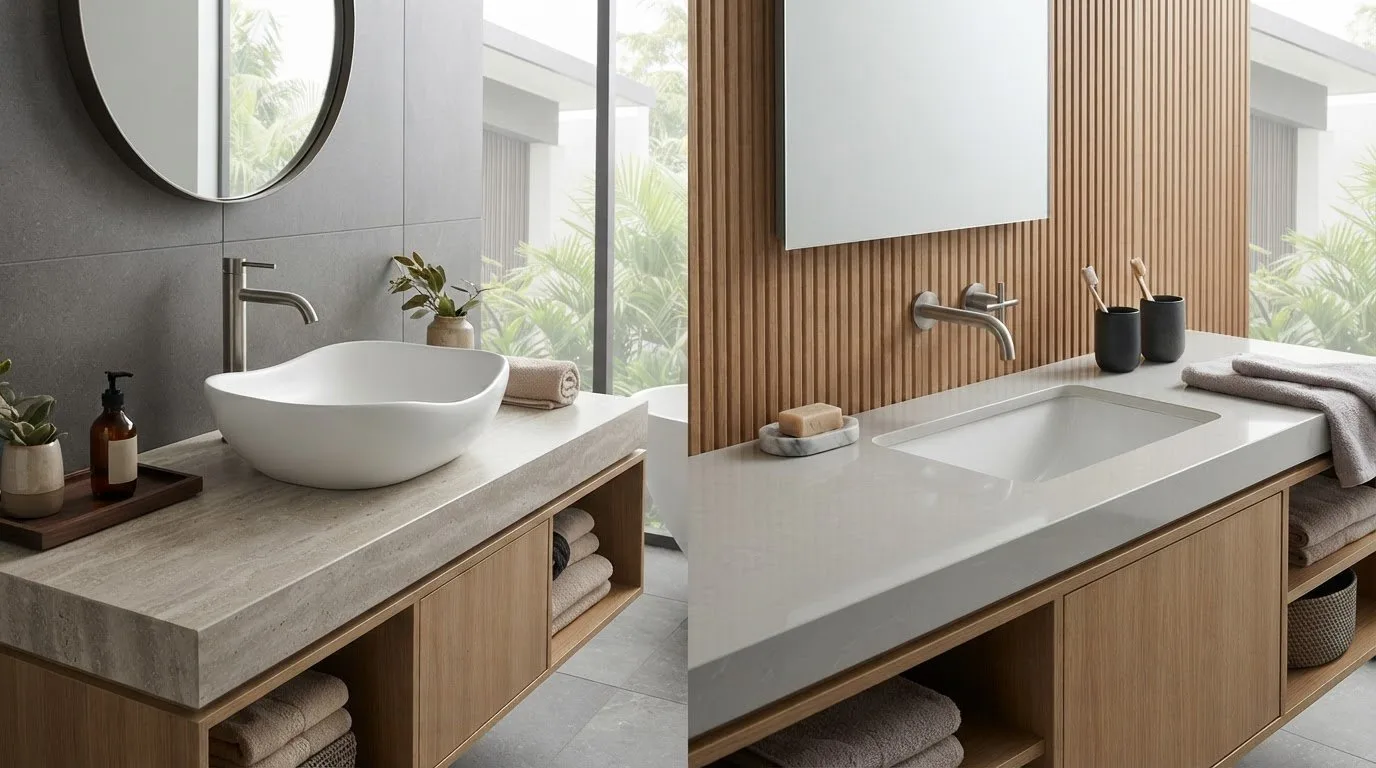
Think about how you want the basin to sit in relation to the vanity: visible above the counter or tucked beneath it. That placement is the key distinction in the countertop basin vs undermount basin choice. A countertop basin sits on top of the vanity surface, while an undermount basin is fixed below the countertop opening. “Under-counter” and “undermount” are often used for the same general installation style.
These names describe how the basin meets the counter, not its shape or tap arrangement. If you’re exploring the wider range of types of sinks, this distinction is a useful starting point for comparing how each style could fit your bathroom.
How a countertop basin sits on the vanity
A countertop basin sits visibly above the counter, making its outline part of the room’s design. A rounded or angular shape can draw the eye, and the basin’s finish can contrast with or complement the vanity. How much of the basin rises above the surface depends on its design. Consider the basin and vanity together, and check where the tap will go and how much counter space will remain.
How an undermount basin sits beneath the counter
An undermount basin is fixed below the countertop, with the bowl beneath the opening. From above, the counter meets the basin without a raised rim interrupting its edge, creating a more continuous-looking surface around the opening. The countertop opening must match the basin’s shape and size, and the counter’s material and edge need to suit this installation.
Look at the vanity from standing height and decide how much visual attention you want the basin to attract. A countertop basin puts its form on display; an undermount basin gives the counter’s outline more prominence. Neither is automatically the better fit. Compare the basin’s dimensions and installation requirements with your existing or planned vanity, as well as the look and function you want from the finished surface.
Countertop vs Undermount Basin: Compare Cleaning, Style and Daily Use
Your choice depends partly on what you want to see and partly on which areas you’re prepared to wipe after daily use. A countertop basin puts its shape on display, while an undermount basin leaves more of the counter accessible. Neither style is maintenance-free: water and grime can collect around edges, tapware and less-visible surfaces.
| Consideration | Countertop basin | Undermount basin |
|---|---|---|
| Visual impact | The basin can become a prominent design feature. | The basin is less prominent, giving the vanity a more integrated appearance. |
| Counter access | The basin occupies space on the counter surface. | More of the counter surface remains open for wiping. |
| Cleaning points | Pay attention to the visible basin edges and nearby tapware connections. | Wipe across the counter towards the basin, and remember the underside of the counter. |
| Installation fit | Consider how the basin sits on the planned vanity surface. | The counter opening and installation must suit the chosen basin. |
Which basin style is easier to clean?
An undermount basin can make a quick counter wipe more straightforward: you can move water and small debris towards the bowl without wiping around a raised edge. With a countertop basin, include the visible junction between the basin and vanity in your regular wipe-down. For either style, pay attention to water that collects near the tap or its connections, as moisture left behind can contribute to grime. The underside of an undermount counter may also need cleaning.
How each basin changes the bathroom’s look
Choose a countertop basin if you want its shape and finish to catch the eye and define the vanity. An undermount basin creates a more integrated look, with the counter surface taking visual priority. Consider the style of the whole room, not just the basin: a feature basin can create a focal point, while a less prominent basin can support a simpler, more unified vanity.
For the countertop basin vs undermount basin decision, picture your everyday routine. Where will you wipe? Which edges will you need to reach? How much do you want the basin to stand out? Once you’ve considered those preferences, browse wash basin options with your preferred look and counter layout in mind.

How to Choose a Basin That Fits Your Vanity and Routine
Start with the vanity you have or the one you’re planning. A basin may look appealing on its own, but the countertop opening, cabinet layout and tapware all affect how it will work in your bathroom. Use this checklist to compare options before settling on a style.
Check the countertop, cabinet and available space
Measure the usable counter area and note any existing opening, drawers or cabinet features that could affect the basin’s position. Check that the layout gives you comfortable access to the basin and leaves enough surrounding surface for everyday tasks. Then compare the basin’s dimensions and installation requirements with the vanity, including the opening and support it needs.
- Record the vanity details. Note the counter dimensions, any existing basin opening and the cabinet arrangement beneath it. If the vanity is planned but not yet selected, use its proposed layout as your starting point.
- Map the usable counter space. Decide where daily-use items will go and whether the basin’s position leaves enough room around it. Consider how you’ll reach the edges for routine cleaning.
- Check the basin’s fit requirements. Compare its dimensions and installation needs with the counter and cabinet. For an undermount basin, pay particular attention to the shape and size of the countertop opening.
Match tapware and cleaning habits to the basin
Plan the tapware as part of the layout. A counter-mounted faucet takes up space on the vanity, while a wall-mounted faucet needs to align with the basin. Either arrangement should leave enough room to use and clean the area. Consider where splashes or pooled water may collect, including around tapware connections, and which surfaces you’re willing to wipe regularly.
- Confirm tapware placement. Mark where the faucet will sit, whether it’s planned for the counter or wall, and how its position relates to the basin.
- Picture your cleaning routine. Consider which edges, joints and surrounding surfaces you’ll need to reach. Choose a layout that feels manageable for the way you maintain your bathroom.
- Set your design priority. Decide whether you want the basin to stand out as a feature or prefer a more open-looking counter. Compare the selected basin’s installation requirements with your vanity before finalising your choice.
With these details in hand, you can compare wash basins against your actual layout rather than choosing by appearance alone. Keep your measurements and tapware plan nearby as you explore options.
Your Next Steps for Choosing a Countertop or Undermount Basin
There’s no single best basin style for every bathroom. If you want the basin itself to make a visual statement, a countertop option may suit your plans. If you value a more open-looking counter, an undermount style may be a better fit. The countertop basin vs undermount basin choice becomes clearer when you turn your preferences and vanity details into a short selection brief.
Turn your comparison into a short selection brief
Write down the practical details before browsing. A few notes can help you compare wash basins against your actual layout, rather than relying on appearance alone.
- Installation preference: Note whether you want the basin on top of the counter or fitted beneath it.
- Vanity layout: Record the counter measurements, existing or planned opening, usable surface and cabinet arrangement.
- Tapware position: Mark whether the faucet will be counter-mounted or wall-mounted, and where its connections will sit in relation to the basin.
- Cleaning priorities: Identify which edges and surfaces you want easy access to, and how much routine wiping you’re comfortable doing.
- Design direction: Decide whether a visible basin feature or a more open counter surface matters most to you.
Use these points to compare suitable options. Before settling on a basin, match its installation requirements to the countertop opening and vanity layout. This keeps your preferred look grounded in the space you actually have.
Explore basin options and plan your next step
With your brief ready, browse Akron’s wash basin products and compare the options with your layout and priorities in mind. Consider how each basin could work with your vanity and tapware, rather than assuming every shape or installation style will suit every counter.
If you’re planning a bathroom project, bring your measurements, tapware plan and cleaning preferences together. A clear brief gives you a practical starting point for choosing a basin that suits both the finished look and your everyday routine.
Make Your Basin Choice the Start of a Better-Fitting Bathroom
Before you settle on a basin, picture how you want the vanity to feel in daily use. Your decision in the countertop basin vs undermount basin comparison should support the bathroom you’re creating, not just the look of a fixture on its own. Keep your measurements, tapware plan and cleaning preferences nearby as you explore, so each option has a clear purpose.
Akron Malaysia offers wash basins as part of its bathroom-fixture range. You can purchase directly or through its network of authorized dealers across Malaysia. If your choice is part of a wider bathroom-fixture project, include your basin requirements in a direct project inquiry.
Explore Akron wash basin options and compare them with your vanity layout, tapware plan and everyday needs.
Frequently Asked Questions
Which is easier to clean, a countertop basin or an undermount basin?
An undermount basin can make it easier to sweep water or small debris off the counter, but neither style is effortless to maintain. With a countertop basin, clean around its base and check nearby faucet connections, especially if splashes collect there. With an undermount basin, include the underside of the counter in your cleaning routine. Tapware placement and how often the basin area gets wet also affect upkeep.
Can a countertop basin be installed on an existing vanity?
It can be, provided the vanity suits the basin’s footprint and plumbing layout. Measure the available surface and check whether an existing opening can be used or adapted for the basin. Consider the cabinet below, drain position and the support needed to hold the basin securely. A basin may fit the counter but still be awkward if it blocks storage access or leaves too little usable surface.
Does a countertop basin need a different faucet?
Not necessarily. The right faucet depends on the basin’s height, shape and tap-hole arrangement, as well as whether you’re using counter-mounted or wall-mounted tapware. A tall basin can affect the reach and clearance of a counter-mounted faucet, while a wall-mounted one needs to align with the bowl. Compare the faucet’s position with the basin’s rim and water flow to make sure the layout feels practical to use.
Can an undermount basin be fitted to any countertop material?
No. An undermount basin needs a countertop that can support the installation and provide a suitable finished edge around the opening. Some countertop materials need specific edge finishing or support, and the cut edge of a laminate counter may not suit an exposed undermount installation. Check that the selected basin, countertop material and opening are compatible before finalising the vanity plan.
Does a countertop basin take up more vanity space?
It uses space on the counter surface, but the amount depends on the basin’s footprint and position. A compact basin may leave useful room beside it, while a wider design can reduce the area available for toiletries or other everyday tasks. Consider the basin’s full outer dimensions, not just the bowl opening, and mark its position on your vanity plan to see how much surface will remain accessible.
Which basin style is better for a small bathroom?
Neither style is automatically best for a small bathroom. An undermount basin may leave more counter area open, which can make a compact vanity easier to use. A countertop basin can also work if its footprint and height suit the available space. Compare the basin’s overall dimensions with the vanity, door and drawer clearances, and leave enough room to use the faucet comfortably. Prioritise fit over assumptions based on style alone.