What if a quick visual check could help you notice a bathroom plumbing problem before it becomes harder to manage? A dripping faucet, a loose handle or water pooling near a fixture can be easy to overlook during a busy week. These bathroom fixture maintenance tips offer a simple way to keep an eye on the parts you use every day.
It can be hard to know which fixtures need regular attention and when a small issue calls for more than routine care. You don’t need an elaborate checklist to get started. A few minutes spent checking your water closet, wash basin, faucet and shower can help you spot changes and decide what to do next.
In this guide, you’ll learn what to inspect, how to care for common bathroom fixtures and which visible signs deserve attention. You’ll also see how to weigh a fixture’s condition and usability when considering a replacement. Akron Malaysia offers water closets, wash basins, faucets, showers and bathroom accessories to help you explore practical options for your space.
Key Takeaways
- Use these bathroom fixture maintenance tips to build a simple, repeatable check around your bathroom’s key fixtures.
- Understand how water supply and drainage work together to serve each fixture.
- Start with a visual scan and note changes over time.
- Distinguish routine fixture care from recurring problems that need attention.
- Assess a fixture’s condition and usability when deciding whether to maintain it or consider a replacement.
Bathroom Fixture Maintenance Tips for Everyday Checks
Keep the routine focused on visible fixtures and accessible areas. Look for changes in moisture, drainage, sounds or movement, then record where and when you noticed them. These observations help you decide whether to keep monitoring a fixture or arrange an assessment.
How to Maintain Bathroom Plumbing: Spot Early Signs of Trouble
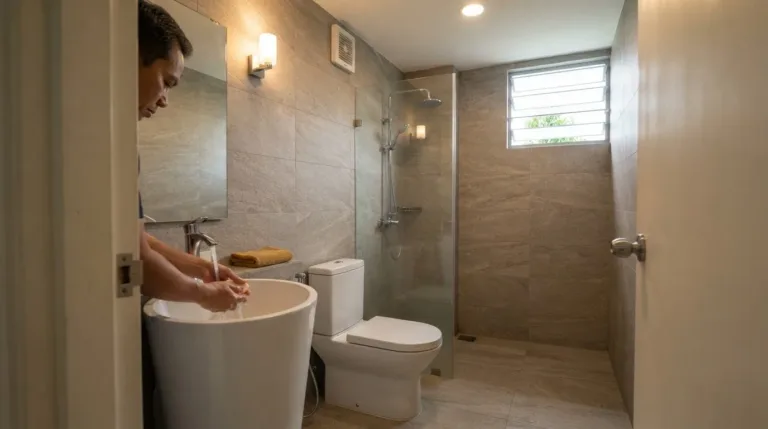
A brief visual check can make bathroom maintenance feel manageable. As part of your bathroom fixture maintenance tips, look over fixtures and accessible connections regularly instead of waiting until a small change becomes hard to ignore.
Preventive bathroom plumbing maintenance means checking visible fixtures and connections so you can notice changes and decide what attention they need. A drip, damp patch or slow drain is a clue to observe, not proof of a particular fault.
Which bathroom plumbing signs should you notice?
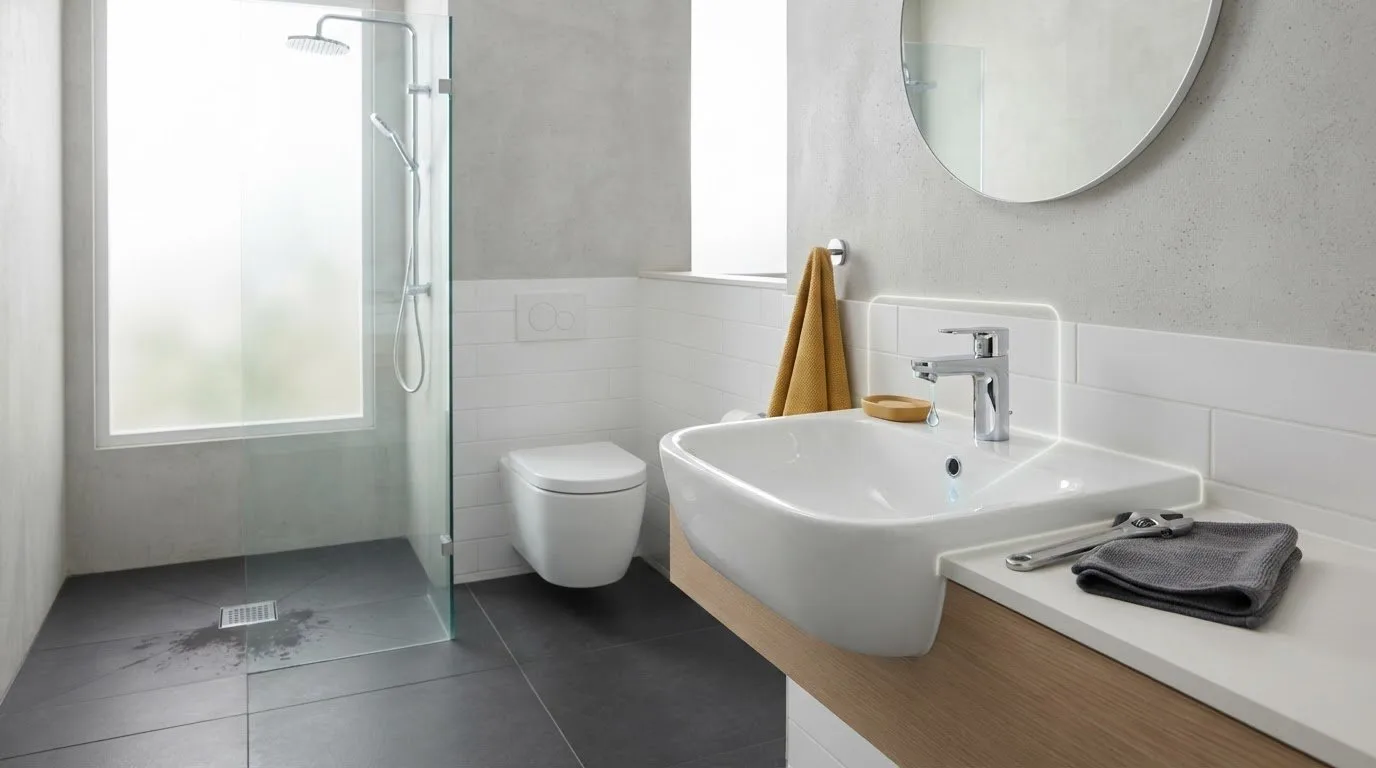
Scan around faucets and wash basins, the water closet base and surrounding area, shower fittings, and any exposed connections. Fixtures are part of a wider system of water supply and drainage. For background on its components, see Plumbing systems and their components.
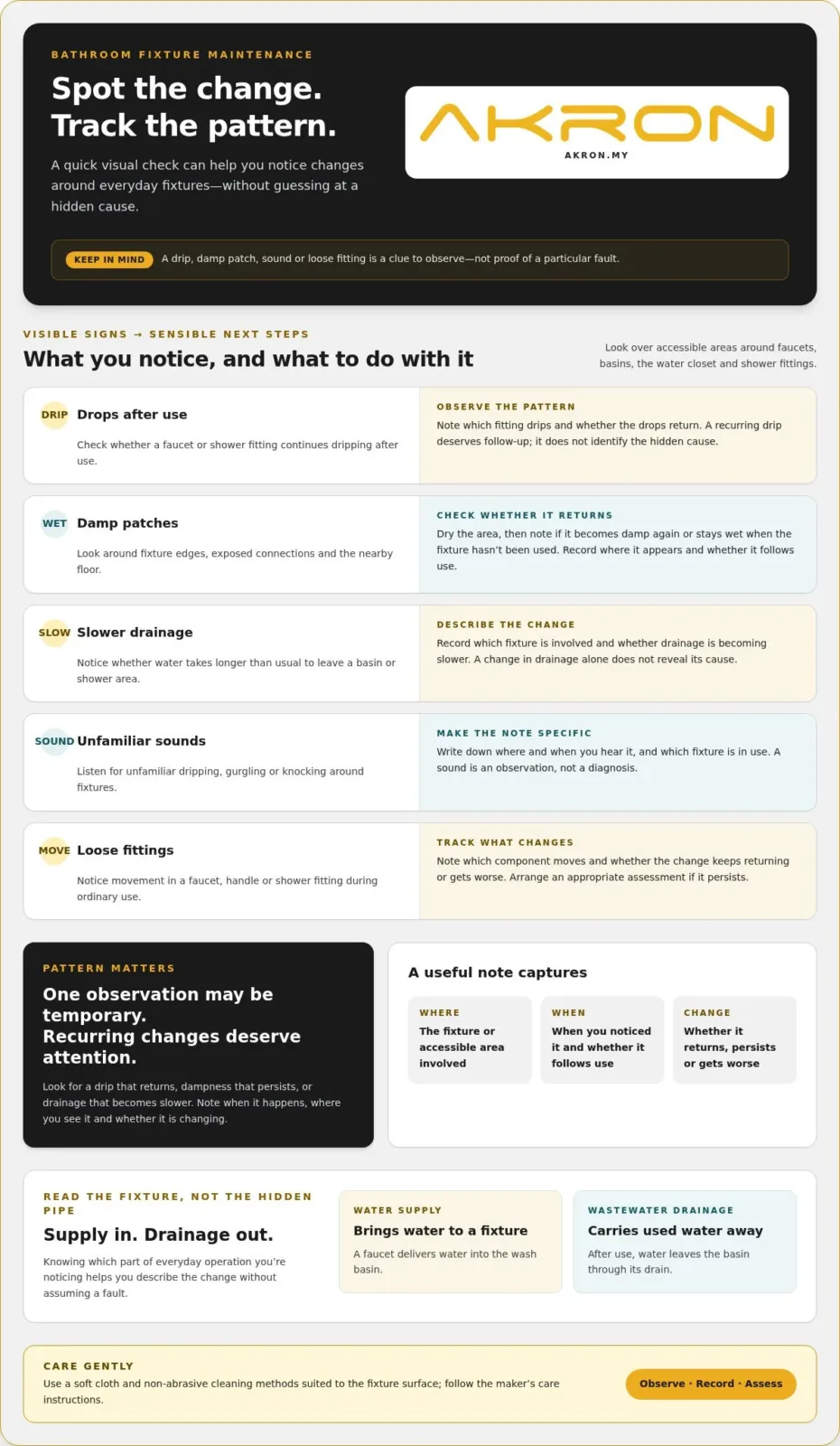
- Dripping: Check whether drops continue from a faucet or shower fitting after use.
- Damp patches: Look around fixture edges, exposed connections and the nearby floor.
- Slow drainage: Notice whether water takes longer than usual to leave a basin or shower area.
- Unusual sounds: Listen for unfamiliar dripping, gurgling or knocking around fixtures.
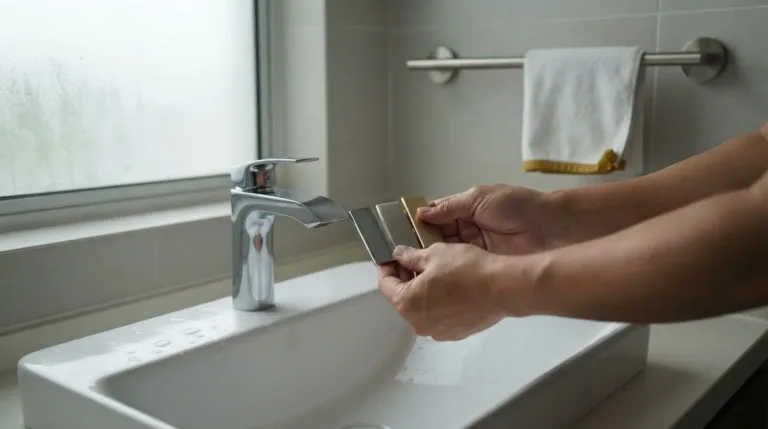
- Loose fittings: Notice movement in a faucet, handle or shower fitting during ordinary use.
Water splashed during washing or showering may leave a temporary wet surface. Recurring moisture is different: an area becomes damp again after you’ve dried it, or stays wet when the fixture hasn’t been used. Note where the moisture appears and whether it follows use of a particular fixture.
When does a small plumbing issue deserve attention?
One observation may be residue or a momentary change. Look for a pattern instead. A drip that returns, dampness that persists, or drainage that becomes slower deserves follow-up. Note when it happens, where you see it and whether it is changing. For example, record whether a damp spot appears after using the shower or is still present later.
These observations can help you describe the issue clearly, but they don’t identify what’s happening behind a wall or beneath a fixture. Don’t treat a sound, wet patch or loose fitting as a diagnosis. If a sign keeps returning or gets worse, arrange an appropriate assessment—established contractors such as Flow Heating, Cooling & Plumbing Services recommend having concealed plumbing inspected before small leaks turn into structural damage. A regular check won’t prevent every problem, but it gives you a clearer basis for deciding what to do next.
How Bathroom Plumbing Works: Fixtures, Water Flow, and Drainage
Bathroom plumbing includes the supply and drainage connections serving your fixtures. One part brings water in for use; another carries used water away. Knowing the difference makes it easier to describe what you notice during your bathroom fixture maintenance tips routine without guessing what might be happening out of sight.
How do water supply and drainage differ?
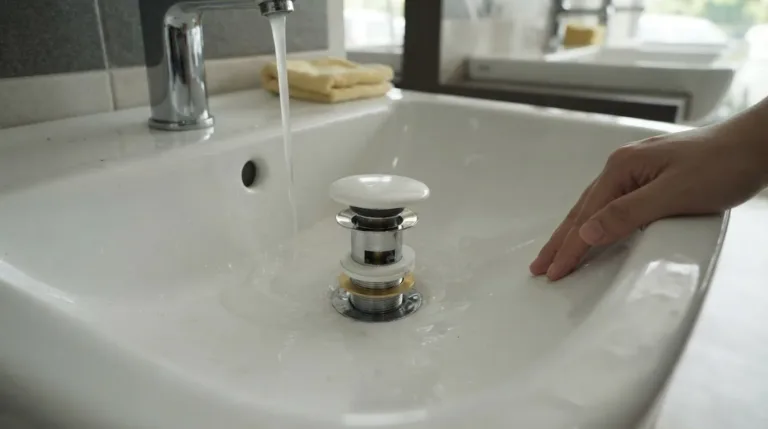
Water supply brings water to a fixture; wastewater drainage carries used water away. Consider a faucet, wash basin and drain working together: water flows from the faucet into the basin, then leaves through the drain after use. A dripping faucet is an observable sign at the water outlet; slow drainage is a change in how quickly water leaves the basin. They involve different parts of a fixture’s everyday operation, but neither observation alone identifies a hidden cause.
Keep your notes specific. Record which fixture is involved and whether you noticed a change in incoming water or in how quickly used water drains away. Clear observations help you describe what’s happening without assuming a fault or trying to assess concealed pipework.
Which bathroom fixtures connect to plumbing?
Common examples include water closets, wash basins, faucets and showers. A faucet and shower deliver water, while a wash basin receives water and drains it after use. A water closet uses water as part of its operation and carries waste away. Bathroom accessories may sit near these fixtures, but they don’t all carry water or connect to drainage.
These distinctions can help you make sense of what you observe. If water appears around a wash basin, note whether it’s near the faucet, the basin itself or the drain. If a water closet’s operation changes, describe what you see or hear rather than assuming which connection is involved. For toilet-specific care, follow the guidance provided with the fixture.
Understanding a fixture’s role can also help when comparing options for a future replacement. Explore bathroom fixture options, including water closets, wash basins, faucets and showers.
A Simple Bathroom Plumbing Maintenance Routine to Follow
A repeatable check doesn’t need specialist tools. Take a little time to look over the fixtures and accessible areas, clean them gently and record anything that changes. These bathroom fixture maintenance tips help you keep observations organised without trying to diagnose concealed plumbing.
What should a routine visual check include?
Start with a visual scan. Look at faucet handles and visible connections, the wash basin and its drainage, the area around the water closet, and shower fittings. Notice moisture that returns after the area has been dried, visible residue, loose components or changes in how quickly water drains. Record what you observe rather than assuming what caused it.
How can you care for fixtures without causing damage?
Use a soft cloth and non-abrasive cleaning methods suited to the fixture’s surface. Follow the maker’s care instructions, since guidance can vary by material and finish. Avoid forcefully turning handles or pushing fittings that feel loose. For shower controls, follow the care guidance in the shower valve instructions; don’t dismantle or adjust them just to clean them.
Follow this simple routine in order:
- Scan: Check the faucet, basin, water closet surroundings, shower fittings and accessible connections for drips, dampness or movement.
- Use and observe: Operate handles normally and notice whether drainage or fixture movement seems different from usual. Don’t force a control that feels stiff or unstable.
- Clean gently: Wipe surfaces using the maker’s recommended approach. Dry the area so you can tell whether moisture returns later.
- Log changes: Note the date, location, observation and whether it has happened before. For example: “Monday, damp below basin connection after use; seen twice.”
A short log helps distinguish a one-off observation from a recurring pattern. Keep entries factual: write “drainage seemed slower after use,” not a guessed explanation. If an observation returns, add a new dated note instead of overwriting the earlier one. This gives you a clearer record when deciding what needs attention.
If your checks lead you to consider replacing a fixture, explore Akron’s bathroom fixture range as you compare options for your space.
When Bathroom Plumbing Maintenance Points to a Fixture Upgrade
Recurring signs don’t automatically mean a fixture needs replacing. They do give you a reason to consider its visible condition, how it works during everyday use and whether it still suits your bathroom. A single drip or slow drain can’t determine whether replacement is the right choice.
How can you decide whether a fixture still suits your bathroom?
Separate upkeep from replacement. Cleaning and observing an existing fixture are routine care; choosing a replacement is a decision about condition, function and fit. Consider whether the fixture remains comfortable and practical to use, whether its appearance works in the space, and whether the same concern keeps returning. A recurring symptom may need assessment, but it doesn’t prove the fixture itself is the cause.
If you’re weighing broader choices, a sanitary ware buying guide can help you think through fixture selection beyond the immediate maintenance concern. Use your observations as context, not as a diagnosis or a reason to rush into replacing a fixture.
What is a sensible next step when replacement is on your mind?
Start by naming the fixture category and what you want to improve. Is it a water closet, wash basin, faucet or shower? Are you looking for a better fit with your bathroom, a change in appearance or a fixture that better suits everyday use? Clear priorities make it easier to compare options without confusing a product choice with a plumbing repair.
Akron’s bathroom fixture categories include water closets, wash basins, faucets and showers. Compare the options against your space and needs. If the issue is a repeated leak, persistent dampness or worsening drainage, keep your maintenance notes and arrange an appropriate assessment. Choosing a new fixture alone doesn’t establish or resolve the cause.
For questions about a product or project, visit Akron’s contact page. Take a considered next step, whether that means continuing to monitor a fixture, arranging an assessment of a recurring issue, or exploring replacement options for your bathroom.
Make Your Next Bathroom Choice With Confidence
Your bathroom should work comfortably for the way you live, not just look good when it’s finished. Use your bathroom fixture maintenance tips as a starting point for thinking about what you want from the space over time. You might simply keep a note of changes, or you might be ready to consider a fixture that better suits your daily routine.
Let your needs guide the decision. Think about how you use the room, the look you want to create and which fixtures matter most to your everyday comfort. A thoughtful choice can help make the bathroom feel more like your own while keeping practicality at the heart of the space.
Explore Akron’s bathroom solutions as you consider what could work in your home. Browse the range of water closets, wash basins, faucets, showers and bathroom accessories, and choose the next step that fits your needs.
Frequently Asked Questions
Is it necessary to check bathroom plumbing regularly?
Periodic checks can help you notice visible changes. Include a quick look during ordinary bathroom use, such as checking whether a faucet continues to drip after you turn it off or whether a fitting appears to move. These bathroom fixture maintenance tips aren’t a substitute for assessing hidden plumbing. Keep notes if an observation returns, and follow the fixture maker’s care guidance rather than relying on a fixed schedule.
Can I use household cleaning products on bathroom fixtures?
Use a cleaning product only if it suits the fixture and its manufacturer’s instructions. Surfaces and finishes can differ, so don’t assume a product labelled for bathroom use is suitable for every faucet, basin or shower fitting. Choose a gentle, non-abrasive approach and avoid forceful scrubbing or handling. Cleaning can care for a visible surface, but it won’t establish or resolve the cause of a plumbing symptom.
Why is my bathroom faucet dripping?
A dripping faucet is a sign to observe, not enough information to identify a cause. Notice whether the drip continues after normal use, appears only at certain times or returns after it seems to stop. Also note whether you see water at the faucet outlet or elsewhere around the fixture. If the drip persists, use those observations when arranging an assessment rather than assuming a particular part needs repair.
What should I do if a bathroom drain becomes slow?
When should a bathroom fixture be replaced instead of maintained?
Consider replacement if the fixture no longer meets your household’s needs or its condition and everyday function have changed. One drip or maintenance observation alone doesn’t mean replacement is necessary. Decide what you want to improve, then identify the relevant category, such as a water closet, wash basin, faucet or shower. Compare suitable product options, treating any recurring plumbing symptom as a separate issue.
Does maintaining bathroom plumbing mean I need to inspect hidden pipes?
No. A beginner-friendly check focuses on visible fixtures and accessible areas; you don’t need to open walls or try to diagnose concealed pipework. If you notice dampness that keeps returning, record where it appears and when you see it, without guessing what lies behind the surface. Those notes help describe the situation and provide useful context when deciding what attention it may need.