What if the toilet causing trouble needs a repair, not a replacement? The signs you need to replace your toilet can be easy to misread: one running flush may point to a fixable part, while a persistent leak or visible crack needs closer attention. Age alone doesn’t settle the question.
Before deciding, look for patterns. Note what is happening, where you see moisture, and whether the same fault returns. Those details can help you distinguish an isolated problem from recurring trouble and make a more informed choice about what to do next.
In this guide, you’ll learn which warning signs deserve attention, which common problems may be repairable, and when replacement is worth considering. You’ll also find practical points to compare when choosing a new water closet, including fit, everyday needs and features such as adjustable wash functions, a self-cleaning nozzle, remote control and energy-saving mode in Akron’s Intelligent Water Closet range.
Key Takeaways
- Assess the signs you need to replace your toilet without assuming every fault means replacing the whole fixture.
- Distinguish isolated issues, such as a running mechanism, from recurring problems or visible damage that need closer attention.
- Record symptoms, when they recur, and where leaks or flushing issues appear.
- Weigh repair and replacement based on the pattern and severity of the problem, not a single symptom alone.
- If replacement makes sense, compare Water Closet options, including Akron Intelligent Water Closets with features such as adjustable wash functions and an energy-saving mode.
When do toilet replacement signs need attention?
A damp floor or a toilet that keeps misbehaving can make you wonder whether the whole fixture needs replacing. Start with what you can observe: what is happening, how often it happens, and whether there’s visible damage. One symptom alone doesn’t prove replacement is the right answer.
Separate visible damage from performance problems. A crack in the bowl or tank deserves prompt attention. A running toilet or weak flush may come from a fault that can be repaired. Toilets have different types and components, so understanding what you’re looking at can help you describe the issue clearly. This overview of toilet types and components offers useful background, but it can’t diagnose a specific fault.
Which visible toilet problems should you check first?
Look closely at the bowl and tank for cracks, and check the floor around the base for moisture. Water near the toilet needs attention, but it doesn’t identify the source or prove that the fixture is damaged. Don’t assume a repair or replacement is needed until the cause is understood.
Note where you see moisture and when it appears, such as after flushing or between uses. Dry the area and observe whether it returns. This can help distinguish a recurring leak from a one-off spill and gives you a clearer account of the problem.
When does a recurring toilet fault matter more?
Repeated clogging, a persistent running sound, or weak and incomplete flushing are worth tracking. Each can have different causes, and none automatically means the whole water closet has failed. A running mechanism, for example, may point to a component issue. Recurring poor flushing needs closer assessment before you decide what to do.
A repeated problem deserves investigation; a single incident doesn’t, by itself, make a toilet a replacement candidate. Note how often the fault occurs, whether it follows a particular use, and whether it improves or returns. That record helps you judge the pattern instead of making a decision based on one frustrating moment.
Toilet repair or replacement: how to tell which makes sense
The choice depends on the pattern and extent of the fault, not simply how inconvenient it feels. One symptom may come from a single part, while a confirmed crack, recurring leak, or persistent flushing issue calls for a wider assessment. Use this comparison as a guide, not a remote diagnosis.
| What you notice | A repair may be worth exploring | Replacement may be worth considering |
|---|---|---|
| Running after a flush | It happens once or appears limited to one internal mechanism. | The running keeps returning after attention, or other faults appear too. |
| Water near the toilet | It is a one-off occurrence and the source still needs identifying. | Leakage recurs, or inspection confirms damage to the fixture. |
| Crack or poor flushing | The symptom is isolated and the cause has not yet been established. | A crack is confirmed, or flushing remains persistently weak or incomplete. |
Which toilet problems may be repairable?
A fault in one internal component may be repairable, but the symptom alone can’t confirm which part is responsible. A toilet that runs after one flush might have a limited fault; a sound that repeatedly returns deserves further investigation. Note whether the problem stopped, came back, or changed after attention. That history helps you tell a recurring fault from a one-time nuisance.
Which signs make replacement worth considering?
Give confirmed cracks, recurring leakage, and persistent performance problems more weight. A crack in the bowl is different from a brief running episode because it involves visible damage to the fixture itself. Recurring symptoms also justify assessing the whole water closet, rather than assuming the same limited fix will resolve them. Base the decision on what’s confirmed and whether the problems keep returning.
An isolated fault may point to one repair; a persistent pattern or confirmed fixture damage calls for considering the toilet as a whole. Replacement won’t prevent every future plumbing issue or guarantee savings. Instead, compare the fixture’s condition with the recurrence of its symptoms before choosing a next step. If replacement is the sensible option, include Akron Water Closet options in your comparison.
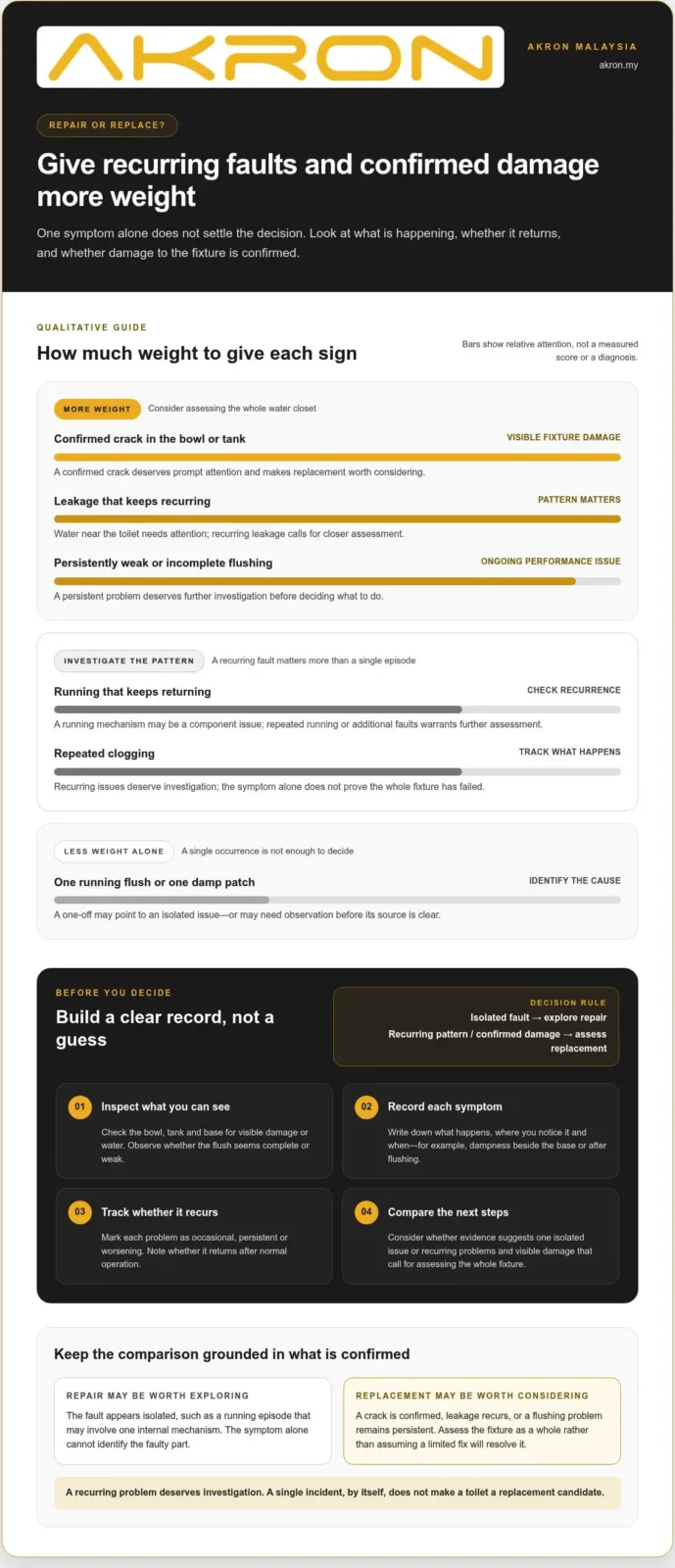
Use this checklist before deciding to replace your toilet
Good decisions start with clear observations, not guesses. Use this sequence to organise what you’ve noticed and decide whether to investigate a repair or compare replacement options. The signs you need to replace your toilet are easier to assess when you can describe what’s happening and how often.
- Inspect what you can see. Look over the bowl, tank and base for visible damage or water. Observe the flush and note whether it seems complete or weak. Stick to what you can see and hear; don’t assume a particular part is faulty based on a symptom alone.
- Record each symptom. Write down what happens, where you notice it and when. For example, note whether dampness appears beside the base, after flushing, or at another time. Describe flushing issues plainly, such as a slow flush or one that doesn’t clear as expected.
- Track whether it recurs. Mark each problem as occasional, persistent or worsening. Note when it happens and whether it returns after the toilet has seemed to work normally. A short record can reveal a pattern that’s easy to miss when you’re relying on memory.
- Compare the next steps. Consider whether the evidence points to one isolated issue that may be repairable, or recurring problems or visible damage that call for assessing the whole fixture. If the source isn’t clear, keep that uncertainty separate from the facts you’ve recorded.
What should guide your replacement choice?
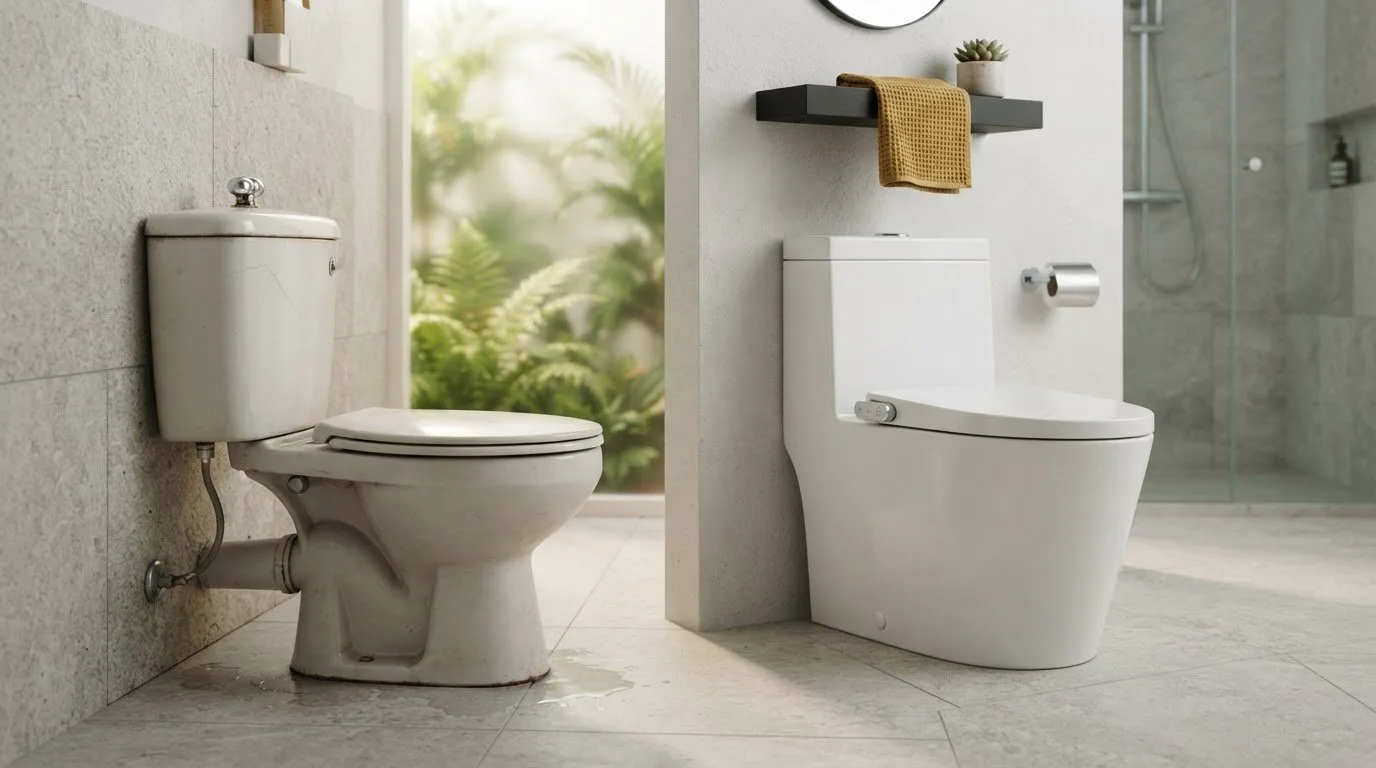
If replacement seems appropriate after assessing the issue, think about how you use your bathroom and which functions matter to you. Do you prefer a straightforward water closet, or are you interested in additional technology? Akron’s Intelligent Water Closet options include remote control, adjustable wash functions, a self-cleaning nozzle and an energy-saving mode. Compare those features with your household’s needs rather than choosing on technology alone.
Fit and function both matter when you compare replacement options. Explore Akron Water Closet options and consider which features suit your routine. This is a product-selection step, not a diagnosis: recurring symptoms don’t always mean you need a new toilet. Keep your notes handy so your choice reflects both the problem you’ve observed and the features you want.
Choosing a replacement toilet: consider Akron’s Water Closet options
A checklist helps you decide whether replacement is worth exploring, but it doesn’t mean every warning sign calls for a new fixture. If you’ve assessed the problem and replacement seems like the right next step, use what you’ve learned to guide your choice. Think about the functions you value in daily use, not just the fault you’re leaving behind.
Akron Malaysia sells Water Closets, including Intelligent Water Closet options. Compare their features with your household’s preferences and the needs you identified in your checklist. Consider whether additional wash functions suit your routine, or whether a more straightforward option better matches your priorities.
What can an Intelligent Water Closet add?
The Intelligent Water Closet collection includes remote control, adjustable wash functions, a self-cleaning nozzle and an energy-saving mode. Consider which of these functions would be useful in your routine and which matter less to you. The right choice is the one that fits your preferences, not simply the one with the longest feature list.
How can you take the next step?
Use your notes to compare Water Closet options: list the functions you want, then weigh them against the issue that led you to consider replacement. If you’re interested in a more technology-focused option, consider whether remote control or adjustable wash functions suit your needs. Keep the decision grounded in both everyday use and the reason you’re replacing the fixture.
Explore Akron Water Closet products to compare options. If you’d like to discuss product details, make a product inquiry. Choose a Water Closet that feels right for your bathroom and routine.
Make your next bathroom choice with confidence
Replacing a toilet is also a chance to shape a bathroom around the way you want to use it. The signs you need to replace your toilet can clarify whether it’s time to compare new options, but your preferences should guide the choice too. Think about the functions you’d welcome in your daily routine and the level of technology that feels right for your home. For homeowners pairing fixture updates with wider property care, comprehensive home maintenance specialists such as Sar Deen Engineering Pte Ltd offer support to keep the rest of your living space well maintained.
Akron offers Water Closets through direct inquiries and a network of authorised dealers. Its Intelligent Water Closet options include remote control and adjustable wash functions. Weigh those features against your needs, and choose a fixture that suits your bathroom rather than responding to a frustrating fault alone.
Ready to explore what could suit your space? Explore Akron’s Water Closet options and take a considered next step toward a bathroom that works comfortably for you.
Frequently Asked Questions
How long does a toilet usually last?
There isn’t one lifespan that applies to every toilet. Use, upkeep and the fixture’s condition all matter, so age alone can’t tell you whether it needs replacing. Look at how well it works and whether there’s visible damage. Some signs you need to replace your toilet, such as a confirmed crack or persistent performance trouble, deserve attention regardless of age. Keep a record of recurring issues instead of relying on memory.
Can a toilet leak without leaving water on the bathroom floor?
Yes. Water can leak from the tank into the bowl without creating a puddle on the floor. If you suspect this, add a few drops of food colouring to the tank water and wait without flushing. If colour appears in the bowl, water may be passing through. This simple check can help identify a hidden internal leak, but it won’t locate every possible leak or confirm which component is responsible.
What should I measure before replacing a toilet?
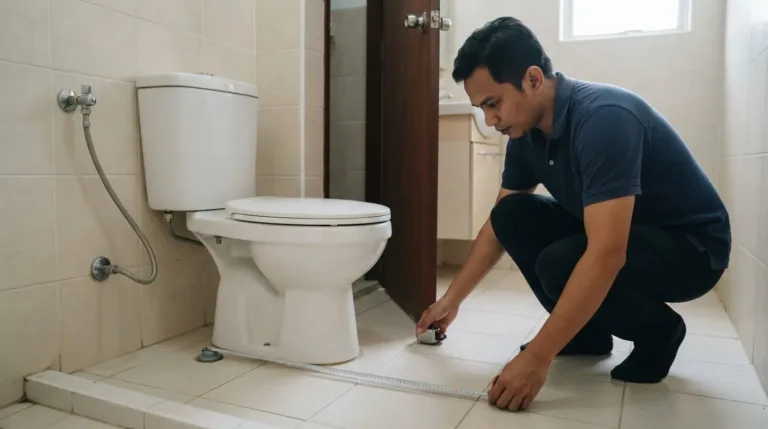
Record the distance from the finished wall behind the toilet to the centre of the floor bolts that secure it. This is commonly called the rough-in measurement. Also note the available width and depth, the bowl’s shape, and where the water supply sits. Take clear photos of the existing fixture and surrounding space. Use these details to compare product specifications rather than assuming a new model will match automatically.
Is a toilet with recurring clogs always due for replacement?
No. Recurring clogs don’t automatically mean the toilet itself needs replacing. The cause could be within the fixture or elsewhere in the drainage system, and the pattern alone can’t identify it. Note whether clogs happen after particular uses, whether flushing is consistently weak, and whether other drains are affected. Those observations can help distinguish a toilet-specific performance issue from a possible wider drainage concern before you decide on replacement—a scenario where residential plumbing experts like Pioneer Plumbing CDA can help diagnose whether line issues or the fixture itself are to blame.
Can I replace only the toilet seat instead of the whole toilet?
Yes, if the bowl and tank are in good condition and the problem is limited to the seat. Before choosing one, compare the bowl’s shape and the seat’s hinge spacing with the replacement’s stated dimensions. A seat change won’t address a cracked bowl, leakage from the fixture, or poor flushing. If those problems are present, consider the whole water closet separately rather than expecting a new seat to resolve them.
What happens if I ignore a crack in the toilet bowl?
A crack can allow water to escape and may worsen over time, potentially leading to leakage around the toilet. The bowl may also become less reliable under normal use. Don’t assume a crack is harmless because it looks small or hasn’t caused a puddle yet. Note whether it changes or moisture appears nearby, and arrange for the damage to be assessed promptly so you can make an informed decision about continued use or replacement.