Bathroom mold is more than a cosmetic problem. People with respiratory conditions or allergies, older adults, children, and people with weakened immune systems should avoid prolonged exposure. To learn how to prevent mold in the bathroom, keep air moving, dry wet surfaces after bathing, and remove mold promptly, whatever its colour or type.
It’s understandable to want a bathroom that feels fresh, clean, and comfortable for everyone at home. This guide explains how to manage humidity, clean mold more safely, and recognise signs of leaks or insulation problems that may need attention. You’ll also learn why a small patch can call for a different response than a larger infestation, so you can take practical steps to protect your bathroom and control moisture.
Key Takeaways
- Reduce lingering moisture by airing out the bathroom and wiping wet tiles and walls after use.
- Keep the room comfortable and pay attention to humidity, since damp conditions can encourage mold growth.
- Use protective gear when cleaning mold, and treat patches larger than 0.5 m² as a job for a professional.
- Look beyond surface stains: mold on the ceiling may point to a leak or an insulation problem.
- See how bathroom fixtures from Akron Malaysia can support a practical, comfortable bathroom.
Is mold in the bathroom dangerous?
Bathroom mold can be a health concern, especially for people with respiratory diseases or allergies, older people, children, and people with weakened immune systems. Arrange professional removal if growth covers more than 0.5 m²; remove smaller patches promptly and safely.
- Limit prolonged exposure. Keep people in higher-risk groups away from moldy areas as much as possible, especially during cleaning. Children and anyone with asthma or allergies, for example, should avoid spending time in a bathroom with visible mold. Reduce contact while arranging cleanup, and don’t dismiss discoloration as merely cosmetic.
- Find the moisture source. Bathing and inadequate ventilation are common sources of indoor moisture that can support mold growth, according to the National Institute of Environmental Health Sciences. Check whether the bathroom stays damp after showers or moisture collects on walls, tiles, and other surfaces. Controlling the moisture helps prevent mold from returning after removal.
- Don’t wait for a particular colour. Remove bathroom mold as soon as possible, regardless of its colour or type. Dark patches aren’t the only ones to take seriously; lighter growth also needs attention. If new spots appear near a shower, ceiling, or wall, act promptly instead of waiting to see whether they spread.
- Use protection for small cleanup jobs. Wear gloves, a respirator, and safety goggles when removing mold. These precautions help limit direct contact and exposure to particles during cleaning. Keep vulnerable household members out of the bathroom while you work, and don’t brush a patch without protective equipment or a plan to contain debris.
- Replace mold-damaged silicone. Mold that has penetrated silicone grout can’t be removed from within the material, so replace the affected silicone. Surface cleaning won’t remove growth embedded in the seal. Check the edges around the shower and basin; if mold remains in the silicone after cleaning, replace it instead of scrubbing repeatedly.
- Remove porous or affected belongings. Discard moldy bathroom furniture, accessories, and textiles, and replace a moldy shower curtain promptly. Don’t return a visibly moldy curtain to a clean shower area. Check nearby items too, since damp fabric and accessories can hold visible growth and bring it back into the room.
- Pay attention to how quickly dampness persists. Mold-related problems can surface after just one or two days of moisture exposure, according to the National Center for Biotechnology Information. If a bathroom remains wet after use, improve drying and ventilation rather than relying only on occasional cleaning. Prompt action can help you spot recurring moisture before mold spreads.
Heating the bathroom and monitoring humidity
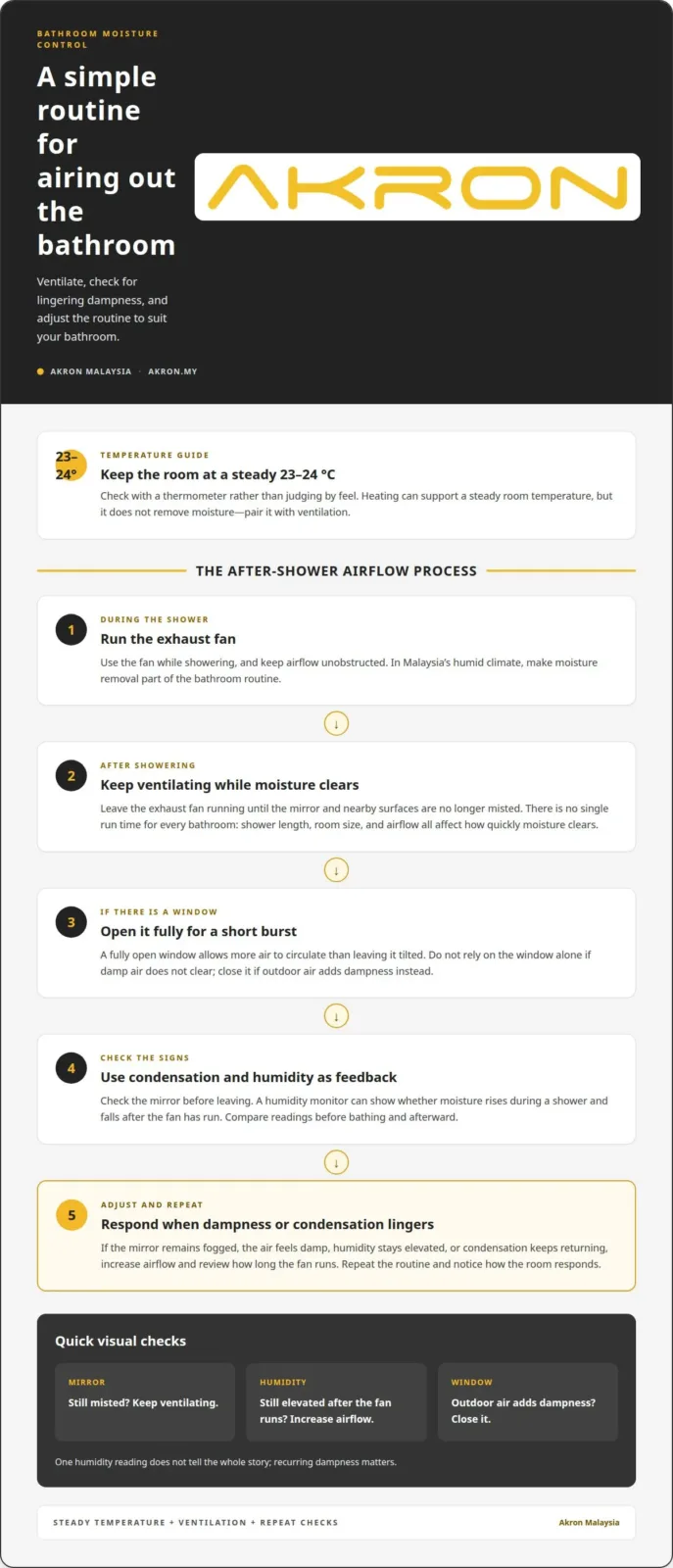
Manage warm, damp air with steady ventilation and practical temperature checks. In Malaysia’s humid climate, make moisture removal part of your bathroom routine.
-
Run the Exhaust Fan After Showering
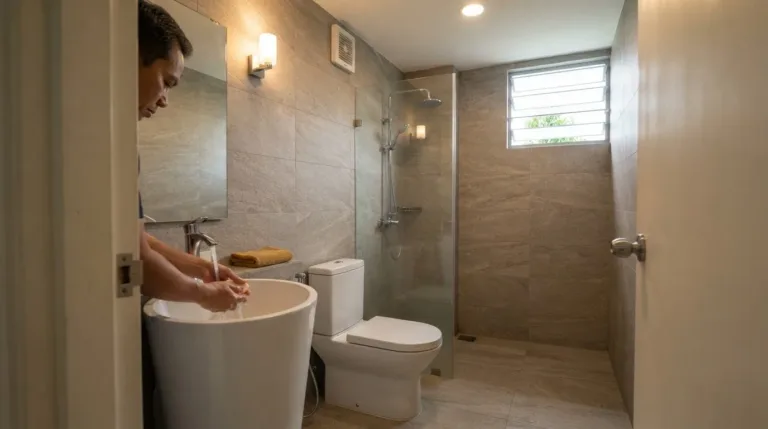
Leave the exhaust fan running after each shower, until the mirror and nearby surfaces are no longer misted. There’s no single run time for every bathroom: shower length, room size, and airflow all affect how quickly moisture clears. If the mirror remains fogged or the air feels damp, continue ventilating and check that the fan is working.
-
Improve Ventilation in Humid Malaysian Climates
Use the exhaust fan during showers and keep airflow unobstructed. If your bathroom has a window, open it fully for a short burst of fresh air rather than leaving it tilted, which allows less air to circulate. In Malaysia’s humid conditions, check whether damp air clears after bathing; don’t rely on an open window alone if it doesn’t.
- Keep the room at a steady temperature. Aim for a bathroom temperature of 23-24 °C to help prevent mold. Use a thermometer to check the room rather than judging warmth by feel alone. A steady, comfortable temperature supports a consistent routine, but heating doesn’t remove moisture by itself. Pair temperature management with ventilation after bathing, especially when the mirror remains misty.
- Monitor humidity and respond to signs. Use a humidity monitor to see whether moisture levels rise during showers and fall afterward. Compare readings before bathing and after the fan has been running. If humidity remains elevated or condensation keeps returning, increase airflow and review how long the fan runs. One reading doesn’t tell the whole story; recurring dampness matters.
- Build a repeatable airing routine. After showering, switch on the fan, open the window fully for a short burst if available, and check the mirror before leaving. Close the window if outdoor air adds dampness instead of clearing it. Notice how the room responds over repeated use. A routine guided by visible condensation and humidity readings helps you adjust ventilation to suit your bathroom.
If you’re refreshing the bathing area, explore bathroom shower options as part of planning a comfortable, practical space.
Household products and chemical cleaners for mold
Choose a cleaning method suited to the affected surface, then focus on keeping it dry afterward. For small areas, protective equipment and careful application make the task more manageable.
In Malaysia, choose bathroom-rated, mold-resistant paint and sealant for refinishing. The cost depends on surface area, preparation, and product coverage. Prevent mold on grout, tiles, ceilings, and silicone by removing growth promptly, drying surfaces, and replacing silicone where mold has penetrated it.
- Put on protective equipment. Wear gloves, a respirator, and safety goggles before cleaning visible mold. Keep children and other household members away from the work area. Prepare the surface and cleaning materials first so you can work steadily without touching contaminated areas with bare hands.
- Use 70% high-proof alcohol on a small affected area. Apply it carefully to the mold, following the product’s instructions and taking care around finishes. Work on one section at a time, then allow the surface to dry. Check the material afterward, since a cleaner suitable for one surface may affect another.
- Try low-concentration hydrogen peroxide on suitable surfaces. A solution of about 3% hydrogen peroxide mixed with water can be used to remove bathroom mold. Leave it on the affected area for half an hour, then brush or rinse away the remaining mold. Keep the solution on the target area, and dry it after cleaning.
- Clean tiles and grout without leaving damp residue. Apply your chosen cleaner to the affected patch, then brush the grout or wipe the tile. Rinse if the product instructions call for it, and dry the area completely. Pay particular attention to grout lines and corners, where residue and moisture can linger after a quick wipe.
- Replace silicone when mold has penetrated it. Mold that has penetrated silicone grout cannot be removed by surface cleaning, so replace the affected silicone. Don’t keep applying cleaner to a stained seal and expect it to reach growth inside the material. After replacement, keep the joint dry and watch for returning moisture.
- Choose paint and sealant for bathroom conditions. Look for paint and sealant labelled for bathroom use and mold resistance, and follow the product directions for preparation and application. The cost depends on the area, existing surface, preparation needs, and coverage per container. Don’t apply a new finish over damp or moldy material.
- Prevent recurrence with a surface-by-surface check. After cleaning, inspect grout, tile edges, ceiling corners, and silicone joints. Remove new growth promptly, and dry cleaned surfaces before using the bathroom again. If a patch returns in the same place, look for persistent dampness instead of relying on repeated surface cleaning alone.
Keep the treatment focused on the bathroom mold for half an hour; only after that interval, brush or rinse away the remaining growth from the treated surface.
Identifying leaks and insulation problems
Mold grows where moisture lingers. Bathing and inadequate ventilation can add moisture, while a ceiling patch may point to a leak or poor insulation.
Bathrooms develop mold when moisture remains on surfaces or enters building materials. According to the National Institute of Environmental Health Sciences, bathing and inadequate ventilation are common sources of moisture that can support mold growth.
- Trace recurring patches to their location. Note whether mold returns in the same ceiling corner, beside a pipe, or near the shower. A recurring pattern can help distinguish a persistent moisture source from a one-off splash. Record the location and appearance, then compare it after normal bathroom use.
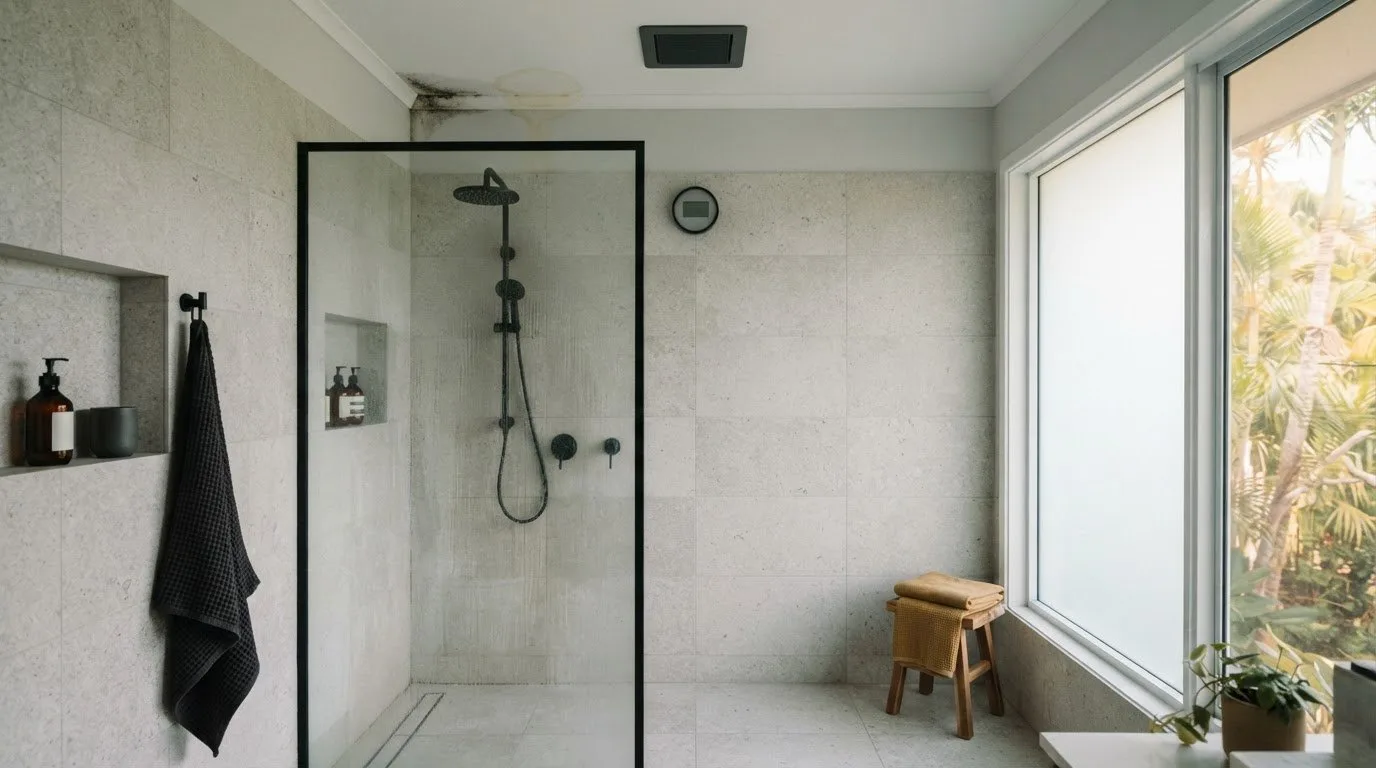
- Inspect the ceiling closely. Mold on a bathroom ceiling may indicate poor insulation or a leaking water pipe. Look for damp-looking areas, discoloration, or changes to the paint around the patch. These signs don’t prove the cause, but they can help show where the problem needs investigation.
- Watch for signs of a pipe leak. Check visible pipe joints, the area beneath plumbing, and nearby walls for moisture or recurring marks. Note whether a stain changes after water is used. Don’t dismantle pipes or open a wall to investigate; record what you can see and keep the area accessible.
- Consider insulation when ceiling mold returns. If ventilation is adequate but mold keeps appearing overhead, poor insulation may be contributing. A ceiling can develop a recurring damp area even when no pipe leak is obvious. Treat that pattern as a reason to investigate the building cause, not simply repaint the surface.
- Compare the patch with bathroom use. Observe the ceiling and adjoining walls before and after bathing. If dampness appears or becomes more noticeable after water use, include that detail in your notes. If the same area stays damp despite routine ventilation, surface cleaning alone won’t address the underlying source.
- Keep a simple record. Photograph the affected ceiling or wall and note when you first noticed the patch. Record whether it sits near visible plumbing or returns after cleaning. These observations give a professional a clearer starting point when identifying a leak or insulation problem.
- Avoid covering the evidence. Don’t paint over a damp or moldy ceiling before identifying the moisture source. A fresh coating can hide visible changes without resolving a leaking pipe or insulation issue. Keep the area observable and continue normal ventilation while arranging an investigation.
- Bring in a professional when the cause needs diagnosis. If a ceiling patch persists despite adequate ventilation, have a professional identify and resolve the cause. This is especially important when a leak or poor insulation may be involved, because cleaning visible mold alone won’t correct the source. Share your location notes and photographs to support the assessment.
Mold on a bathroom ceiling may indicate poor insulation or a leaking water pipe. If ventilation is adequate, a professional should identify and resolve the cause.
Akron Malaysia: Water Closet
Akron Malaysia offers Water Closets, Wash Basins, Faucets, and Showers for bathroom updates. After addressing a moisture issue, consider which fixtures best suit your room and daily routine. A well-planned bathroom balances practical choices with a look that feels comfortable at home.
Explore the available fixtures as you plan your bathroom refresh. For questions about Akron Malaysia’s offerings, contact Akron Malaysia.
Build a Bathroom Routine That Lasts
Lasting improvement starts with making moisture checks part of everyday bathroom care. Choose a regular moment to notice changes, such as after showering or while cleaning. Look for damp patches that return, seals that stay wet, or ceiling marks that change over time. These details can help you respond to a developing problem before it becomes harder to manage.
Keep your routine simple enough to maintain. If mold reappears in the same place, focus on finding the underlying moisture source rather than repeatedly treating the surface. That practical approach is central to preventing mold in the bathroom over time: stay attentive, act early, and address persistent causes as well as visible growth.
For a bathroom refresh, Akron Malaysia can help you explore fixture options suited to your space. Take the next step at your own pace and contact Akron Malaysia to discuss your bathroom plans.
Frequently Asked Questions
What is the ideal bathroom humidity level to prevent mold?
Use condensation as a practical sign: humidity should fall after bathing rather than leaving mirrors and surfaces wet. A humidity monitor can help you compare readings before and after a shower. To understand how to prevent mold in a bathroom, watch whether the air dries between uses. If readings stay high or condensation returns, improve airflow and check whether the exhaust fan clears damp air.
What bathroom cleaning products prevent mold, and how often should they be used?
For visible mold, 70% high-proof alcohol or hydrogen peroxide diluted to about 3% can be used on suitable surfaces. For peroxide, leave it on the affected area for half an hour, then brush or rinse away the remaining mold. Learn how to prevent mold in a bathroom by cleaning visible growth promptly and drying the surface afterward, rather than applying cleaners on a fixed schedule. Follow each product’s directions.
How to fix bathroom leaks and condensation that cause mold?
For condensation, improve ventilation and observe whether moisture clears after showering. If dampness keeps returning in the same place, note its location and whether it changes after water use. A recurring ceiling patch can point to a leaking pipe or poor insulation. If ceiling mold persists despite adequate ventilation, have a professional identify and resolve the underlying cause instead of covering the mark.
What are the health risks of bathroom mold exposure?
Prolonged exposure to bathroom mold is a particular concern for people with respiratory diseases or allergies, older people, children, and people with weakened immune systems. Keep these household members away from a moldy bathroom during cleanup and limit their time near affected areas. Remove visible mold promptly, and use protective equipment during cleaning. For growth covering more than 0.5 m², arrange professional removal.
Which bathroom paints and sealants resist mold, and how much do they cost in Malaysia?
Choose paint and sealant labelled for bathroom use and mold resistance. In Malaysia, the cost depends on the surface area, preparation needed, and product coverage.