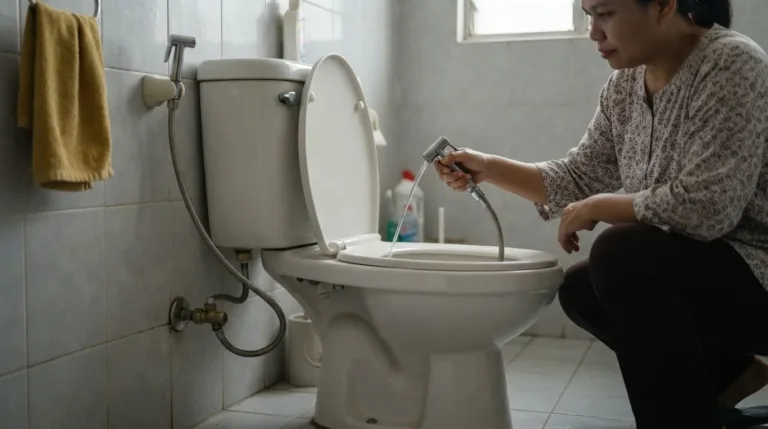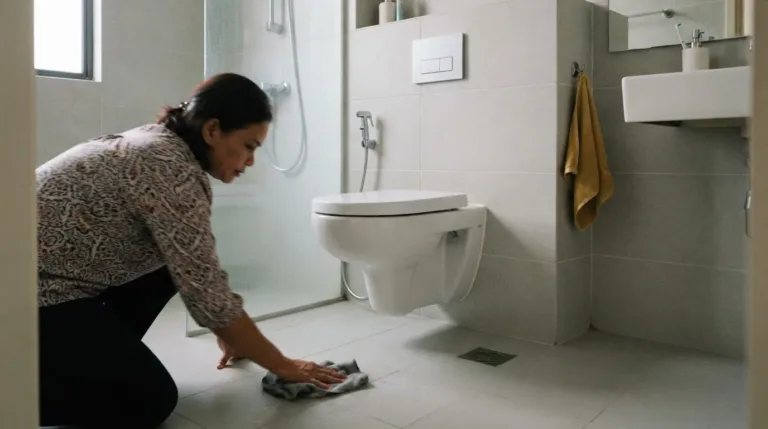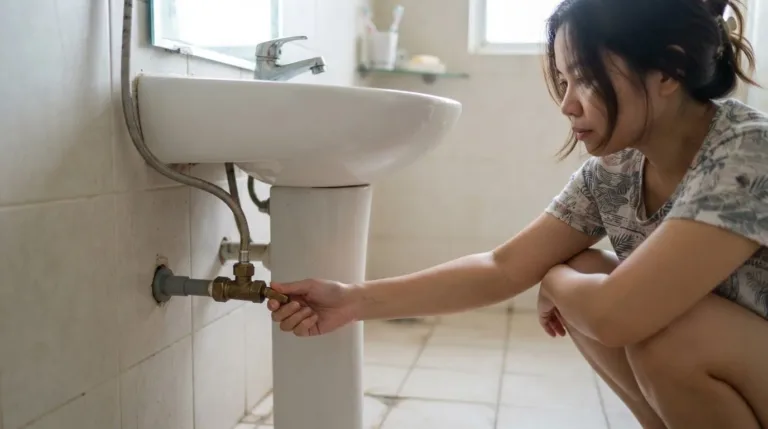
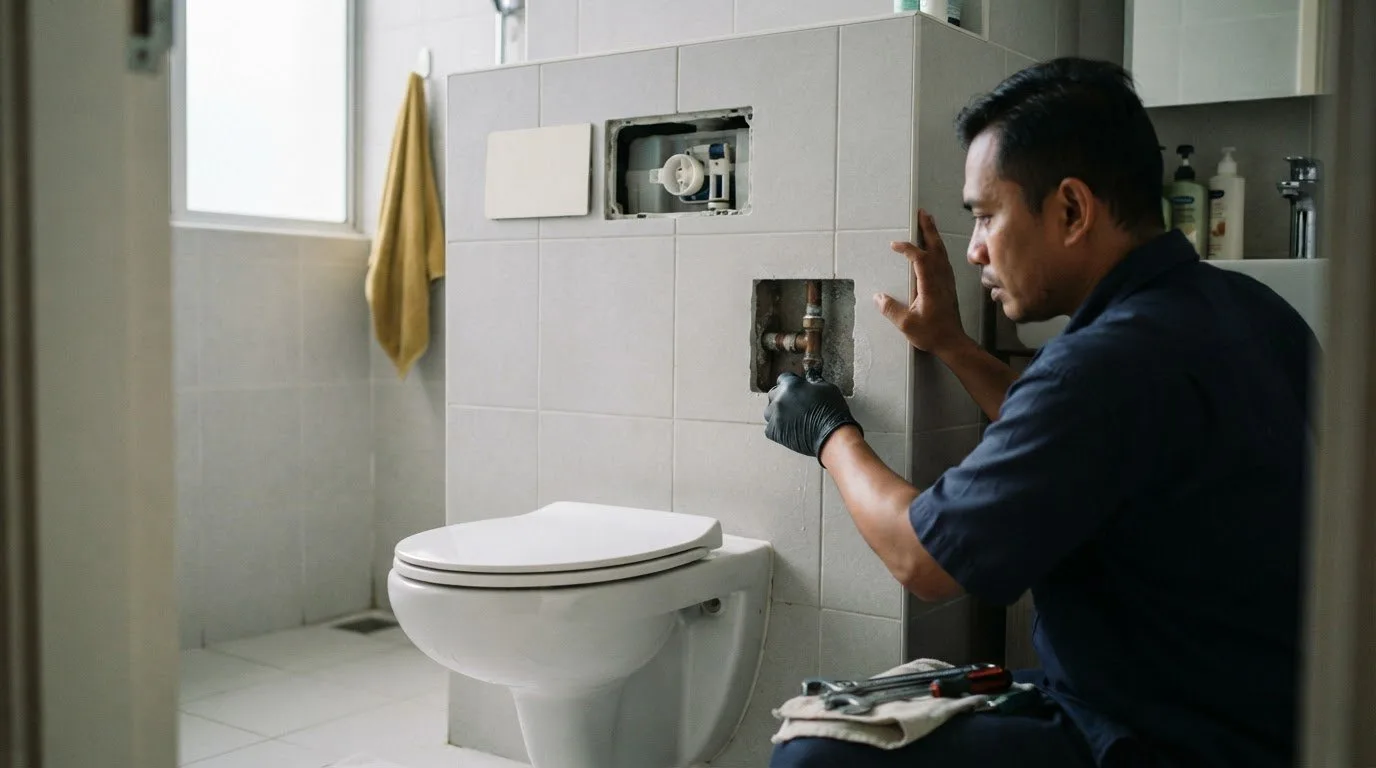
A concealed cistern doesn’t automatically mean a repair requires opening the wall. The flush plate usually provides access to parts such as flushing valves and seals, so some maintenance can be done through that opening. This concealed cistern maintenance guide explains what you can reach and when a fault may extend beyond the access point.
It’s understandable to worry that a hidden tank will make every repair disruptive. The type and location of the fault matter: an accessible valve or seal issue may be addressed through the flush plate, while damage or a problem with concealed pipework may require a larger opening.
Read on to learn how a concealed cistern works, which components are accessible through the flush plate, and what signs suggest a repair may require access behind the wall. You’ll also see why opening the wall isn’t the first step for every cistern problem.
Key Takeaways
- The flush plate provides access to key cistern parts, so some maintenance can be done without opening the wall.
- Learn how to distinguish an accessible valve or seal issue from a fault that may involve concealed pipework or damage behind the wall.
- Persistent hissing or water running after a flush can help signal that the cistern needs attention.
- Inspection needs depend on the cistern’s condition and signs of a problem, rather than an invented fixed service interval.
- Understand how a suitable water closet can support a practical, comfortable bathroom design.
Concealed cistern components and service access
A concealed cistern sits behind a wall or panel, keeping the toilet area visually uncluttered. Its flush plate provides the main service access for routine checks and reachable components.
Flush Plate Access
The flush plate is a removable panel that exposes the cistern’s service opening. Through this opening, technicians can reach accessible parts without immediately removing tiles or opening the wall.
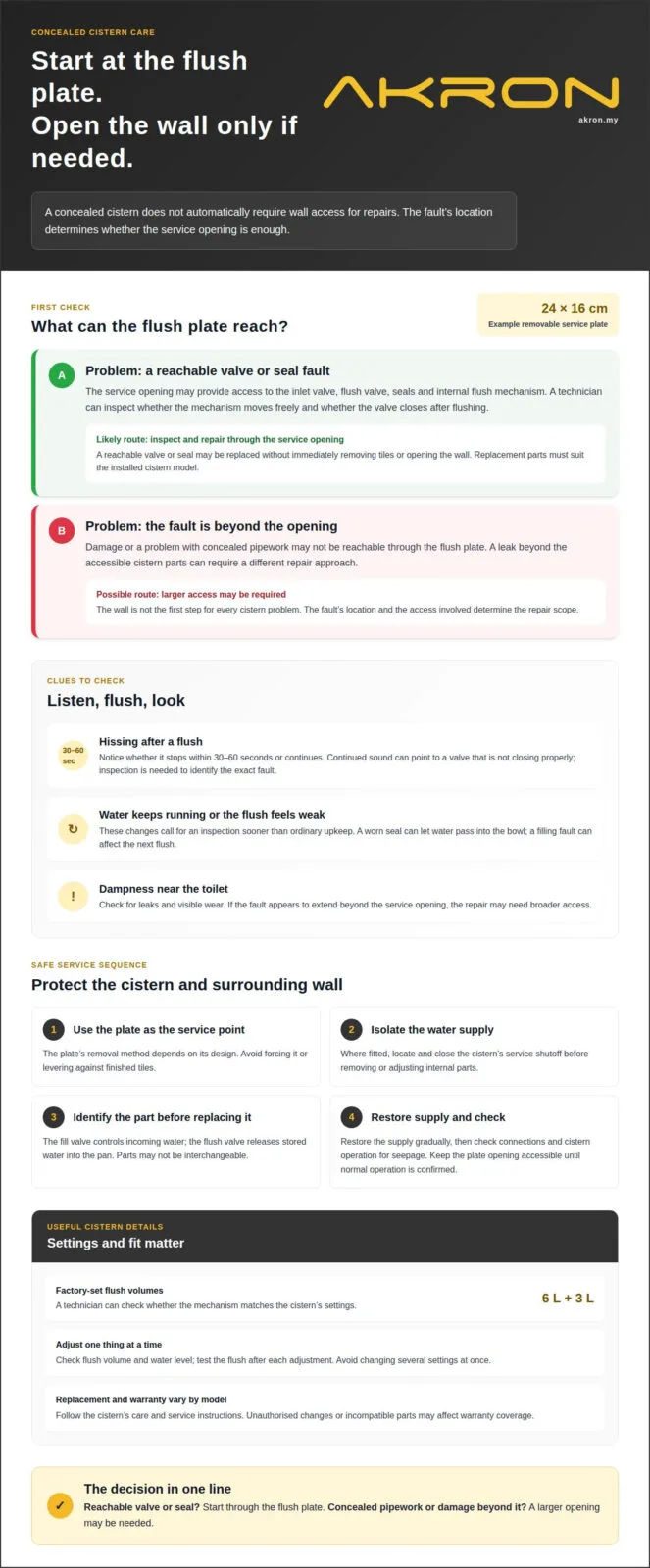
Flush actuator plates measuring 24cm wide by 16cm high are described as removable service hatches. The plate’s exact removal method depends on its design, so avoid forcing it or levering against finished tiles. Once removed, the opening can provide a view of the cistern and space to reach its internal mechanisms.
Accessing Cistern Internals
The service opening may provide access to components such as the inlet valve, flush valve and seals. A fault in a reachable part may be addressed through the opening, while a leak beyond it can require a different repair approach.
For example, a technician can inspect whether the flush mechanism moves freely and whether the valve closes after flushing. Some cisterns have factory-set flush volumes of 6 and 3 litres. The plate opening helps identify the arrangement, but replacement parts must suit the installed cistern model.
Maintenance and warranty requirements vary by cistern model. Follow the care and service instructions supplied for that model, as unauthorised changes or incompatible parts may affect warranty coverage.
Water Shutoff and Leak Prevention
Before maintenance, isolate the cistern’s water supply. Opening a valve or connection while water is flowing can cause leakage into the wall cavity.
Where fitted, a technician can locate and close the cistern’s service shutoff before removing or adjusting internal parts. After the work, the supply can be restored gradually, then the connections and cistern checked for seepage. Keep the flush plate opening accessible until normal operation is confirmed.
In Malaysia, concealed cistern servicing and repair costs depend on the fault, required parts and access involved. Replacing a reachable seal differs from work that requires opening the wall, so the repair scope is a key cost factor.
Inspection and Servicing Frequency
Inspection frequency refers to how often you check for leaks, flush performance and visible wear. These checks matter because a slow-running cistern can waste water before damage appears outside the wall.
Include a flush check in routine bathroom care, and watch for changes such as a weak flush, water that keeps running or dampness near the toilet. These signs call for an inspection sooner than ordinary upkeep. Usage and the condition of valves and seals help determine whether further servicing is needed.
A concealed cistern maintenance guide should treat the flush plate as a service point, not a reason to open the wall first. The opening allows an initial inspection of reachable components; the fault’s location determines whether that access is enough.
Repairing valves and seals through the flush plate
Valves and seals control how a concealed cistern fills and releases water. Their condition affects flush performance, water use and whether the cistern continues running after a flush.
Valve and Seal Repairs
A valve or seal repair addresses the parts that regulate filling or prevent water from leaving the cistern. A worn seal can let water pass into the bowl, while a filling fault can affect the next flush.
Listen for hissing after flushing. A plumber should assess whether it stops within 30-60 seconds or continues. Continued sound can point to a valve that is not closing properly, though the exact fault needs inspection. A straightforward valve or seal replacement typically takes less than an hour; the time depends on the part and access.
Adjusting Flush Volume and Water Level
Flush-volume adjustment changes how much water the cistern releases, while water-level adjustment controls how much it stores before flushing. An unsuitable setting can affect the flush or cause water to keep flowing into the bowl.
The cistern is factory set to flush 6 and 3 litres. A technician can check whether the mechanism matches those settings and whether the float stops the incoming water at the intended level. Avoid changing several adjustments at once. A flush test after each change helps identify whether the adjustment improved the result or created another problem.
Fill and Flush Valve Removal
Removing a fill valve or flush valve involves disconnecting the relevant mechanism through the service opening for cleaning or replacement. Correct identification matters because the valves serve different functions and may not use interchangeable parts.
Before removal, isolate the water supply and empty the cistern. The fill valve controls incoming water; the flush valve releases stored water into the pan. A technician can note how each part connects, remove it without stressing nearby fittings, and install a compatible replacement. Restore the supply and test several flushes to check for leaks or poor operation.
Flush Pipe Cutting and Fit
The flush-pipe fitting connects the cistern outlet to the toilet pan, so its length must suit the installed pan height. A poor fit can disrupt the connection or cause leakage at the joint.
Installation instructions specify cutting the flush pipe’s 50mm end squarely to suit the pan height. This is a fitting requirement, not a routine valve adjustment. The cut should be measured against the actual pan position, then checked for a straight connection before the toilet is set in place. If a replacement pan changes that height, review the bathroom product options alongside the cistern and pipe arrangement.
When concealed cistern repairs require opening the wall
The flush plate provides a service route, but it cannot expose every pipe or fitting behind a finished wall. Opening the wall may be necessary when inspection points to damage or a failed connection outside the accessible area.
Signs the fault may be behind the wall
Look for dampness around the toilet, staining on an adjoining surface or water that continues appearing after the cistern stops flushing. These signs can indicate a leak beyond the visible cistern mechanisms, although moisture may also come from another source. A technician can compare the leak’s location with the cistern, supply pipe and flush connection before deciding where access is needed.
For example, if the flush plate reveals dry internal components but dampness persists below or beside the cistern, the fault may be behind the finished surface. If water instead runs into the toilet bowl, the cause may be within the cistern or its connection. Distinguishing between these signs helps avoid opening an unnecessary area.
When the service opening is not enough
The flush plate opening may not provide a clear view of a damaged supply pipe, a leaking joint or a cistern body cracked outside the access area. These faults may require a larger opening to reach the affected part. The opening needed depends on the fault’s position and the wall construction, not simply on the presence of a concealed cistern.
A technician can inspect through the existing access point, trace visible moisture and identify which side of the wall needs access. If the fault is at a reachable valve, removing tiles may add disruption without improving access. If the leak comes from concealed pipework, the flush plate alone may not provide access to the failed section.
Planning a safe, targeted opening
Before drilling, check the wall for concealed cables and exposed pipework. Either may run near the proposed access area. The opening should target the suspected fault rather than remove a broad section of wall without a clear reason.
Isolate the cistern’s water supply before repair work, then protect nearby surfaces from debris. A technician can use the damp area, visible pipe route and service opening to choose an access point. With tiled walls, the repair may also involve replacing the finish removed to reach the pipe or cistern.
What happens after access is opened
Once the wall exposes the fault, the technician can repair or replace the affected connection and check for further moisture. Restore the water supply gradually, then inspect the repair while the cistern fills and flushes. Dry surroundings and stable connections help show whether the source has been addressed.
Opening the wall is justified when the fault lies beyond the service opening, not simply because the cistern is hidden. A careful inspection first can narrow the repair area and help protect the surrounding bathroom finish.
How often should a concealed cistern be inspected and serviced?
Inspect the cistern during regular bathroom cleaning, but follow the manufacturer’s instructions for model-specific service timing. No single interval suits every concealed cistern. Usage, water conditions, component wear and previous repairs all affect when closer attention is useful.
A routine visual check can focus on the toilet’s performance and the area around it. Note whether the flush button moves normally, the bowl clears as expected, and the wall or floor near the toilet stays dry. A change from the cistern’s usual behaviour is more useful than following an arbitrary calendar schedule.
Keep a simple record of changes and maintenance. Note, for example, when a flush becomes weaker, a button sticks or a technician replaces a part. This history can help identify recurring problems and give the technician useful context. After a repair, observe several normal flushes and check exposed connections for moisture.
- During bathroom cleaning: Look for damp patches, staining or changes around the toilet.
- After a repair: Check that the flush works consistently and the serviced area remains dry.
- After a change in performance: Record what changed and when, then arrange an inspection if it continues.
Servicing differs from visual inspection. It involves opening the service access, examining components and addressing wear or faults. The need depends on the cistern’s condition, the part involved and the manufacturer’s care instructions. A repeatedly sticking flush button, for instance, calls for attention even if the surrounding wall looks dry. A cistern operating normally may only need the checks specified for its model.
Don’t wait for visible damage before responding to a persistent change. A technician can assess the cistern through its access point, test its operation and decide whether parts need adjustment or replacement. If the issue involves concealed pipework, the inspection can also establish whether the existing access is sufficient.
For a bathroom refresh alongside maintenance, consider bathroom fixtures suited to your space.
Follow the manufacturer’s model-specific instructions for care and service timing. Depending on the cistern’s condition and the parts involved, servicing may include examining components and addressing wear or faults.
Akron Malaysia
Akron Malaysia offers bathroom fixtures for readers planning a bathroom update alongside cistern maintenance. Its range includes water closets, wash basins, faucets and showers, helping you consider how essential fixtures work together in a practical, cohesive space. If a cistern fault has you weighing whether to keep the existing toilet or choose a replacement, explore options based on your bathroom layout and needs. A new fixture is a separate decision from repairing concealed pipework, so identify the fault and repair scope before choosing what to update. Akron Malaysia focuses on affordable, durable products with stylish design for homes across Malaysia. For help exploring bathroom fixture options, contact Akron Malaysia.
Make Your Next Bathroom Decision With Confidence
Use this concealed cistern maintenance guide as a reference when planning your next bathroom update. Keep the cistern model details and repair notes together, so future decisions account for the existing setup rather than treating each issue in isolation.
If you’re considering a broader refresh, think about how the toilet, wash basin and faucet will work together in your space. Akron Malaysia offers these bathroom fixtures, giving you options for creating a practical, comfortable bathroom. The right next step depends on whether you’re addressing a current fault or planning a change.
Contact Akron Malaysia for cistern advice and take the next step toward a bathroom that feels right for your home.
Frequently Asked Questions
Firstly, what exactly is a Concealed Toilet Cistern?
A concealed toilet cistern is a water tank hidden behind a finished wall or panel and connected to the toilet pan. Usually, only the flush plate and toilet are visible. Although the tank stays out of sight, it still needs an access point for service. For example, a flush plate may open to reveal the cistern’s service area without removing the surrounding wall finish.
How does a concealed toilet cistern work, and what parts need regular maintenance?
A concealed cistern stores water and releases it through the flush pipe when you operate the flush control. The inlet valve refills the tank, while the flush mechanism and seals help control water release and flow. For practical upkeep, watch for changes in button movement, refill behaviour or flushing. A technician can identify the installed parts before selecting replacements, since designs vary between cistern models.
How to access and clean a concealed cistern through the flush plate?
Remove the flush plate according to its design to access the service area, then clean only reachable surfaces with a soft cloth. Avoid pouring cleaning chemicals into the opening or forcing small components, as this can damage moving parts or seals. Keep dirt and loose debris away from the mechanism. If the plate resists removal or an internal part needs dismantling, stop and arrange an inspection instead of levering against the wall finish.
How to fix a concealed cistern that keeps running or leaking into the toilet bowl?
A cistern that keeps running may have a filling valve that fails to close or a flush seal that no longer holds water. First, note whether water continues entering the bowl after flushing or moisture appears outside the toilet. These symptoms point to different fault areas. Isolate the supply if water is escaping, and have the internal mechanism assessed before replacing parts, as an incorrect fit can leave the leak unresolved.
How to troubleshoot weak flushing, slow refilling, or a cistern that will not flush?
Start by noting the exact symptom: a weak flush, slow refill or unresponsive button. Check whether the button moves freely and whether the cistern refills after a flush. If the button moves but no water releases, the control linkage may need inspection; slow refilling points to the inlet path. Avoid forcing the control or adjusting unfamiliar parts. The cistern model and its components guide the appropriate repair.
What replacement parts fit common concealed cistern brands and models in Malaysia?
Replacement parts must match the cistern’s brand, model and mechanism; there is no universal fit for every concealed cistern in Malaysia. Share the cistern label or clear photographs of the flush plate and accessible components when identifying a part. A flush valve that looks similar, for example, may have different connections or dimensions. Matching the original specification helps prevent poor operation and repeat repairs.