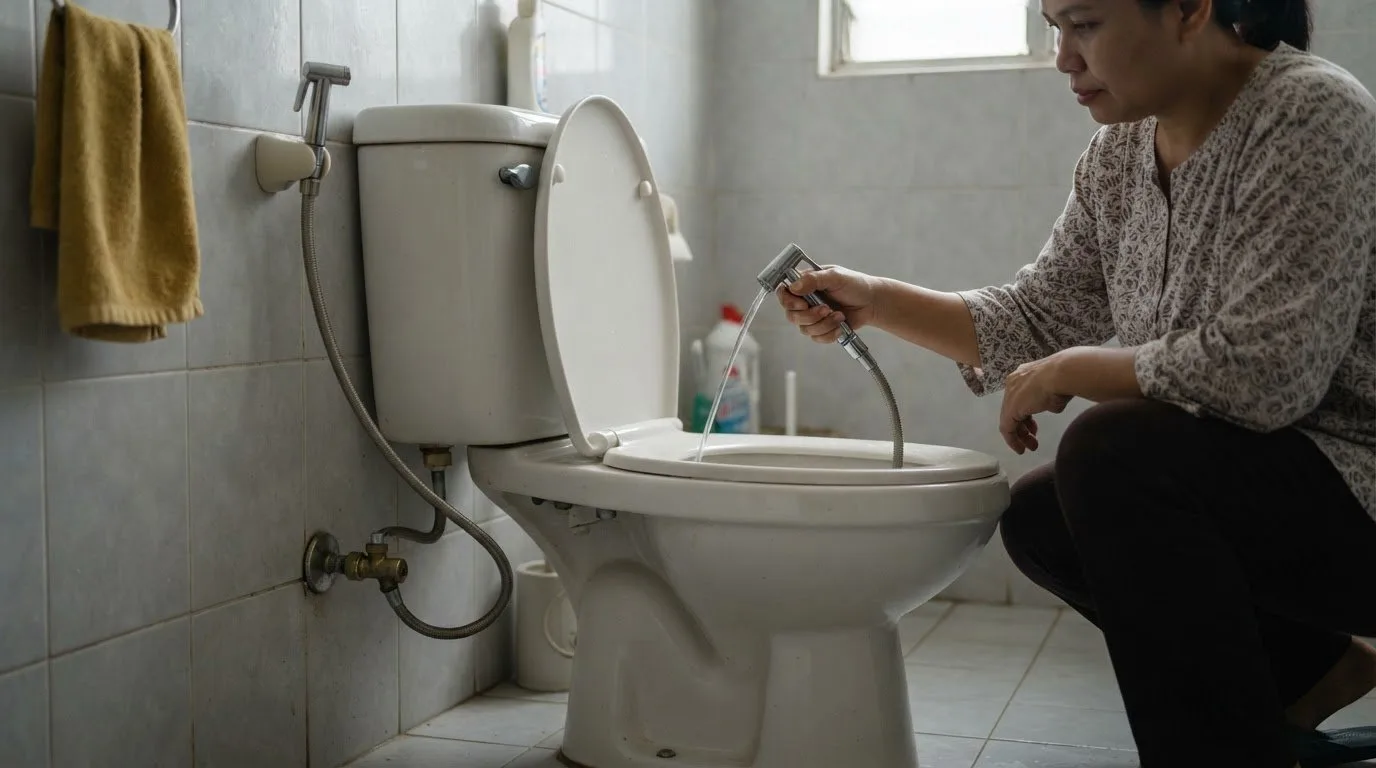
Good toilet hygiene depends on more than choosing a sprayer that looks right. The best bidet spray for toilet use should feel comfortable in everyday routines and suit your toilet’s layout, hose reach and fittings. A good fit makes it easier to use and store.
If you’re considering a bidet sprayer, it’s natural to want a choice that feels clean, practical and simple to use. This guide explains how hygiene and daily habits shape your decision, and what to consider about hose length and fittings before choosing.
You’ll also learn how these details work together, so you can find an option that suits your bathroom and your routine with confidence.
Key Takeaways
- Choose a sprayer that suits your toilet setup and everyday routine, not just its appearance.
- Consider how hygiene and ease of handling shape comfortable daily use.
- Think about hose reach and fitting compatibility to make the sprayer practical in your bathroom.
- Compare material options with durability and resistance to corrosion in mind.
- Explore Akron Malaysia’s bathroom fixtures when planning a coordinated, functional bathroom.
Why Consider a Bidet Sprayer?
A handheld sprayer can suit a toilet where you want a separate rinse tool without replacing the seat. The best bidet spray for toilet use depends on the available connection, toilet shape and how you plan to handle it. In a compact bathroom, for example, a wall-mounted holder can keep the sprayer within easy reach.
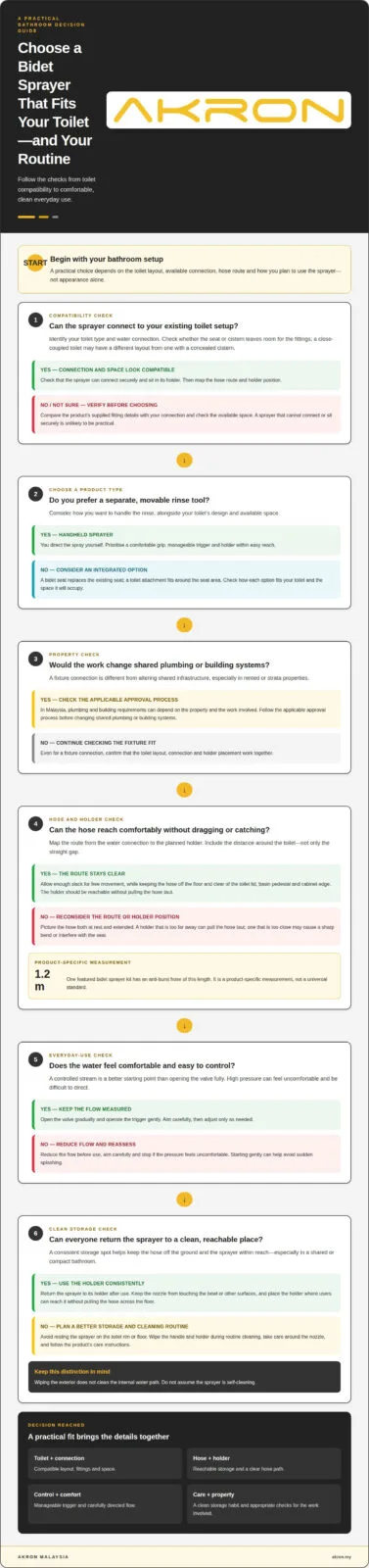
Installation and compatibility go together. Before choosing, identify your toilet type, locate its water connection and check whether the seat or cistern leaves room for the fittings. A close-coupled toilet may have a different layout from one with a concealed cistern. A sprayer that cannot connect to the existing setup or sit securely in its holder is unlikely to be practical.
Handheld sprays, bidet seats and toilet attachments serve different needs. You direct a handheld spray yourself, while a bidet seat replaces the existing seat and an attachment fits around the seat area. Choose according to whether you prefer a separate, movable sprayer or an integrated setup, as well as your toilet’s design and available space.
In Malaysia, plumbing and building requirements can depend on the property and the work involved. Follow the applicable approval process before changing shared plumbing or building systems. In rented or strata properties, connecting a fixture is different from altering shared infrastructure.
When comparing prices, focus on what each product includes, not just its listed price. Models can differ in materials, finish, holder design and included fittings. Compare these details side by side, and don’t assume a higher price means a better fit for your toilet.
Choose according to your needs rather than an unverified model ranking. For a simple setup, prioritise a suitable connection, comfortable grip and reachable holder. If you’re considering a seat or attachment, check its fit around the toilet and the space it will occupy.
- Check compatibility: Match the sprayer’s connection and holder placement to your toilet’s layout.
- Compare product types: Weigh a movable handheld sprayer against an attachment or replacement seat.
- Assess value: Compare included fittings, materials and design details across budget and premium options.
- Consider the property: Treat changes to shared plumbing differently from a fixture connection.
A bidet sprayer adds a separate rinse option without taking up the space of a larger bathroom fixture. Choose a setup that suits your toilet, bathroom and everyday preferences.
Bidet spray hygiene and everyday use
Everyday hygiene depends on controlled use and a clean, accessible sprayer. A handheld bidet spray can provide front and rear spray functions, so users can direct water where needed. That flexibility makes grip, nozzle direction and reachable controls practical considerations. For example, a sprayer stored beside the toilet is easier to pick up and return after use.
Start with the water control. Open the valve gradually, then operate the trigger gently to judge the stream before directing it. A strong jet can feel uncomfortable or be difficult to control, particularly when the user expects a softer rinse. Begin with low flow, aim carefully, and adjust only as needed. This measured approach helps avoid sudden splashing and makes the routine more manageable.
High-pressure water can cause discomfort and may be difficult to direct. Reduce the flow before use, aim carefully and stop if the pressure feels uncomfortable. A controlled stream is a better starting point than opening the valve fully.
Clean handling matters between uses. Keep the sprayer in its holder rather than resting it on the toilet rim or floor. Return it to the holder after use, and keep the nozzle from touching the bowl or other surfaces. A dedicated wall holder provides a consistent storage place away from cleaning items.
Build a simple routine around your bathroom’s regular cleaning schedule. Wipe the handle and holder during routine cleaning, taking care around the nozzle. Follow the product’s care instructions for cleaning materials. Don’t assume a sprayer is self-cleaning or that wiping its exterior cleans the internal water path.
Shared bathrooms benefit from predictable storage and clear use habits. Place the holder where each user can reach it without pulling the hose across the floor or around the toilet. Keeping the hose off the ground makes it easier to separate from floor-cleaning tools. In a compact bathroom, a fixed holder also saves basin or shelf space.
For guests or children, explain the trigger and water control before use. A quick demonstration can show how to start gently, aim toward the bowl and return the sprayer afterward. Keep the instructions simple. The goal is a controlled rinse, not a high-pressure blast or a wet floor.
Choose hygiene features that suit your routine: a manageable trigger, a reachable holder and a spray you can direct carefully. If you’re planning a broader bathroom update, consider fixture choices that suit the room’s layout.
Hose length and fittings
A hose needs enough reach for comfortable use, without dragging across the floor or catching around the toilet. One featured bidet sprayer kit has a 1.2-metre anti-burst hose. Treat that as a product-specific measurement, not a universal standard. The right length for your bathroom depends on the water connection, holder position and path between them.
Map the route from the connection point to the planned holder. Account for the distance around the toilet’s side, not just the straight gap between two points. A connection behind a close-coupled toilet, for example, may need a different route from one beside the bowl. Allow enough slack for the sprayer to move freely, but avoid a loop that touches the floor or catches on nearby fixtures.
Next, consider where to place the holder. If it is too far from the toilet, the hose may pull taut when you lift the sprayer. If it is too close, the hose may bend sharply or interfere with the seat. Picture the hose both at rest and extended. Its path should clear the toilet lid, basin pedestal and cabinet edge.
Fittings matter as much as reach. The hose must connect securely to the sprayer and water supply. Connection shapes and sizes can vary between products and plumbing setups, so compare the supplied fitting details with your existing connection before installation. A mismatch can prevent a secure connection, even if the hose length seems right.
Use this practical selection sequence:
- Locate the connection: Identify where the sprayer will receive water.
- Plan the route: Trace the hose path to a holder beside the toilet.
- Compare reach: Check that the hose reaches comfortably without resting on the floor.
- Match fittings: Confirm that both ends suit the sprayer and supply connection.
- Review movement: Make sure the hose does not snag when lifted or returned.
A nearby connection may allow a shorter hose route. A toilet beside a partition or vanity may need more reach to route the hose around an obstacle. Either way, extra length is useful only if it stays controlled. A loose coil can clutter a compact room and make the sprayer harder to store neatly.
During fitting, keep the hose untwisted and align each connector before tightening. Don’t force a connection that resists, as a cross-threaded fitting can compromise the joint. After assembly, open the water supply carefully and inspect the connections for leaks. If a joint leaks, shut off the supply and correct the connection before regular use.
Choose hose length and fittings together. A suitable route, secure connections and tidy storage make a sprayer easier to handle every day.
Which bidet spray materials are most durable and corrosion-resistant?
Material affects how a sprayer feels in hand, handles regular cleaning and holds its finish. A guide describes a bidet sprayer design made from 304-grade stainless steel. That gives you a concrete material reference when comparing options, but the material alone doesn’t tell you how every component is constructed.
Stainless steel is commonly selected for bathroom fittings because it resists corrosion better than untreated steel. The 304-grade example is useful when assessing a metal sprayer, especially in a room exposed to frequent moisture. Still, check which parts use stainless steel. A metal-looking finish may cover another base material, and the hose, trigger, connectors and holder may use different materials.
Plastic components can make a sprayer lighter and easier to handle. Performance depends on the type of plastic, construction and care, so don’t assume every plastic handle has the same durability. Compare the trigger and nozzle area closely: these parts receive repeated hand contact and water exposure during routine use.
Brass may be used in connectors or fittings, while a coating can create a different surface appearance. Both the base material and its finish matter. A scratch through a coating can expose the underlying material to moisture, while a well-finished surface is easier to wipe clean. Look for clear material descriptions instead of relying on labels such as “premium” or “heavy duty.”
Use this quick comparison when reviewing a sprayer:
- Body: Identify whether the main handle is stainless steel, plastic or another material.
- Wetted parts: Check the nozzle and connectors, where water passes through or collects.
- Finish: Look for an even surface without visible chips, rough edges or gaps.
- Care: Follow the product’s cleaning guidance to protect its finish.
For a bathroom in regular use, choose materials that suit how the sprayer will be handled and cleaned. A stainless-steel body may feel more substantial than a plastic one, while some users may find a lighter handle easier to grip. Neither automatically makes the complete sprayer more durable. The construction of its joints and moving trigger also affects everyday wear.
After installation, include the sprayer in your regular bathroom inspection. Look for changes such as a loose handle, damaged finish or moisture around a connector. Wipe away water after cleaning, and avoid abrasive pads that can mark the surface. These habits help maintain the appearance of stainless steel, plastic and coated parts.
Compare material details across bathroom product options as you plan a coordinated space, and choose a finish that fits your practical needs and preferred look.
Akron Malaysia
Akron Malaysia offers bathroom fixtures to help you plan a practical, coordinated space around your toilet and daily routine. After assessing a bidet sprayer’s hygiene, hose reach, fittings and materials, consider how the surrounding fixtures work together. A well-planned bathroom keeps everyday essentials functional while supporting the room’s overall look.
Akron Malaysia offers Water Closets, Wash Basins, Faucets and Showers. Consider these fixtures when refreshing a bathroom or choosing pieces for a new space. The right combination depends on your layout, preferred style and the features you value in daily use.
For help with your bathroom fixture plans, contact Akron Malaysia.
Make Your Bathroom Plan Work as a Whole
Choosing the best bidet spray for your toilet is one part of planning a bathroom around your daily routine. Next, consider how each fixture supports the room’s layout, function and overall feel. A cohesive plan helps create a space that feels considered, rather than assembled piece by piece.
Akron Malaysia offers Water Closets, Wash Basins and Faucets for bathroom planning. Considering these options together can help you look beyond a single fixture as you refine your space’s style and practical needs. Choose what feels right for your home and the way you use it.
For advice as you plan your bathroom, contact Akron Malaysia. Take the next step at your own pace and create a bathroom that feels comfortable, useful and distinctly yours.
Frequently Asked Questions
What is a bidet, anyway?
A bidet is a bathroom fixture or attachment that uses water for personal cleansing after using the toilet. A handheld bidet spray is a separate nozzle connected by a hose, while a bidet seat or attachment fits onto the toilet. For example, a handheld model can be stored in a wall holder, whereas an integrated option stays attached to the toilet. These formats differ in use and fit.
What are the best bidet sprays for toilets available in Malaysia?
The best bidet spray for toilet use suits your toilet, preferred handling and bathroom setup. Compare spray control, grip, hose reach, fittings and material rather than relying on a “best” label alone. A user who prefers direct control may favour a handheld sprayer, while someone seeking an integrated setup may consider a bidet seat or attachment. Match the product type to your routine.
How much do toilet bidet sprays cost in Malaysia?
Bidet spray prices in Malaysia vary by product type, materials, finish and package contents. A handheld sprayer and a bidet seat are different purchases, so compare like with like. Check whether the listed price includes the hose, holder and fittings, and whether the material description applies to the handle or the full assembly. These details help explain differences between listings without treating one price as a universal benchmark.
What water pressure and spray settings should a good bidet spray offer?
A good bidet spray lets you control water flow comfortably and direct the stream accurately. Start gently, then adjust the trigger or control to a manageable level. Look for clear operation rather than a long list of settings. Some products offer front and rear spray functions, while others focus on water-volume control. A control you can use smoothly matters more than choosing the most forceful stream.
Are bidet sprays compatible with standard Malaysian toilets and plumbing?
Compatibility depends on the toilet’s shape, water connection position and the product’s fittings. “Standard” doesn’t guarantee that every sprayer will fit every bathroom. For example, a rounded-bowl toilet may suit an attachment designed for that shape, while a concealed cistern can affect access to connections. Compare your toilet’s layout with the product’s specified fit before choosing, especially if the property has shared plumbing.
How to install a handheld bidet spray in a Malaysian bathroom?
Installation involves connecting the sprayer to a suitable water supply and placing its holder within easy reach. A typical sequence is:
- Shut off the water supply before working on the connection.
- Fit the compatible connection and hose according to the product instructions.
- Secure the holder in a reachable position.
- Restore the supply gradually and inspect joints for leaks.
Stop if a fitting doesn’t align or water leaks. Forcing a connection can cause problems.