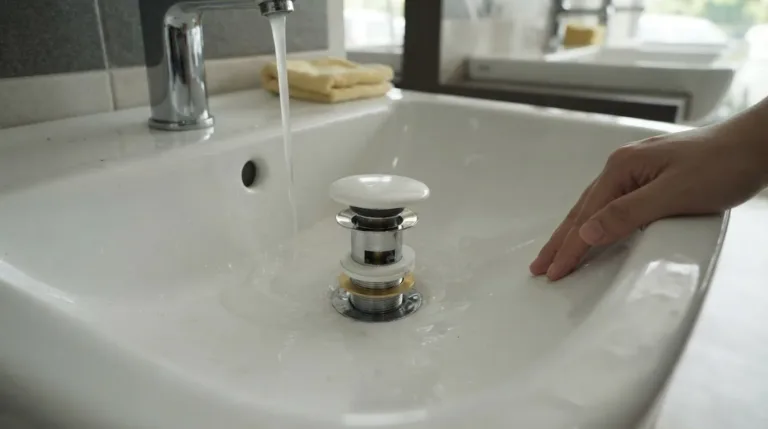
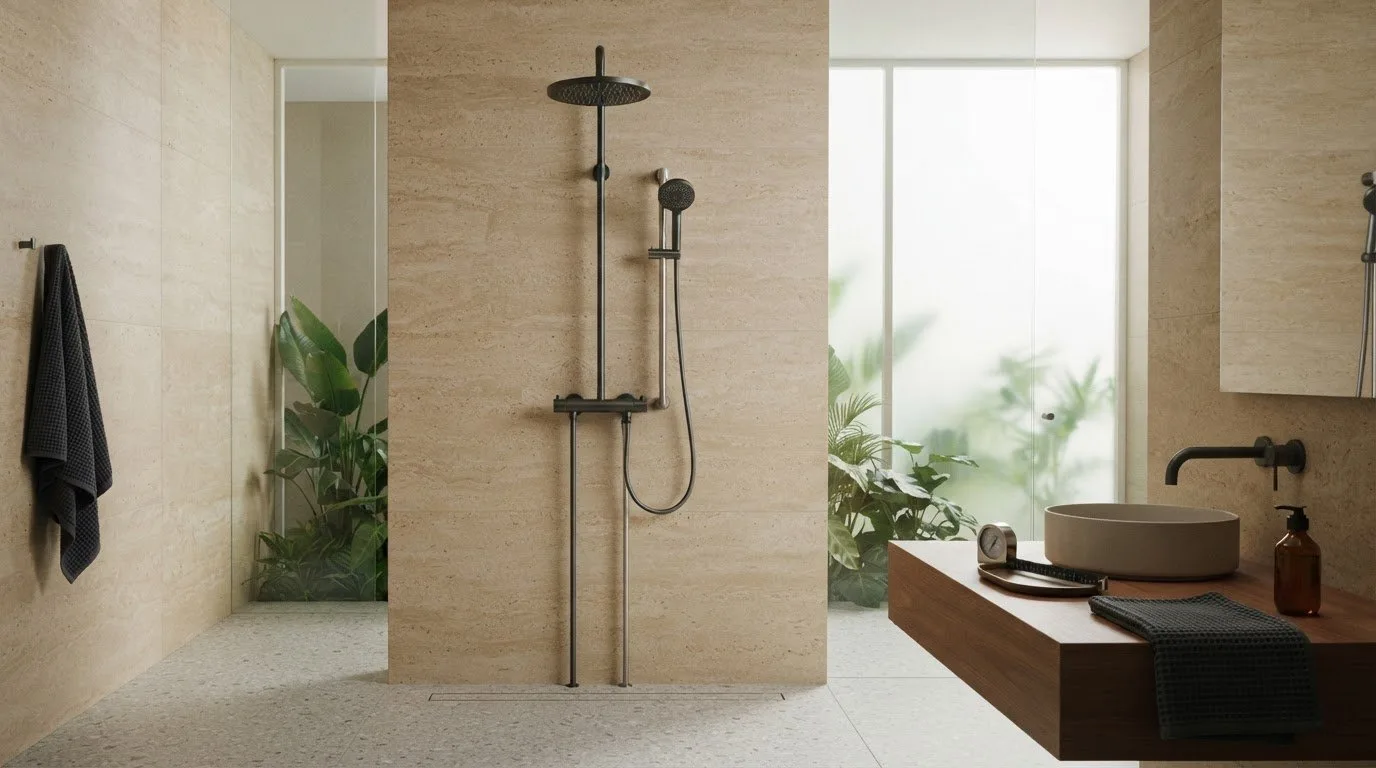
The shower system that looks perfect on the shelf may not suit your bathroom’s water supply. Choosing the right shower system starts with what your home can support, not just the shower style you like.
When showerheads, controls and configurations all promise a better daily shower, it can be hard to know where to start. The right choice depends on practical details, including your water supply, existing plumbing, available space and how people in your household use the bathroom.
This guide explains the main shower components and common configurations, then shows you how to compare them against your bathroom and routine. You’ll learn what to observe and measure before buying, so you can narrow your options and avoid overlooking important details about fit, access or upkeep.
Key Takeaways
- Choosing the right shower system begins with understanding your bathroom’s water supply and pressure.
- Compare the shower head, control valve and overall configuration as connected parts of the system.
- Assess your supply, measure the space and set priorities before comparing options.
- Consider household routines and bathroom conditions to find a setup that works in everyday use.
- Once you know what matters, explore Akron’s shower range as you plan your bathroom update.
Choosing the Right Shower System Starts with Your Water Supply
A shower system brings together components such as the shower head and control valve. They need to suit the bathroom’s water supply, plumbing and the people who use the space. A good fit works with your bathroom and routine, not just your preferred look.
That’s why choosing the right shower system starts with the conditions behind the wall. A stylish head or finish cannot compensate for a setup that does not suit the existing supply and plumbing. For a general overview of shower types and components, see Shower (Wikipedia).
How water pressure and flow affect shower choice
Pressure is the force that moves water through the plumbing. It influences how strongly water reaches the shower head and can affect how the shower feels. Flow rate describes how much water passes through over time. The two are related, but they are not interchangeable: the volume delivered and the force behind it are different aspects of performance.
Before choosing a head or configuration, observe how water reaches your bathroom and how the shower performs during normal household use. If its performance changes at different times, note when that happens. These observations give you a more useful starting point than judging a product by appearance alone.
Which bathroom conditions should shape the decision?
Review the bathroom as it is now, then identify what the planned update will change. These details can help you narrow down suitable configurations:
- Current plumbing: Note where the shower connections and controls are. Decide whether the project will keep them in place or change their position.
- Hot-water arrangement: Identify how hot water reaches the shower and how its controls work. Don’t assume every home uses the same setup.
- Renovation scope: Replacing visible fixtures is different from changing concealed pipework or rearranging the shower area. Define the work before comparing options.
- Household routine: Consider who uses the shower, how often, and which controls feel straightforward for everyone.
Keep these notes together as a short bathroom brief. It gives you a practical basis for comparing shower styles and configurations, and helps you focus on whether the setup suits your home before choosing a finish.
Shower System Components: Match the Head, Valve and Configuration
The shower head directs the water, the valve controls its delivery and temperature, and the configuration determines how the components are arranged in the bathroom. Treat these as connected decisions. A head that suits your preferences still needs to work with the supply, controls and available layout.
| Component | Role and choices | Key fit question |
|---|---|---|
| Shower head | Directs the spray. Options include fixed, hand-held and rain-style designs. | Which position and spray experience suit your routine? |
| Control valve | Manages water delivery and temperature as part of the chosen setup. | Does its placement and operation suit the bathroom and users? |
| Configuration | Sets how components are arranged, including exposed or concealed fittings. | Does it work with the plumbing and renovation scope? |
Choose a shower head for the experience you want
A fixed head stays in one position. A hand-held head lets you direct the spray, while a rain-style head is often chosen for its broad overhead feel. Spray patterns also vary, so consider whether you prefer a focused or wider-feeling spray. These are preference cues, not promises about pressure or water use. Think about how each style fits your bathroom and daily habits.
Understand shower valves and exposed or concealed setups
Valves control how water is delivered within the system. Exposed fittings remain visible on the wall, while concealed arrangements place some components behind the finished surface for a streamlined appearance. Concealed fittings need to be planned with the wall and plumbing work, with access and placement considered in advance. Exposed setups keep the fittings visible, so consider how they sit within the bathroom layout. For more detail on valve choices, use the shower valve guide.
There is no single combination for every bathroom. Match the head, valve and arrangement to the water supply, available space and the preferences of the people using it. Once you understand those needs, explore Akron’s shower options as part of your shortlist.
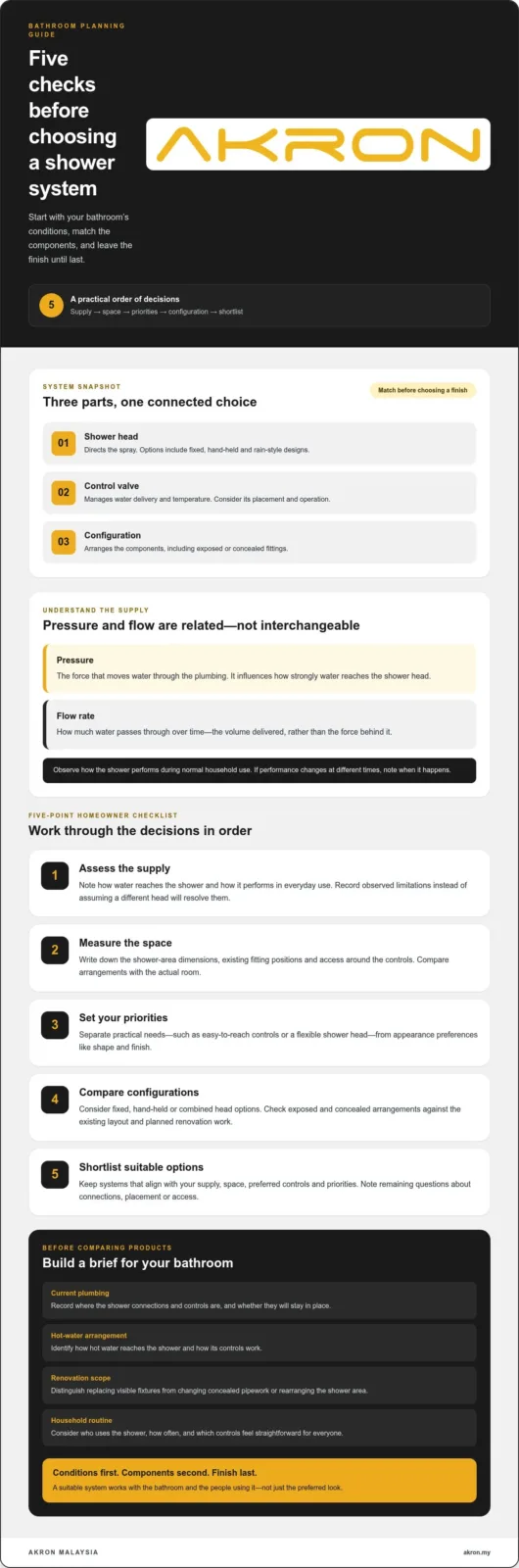
How to Choose a Shower System: A Practical Homeowner Checklist
A shower head may catch your eye, but choosing it first does not guarantee it will suit your water supply, fittings or bathroom layout. Work through the decisions in a practical order: conditions first, components second, finish last.
- Assess the supply. Note how water reaches the shower and how it performs during everyday use. Record any limitations you have observed rather than assuming a different head will resolve them.
- Measure the space. Write down the shower-area dimensions, existing fitting positions and available access around the controls. Use these details to compare arrangements against the actual room.
- Set your priorities. Separate practical needs, such as easy-to-reach controls or a flexible shower head, from appearance preferences like shape and finish. Decide what matters most to the household.
- Compare configurations. Consider whether a fixed head, hand-held option or combination suits your routines. Compare exposed and concealed arrangements with the existing layout and planned renovation work.
- Shortlist suitable options. Keep the systems that align with your supply, space, preferred controls and priorities. Note any remaining questions about connections, placement or access before purchasing.
Measure the space and define everyday needs
Useful measurements capture how people move through the shower, not just its footprint. Note where the controls sit and whether they are easy to reach. Consider who uses the bathroom: a fixed head may suit a straightforward routine, while a hand-held option or combination may offer more flexibility. Keep functional needs separate from preferred finishes so appearance does not distract from fit.
Build a shortlist without overlooking installation
For each option, compare its arrangement with the home’s supply, fitting positions and renovation scope. Replacing visible fittings calls for different planning from changing concealed pipework or moving controls. Write down unresolved questions about connections, placement and access before purchasing. A clear shortlist helps you weigh practical requirements against the look you want as you plan the update.
When your shortlist reflects your bathroom and routine, explore Akron’s shower range to compare options.
Explore Akron Shower Options and Plan Your Next Step
You’ve considered the key decisions: the bathroom’s water supply, the available space and existing fittings, the shower-head style that suits your routine, and your preferences for controls and configuration. Bring those details together before browsing. This makes choosing the right shower system a focused comparison rather than a decision based on appearance alone.
Turn your checklist into a clear product brief
Keep a short note of the details that will help you compare shower products:
- Supply: Describe how water reaches the shower and note anything you’ve observed about its usual performance.
- Space and fittings: Record the shower-area dimensions, fitting positions and renovation plans.
- Head preference: Note whether a fixed, hand-held or combined approach best matches household routines.
- Controls: Describe your preferred control arrangement and any placement or access needs.
- Appearance: List your preferred finish and look, keeping these preferences separate from practical requirements.
Use this brief to compare options in Akron’s bathroom product range. Akron offers showers as part of its bathroom fixture range. As you browse, review the product information and compare it with your notes so you can weigh practical fit alongside appearance.
Make the next step feel straightforward
Akron sells bathroom fixtures directly and through a network of authorized dealers across Malaysia. If you’re still narrowing down what you need, refine your brief before deciding. To explore the range or make an inquiry, visit the Akron contact page.
There’s no need to rush toward a particular finish or configuration. Choose based on the conditions and priorities you’ve identified, then move ahead when an option makes sense for your bathroom and the people who use it.
Make Your Next Bathroom Choice with Confidence
A well-planned shower can make your bathroom feel more personal and comfortable every day. Give yourself time to choose thoughtfully. Keep your notes nearby as you browse, and compare each option with what you genuinely need rather than what catches your eye first.
That’s the practical value of choosing the right shower system: your decision reflects how you want the bathroom to work, not just how you want it to look. As your plans take shape, Akron’s shower products offer a place to continue exploring within a broader bathroom-fixture range.
Ready to take a closer look? Explore Akron’s bathroom product range and consider the shower options for your bathroom plans. Akron products are available through direct inquiries and authorized dealers across Malaysia.
Take the next step by reviewing the range and matching your options to the notes you’ve made. A little preparation can help you choose a setup that suits your home and routine.
Frequently Asked Questions
Can I choose a shower system before checking my water pressure?
You can browse styles first, but choosing the right shower system is easier when you understand your supply before committing. A head that looks appealing may not deliver the experience you expect if your home’s water conditions do not suit its requirements. Observe how the current shower performs during normal use, including when other taps are running, and compare your findings with the product’s published specifications before deciding.
Is a concealed shower system suitable for an existing bathroom?
It can be, but suitability depends on the existing pipework, wall construction and renovation plans. Concealed fittings sit behind the finished surface, so changing to this arrangement may involve opening or altering a wall to position the components and provide access. If you’re updating a bathroom without changing its walls, an exposed arrangement may involve less alteration. Consider the work involved before choosing based on appearance alone.
Do rain shower heads need high water pressure?
Requirements vary by head design and the system it is paired with, so there is no universal pressure rule for every rain-style head. A broad spray may feel different from a more focused one, especially if the supply does not suit the head’s stated requirements. Check the product information for supply conditions and consider how your current shower feels before choosing a similar style.
Can I replace only the shower head without changing the whole system?
Often, a head can be changed on its own if the replacement matches the existing connection and works with the current setup. Before buying, check how the head attaches, whether it connects to a hose or fixed outlet, and whether a diverter or other fitting affects its use. If the connection or control arrangement is unusual, identify it first rather than assuming every head will fit.
What should I measure before choosing a shower system?
Measure the shower area’s width and depth, the height and position of existing head and control fittings, and the space around them. Note the ceiling height if you’re considering an overhead head, along with the distance between connection points if you plan to retain them. A quick sketch with measurements and photos can help you compare product dimensions and explain the layout clearly as you plan an update.
How do I keep a shower system in good condition?
Follow the care instructions supplied with your shower products, since cleaning guidance can differ by finish and material. As a general habit, wipe surfaces with a soft cloth and avoid abrasive pads or harsh cleaners unless the product instructions allow them. Keep an eye out for drips, loose fittings or changes in how controls operate. If you notice a persistent leak, avoid forcing a stiff control.