What if the best faucet for hard water isn’t the one with the most impressive finish, but the one that’s easiest to clean and maintain? Mineral spots can return soon after you wipe the basin, making a tidy bathroom feel like a constant chore. Hard water can also leave deposits around the faucet outlet and moving parts over time.
You don’t have to choose between a bathroom style you love and a fixture that fits your cleaning routine. A well-considered design can make everyday upkeep simpler, though no faucet finish will prevent mineral marks entirely. Focus on practical details such as easy-to-clean surfaces, accessible parts, and clear maintenance instructions.
This guide explains what hard water can leave behind and which faucet features are worth comparing. You’ll also learn how to weigh finish, design, and maintenance needs before choosing a faucet for your bathroom. Akron Malaysia offers bathroom faucets to consider as you look for a style that works with your space and day-to-day routine.
Key Takeaways
- Understand how dissolved minerals such as calcium and magnesium can leave visible deposits on faucets.
- Look for a design that’s easy to reach and clean, and treat finish as a style and care consideration rather than a shield against buildup.
- Use a practical checklist to match the best faucet for hard water to your basin, installation type, preferred style, and cleaning routine.
- Compare the exact product specifications and care guidance instead of assuming every faucet has the same features.
- Explore Akron’s faucet range and compare designs with your bathroom needs and maintenance preferences.
Why Hard Water Leaves Marks on Faucets, and What a New Faucet Can Solve
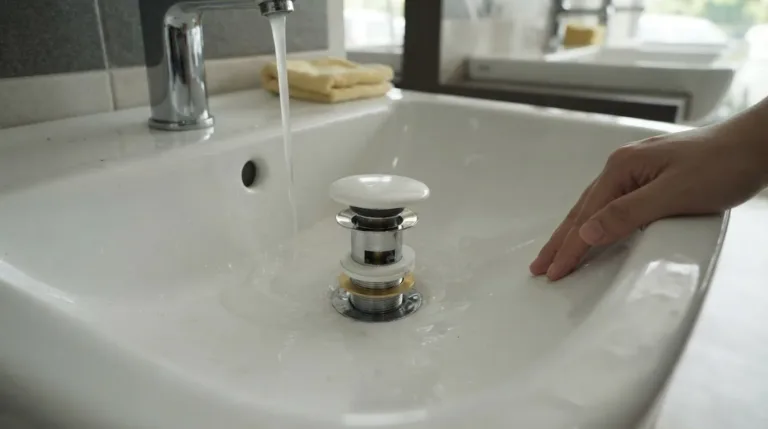
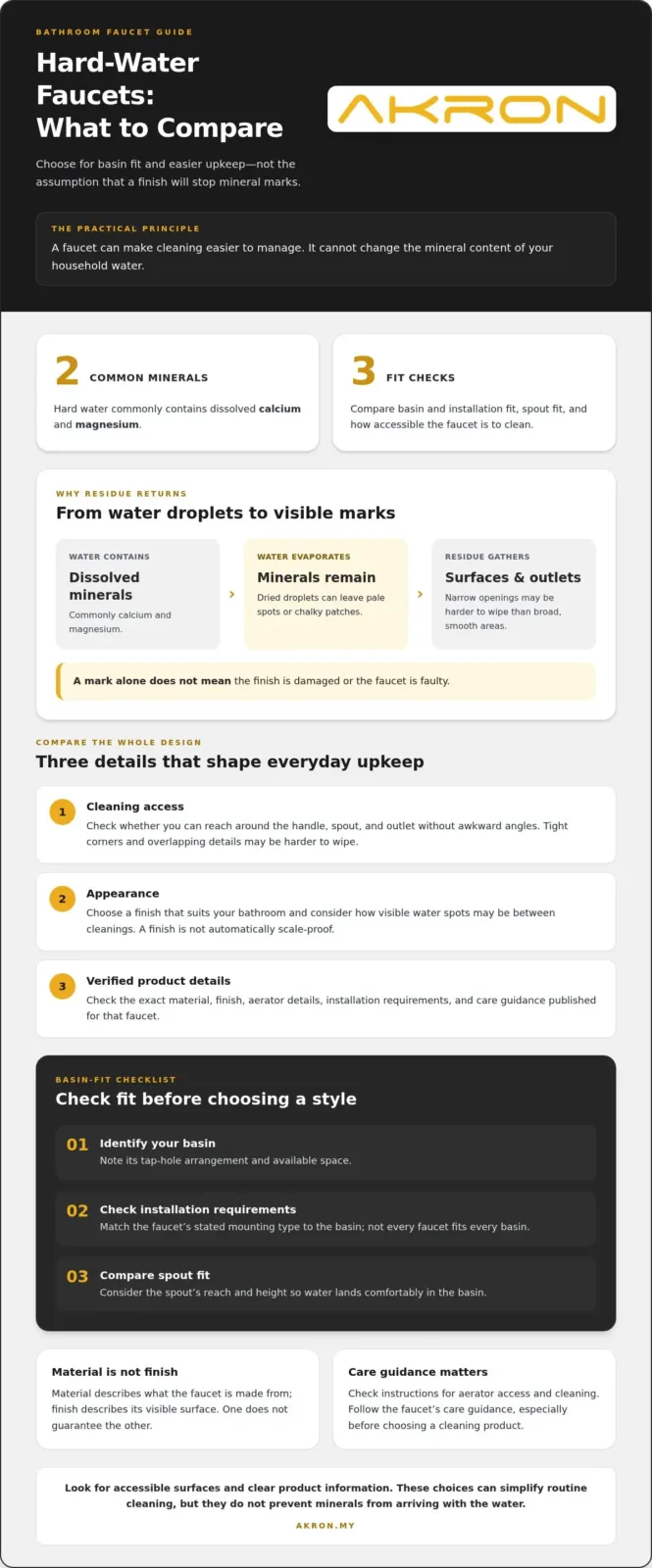
You clean the bathroom faucet, step away, and soon notice pale spots around the spout again. That repeat cycle can make even a well-kept basin look untidy. Hard water contains dissolved minerals, commonly calcium and magnesium. When water evaporates, some minerals can remain on surfaces as visible residue. The Hard water overview explains how water can acquire these minerals as it passes through mineral deposits, and how limescale can form on fixtures.
Knowing where residue gathers can help you choose a faucet that’s easier to care for. The best faucet for hard water won’t change the mineral content of your household supply, but an accessible design can make routine cleaning less awkward.
How mineral deposits affect faucet surfaces and outlets
On the faucet body, dried droplets may leave chalky patches or small spots, especially where water often splashes or sits. These marks can be frustrating, but their presence alone doesn’t mean the finish is damaged or the faucet is faulty.
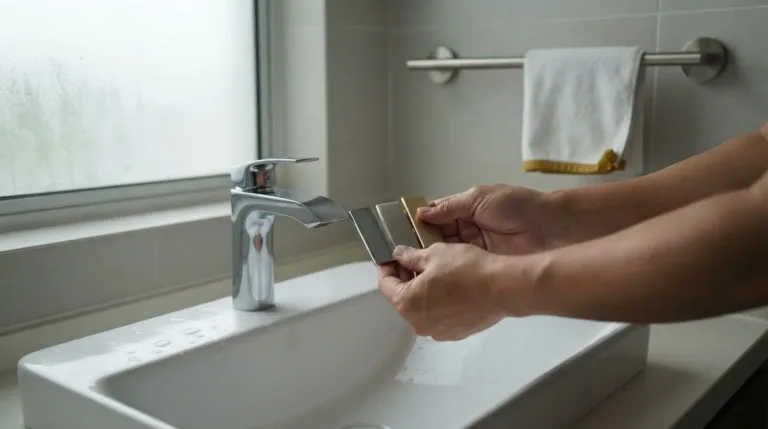
Mineral residue may also collect around the aerator, the small outlet where water flows from the spout, or around other narrow openings. Buildup in these areas can be harder to wipe away than residue on a broad, smooth surface. Check whether the outlet and surrounding areas are accessible for cleaning.
What a faucet can, and cannot, do about hard water
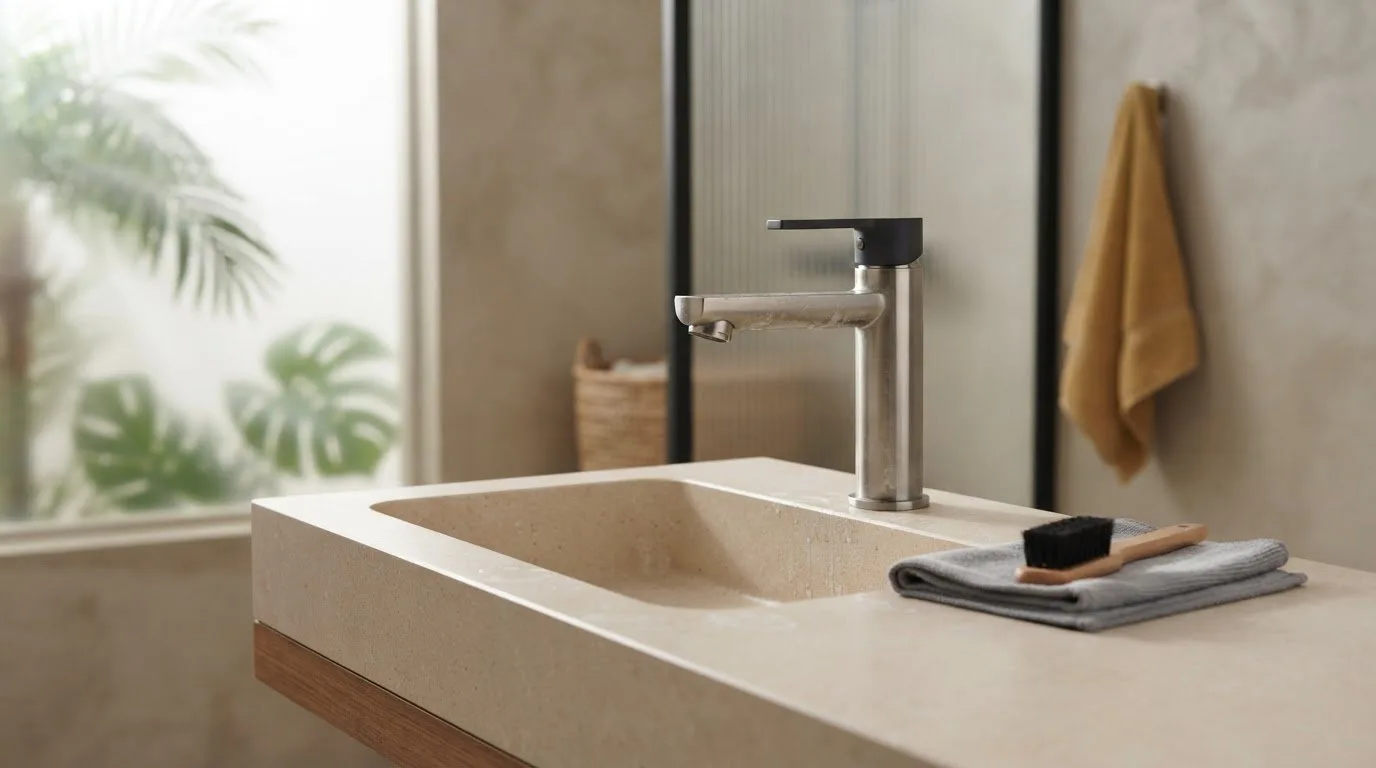
A faucet can make upkeep more manageable when its surfaces and details are easy to reach. A straightforward shape may leave fewer tight corners to clean, while an accessible outlet can make routine care easier. These design choices can reduce the effort of removing residue, but they don’t stop minerals from arriving with the water.
Don’t treat any finish as completely scale-proof without supporting product information. Even a finish that suits your bathroom may show deposits if mineral-rich water dries on it. Changing the household water supply is a separate consideration from choosing a faucet: water treatment addresses the water itself, not the faucet’s shape or finish. For your selection, focus on features that support practical cleaning and follow the care guidance for the specific faucet.
Which Faucet Features Matter Most in Hard-Water Bathrooms?
A faucet’s appearance matters, but so does how easily you can reach the areas that need regular attention. Compare the whole design: the surfaces around the spout, the gaps around handles, and the outlet where water leaves the faucet. The best faucet for hard water is a practical fit for both your bathroom and cleaning routine, not simply a particular colour or finish.
Faucet materials and finishes: compare claims carefully
Material describes what the faucet is made from; finish describes its visible surface. Don’t assume one tells you the other, or that a certain look guarantees resistance to mineral marks. A finish may affect how noticeable water spots appear, but don’t treat it as scale-proof without manufacturer evidence. Compare the faucet’s published specifications and follow its care instructions, especially before choosing a cleaning product.
Aerators, handles, and shapes that affect upkeep
Look closely at the spaces around the handle and spout. A simple silhouette with accessible surfaces can be easier to wipe than a design with tight corners or overlapping details. If the product guidance explains how to access and clean the aerator, use those instructions to assess how manageable outlet care will be. These are practical considerations for routine maintenance, not proof that a faucet prevents deposits or protects against hard water.
Use the same checks when comparing designs. Akron offers bathroom faucets, so you can explore Akron’s bathroom products and consider which faucet style suits your basin and upkeep preferences. Let published product details, rather than assumptions based on appearance, guide your choice.
How to Choose the Best Faucet for Hard Water: A Practical Checklist
Start with your basin and how you use it, then weigh cleaning access alongside style. This checklist helps you compare faucets based on fit and care rather than assumptions. For more on choosing a style and fit, see our bathroom faucet selection guide.
Match the faucet to the basin and installation
Check your basin’s tap-hole arrangement and compare it with the faucet’s stated installation requirements. A faucet designed for one mounting arrangement may not suit another. Also consider the spout’s reach and height: water should land comfortably in the basin without making everyday handwashing awkward. Don’t assume every faucet fits every basin.
Assess cleaning needs before comparing styles
Think about how often you wipe away visible water marks. If you prefer quick, simple cleaning, look for a shape that’s easy to reach around and wipe. Then compare the care instructions and exact specifications, including any guidance on aerator access and cleaning. A convenient design can simplify maintenance, but it isn’t proof of protection from hard-water deposits.
- Identify your basin. Note its tap-hole arrangement and available space.
- Check installation requirements. Match the faucet’s stated mounting type to the basin.
- Compare spout fit. Consider reach and height for comfortable use over your basin.
- Set your style preference. Choose a shape and finish that suit your bathroom and cleaning habits.
- Review care and specifications. Check the manufacturer’s instructions and verify details such as aerator access instead of assuming all faucets share the same features.
This practical approach can help you find the best faucet for hard water for your bathroom without treating appearance as a maintenance guarantee. To compare designs, explore Akron’s bathroom products and consider which faucet style fits your basin and routine.
Explore Akron Faucets and Choose a Manageable Bathroom Fit
The best faucet for hard water is one that suits your basin and bathroom while making regular care feel manageable. Before choosing, revisit the practical details: installation fit, spout position, surfaces you can reach easily, and the care guidance for the specific faucet. Treat durability or resistance claims as meaningful only when they’re supported by the product information.
Compare Akron faucet options against your checklist
Akron offers bathroom faucets with style and durability in mind. Compare the available designs with your basin, preferred bathroom look, and cleaning routine. Check the product information for the specifications that matter to your setup, such as installation requirements and care instructions. Don’t assume that every faucet shares the same material, finish, or maintenance features, and don’t rely on appearance alone to predict hard-water performance.
A simple comparison can help you narrow your choice:
- Bathroom fit: Does the faucet suit your basin and mounting arrangement?
- Everyday use: Do the spout’s height and reach work comfortably over the basin?
- Cleaning access: Can you easily wipe around the handles, spout, and other details?
- Product information: Are the specifications and care guidance clear for the faucet you’re considering?
These checks connect style with practical use. They also keep your decision grounded in the details provided for the specific faucet rather than assumptions about finishes or hard-water protection.
Take the next step with a clear product inquiry
Once you’ve identified the details that matter, explore Akron’s wider bathroom-fixture range to consider how your faucet choice fits the rest of your bathroom. For product inquiries, contact Akron with the faucet or basin details you’re comparing so your inquiry focuses on the product information and bathroom fit you care about.
Choose a Faucet That Fits Your Bathroom and Routine
Mineral marks are a common cleaning frustration, but a faucet can’t change the minerals in your household water. The best faucet for hard water is one that fits your basin, offers surfaces you can clean with ease, and comes with clear care guidance. Compare the product’s actual specifications rather than assuming every finish or design offers the same features.
Akron offers faucets as part of its bathroom-fixture range, with style and durability in mind. You can purchase directly or explore options through Akron’s network of local dealers across Malaysia. Match a faucet’s design and documented details to your bathroom and upkeep preferences.
Ready to find a style that feels right for your space? Explore Akron’s bathroom fixtures and compare the options for your basin and cleaning routine.
Frequently Asked Questions
Is any faucet completely resistant to hard-water deposits?
No faucet should be called completely scale-proof without reliable product evidence. Mineral residue can still form on surfaces exposed to hard water, regardless of how easy a faucet is to wipe. Easier cleaning helps with upkeep, but it doesn’t prevent deposits from forming. Follow the care instructions for your chosen faucet, and consider household water treatment separately if mineral buildup remains a persistent concern.
What faucet finish is best for hard water?
There’s no universal best finish for every hard-water bathroom. How visible water spots are can vary with the finish, your water, and your cleaning routine. Compare the manufacturer’s care instructions before deciding, and choose a surface your household is comfortable maintaining. A finish may suit your bathroom’s style or make marks less noticeable, but don’t assume it prevents limescale unless the product information supports that claim.
Can hard water damage a faucet?
Mineral deposits can collect on faucet surfaces and around outlets, including an aerator. Buildup in these areas may affect water flow or make cleaning more difficult, but a deposit doesn’t automatically mean the faucet is damaged or faulty. Follow the manufacturer’s care recommendations. If the faucet’s operation changes, consult its product guidance for appropriate next steps rather than assuming mineral marks are the cause.
How do I remove hard-water marks from a faucet?
Start with the faucet manufacturer’s cleaning instructions. Use a soft cloth, and avoid abrasive pads or chemical cleaners unless the product guidance approves them. The right method depends on the faucet’s finish and specifications, so a cleaning approach that suits one surface may not suit another. Clean gently and regularly instead of scrubbing harshly. No method can be guaranteed to remove every mark without knowing the faucet’s care requirements.
Are single-handle or dual-handle faucets better for hard water?
Handle count alone doesn’t determine how well a faucet resists mineral deposits. Compare how the faucet fits your basin, how comfortable it is to operate, and whether you can easily clean around its handles and spout. Check the product’s care guidance and specifications, too. The best layout depends on your basin, bathroom design, and personal preference, so don’t assume one handle style lasts longer or performs better in hard water.
Should I buy a water softener instead of changing my faucet?
A faucet and a water-treatment system address different needs. A faucet is a bathroom fixture; household treatment changes the water, while replacing a faucet won’t remove minerals from your supply. If mineral buildup is affecting more than one fixture, consider the broader household water issue separately and review relevant treatment product guidance. Choose a new faucet based on basin fit, cleaning access, and care instructions, not as a substitute for treating water.