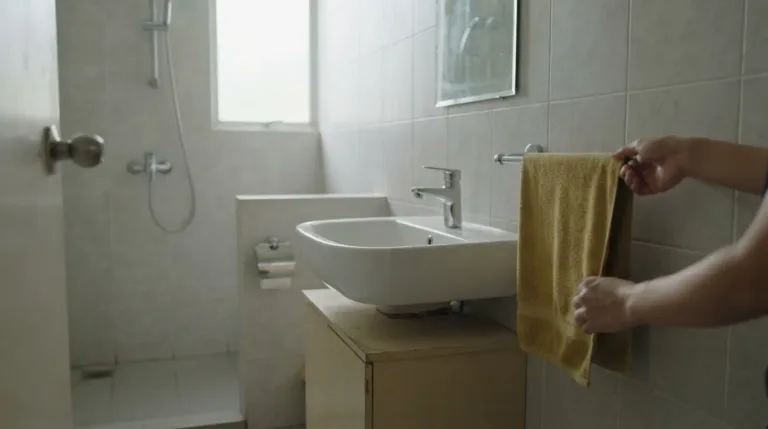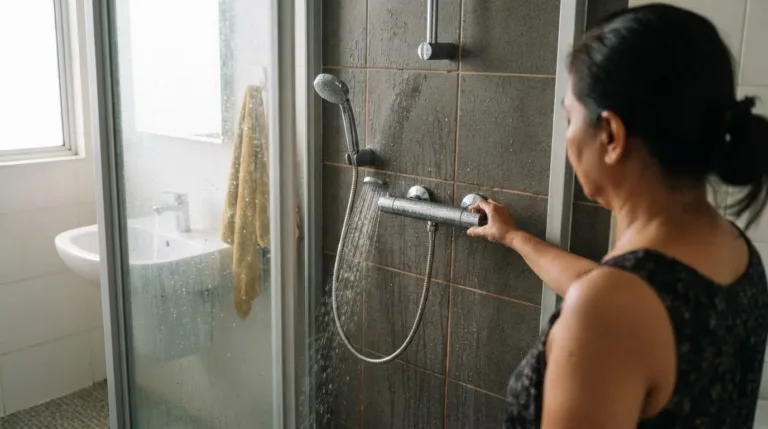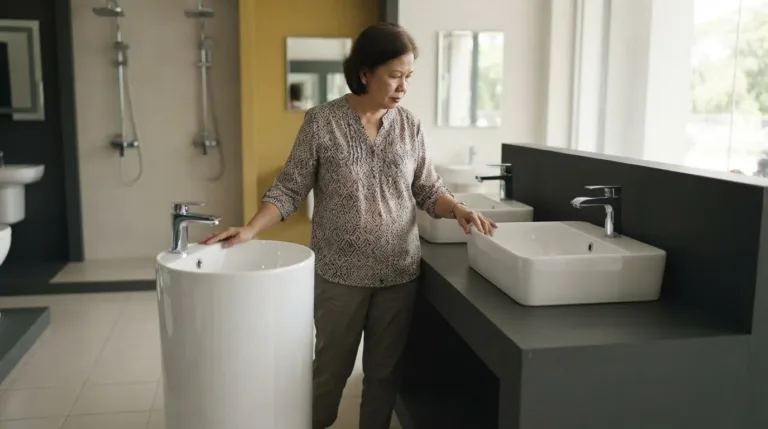
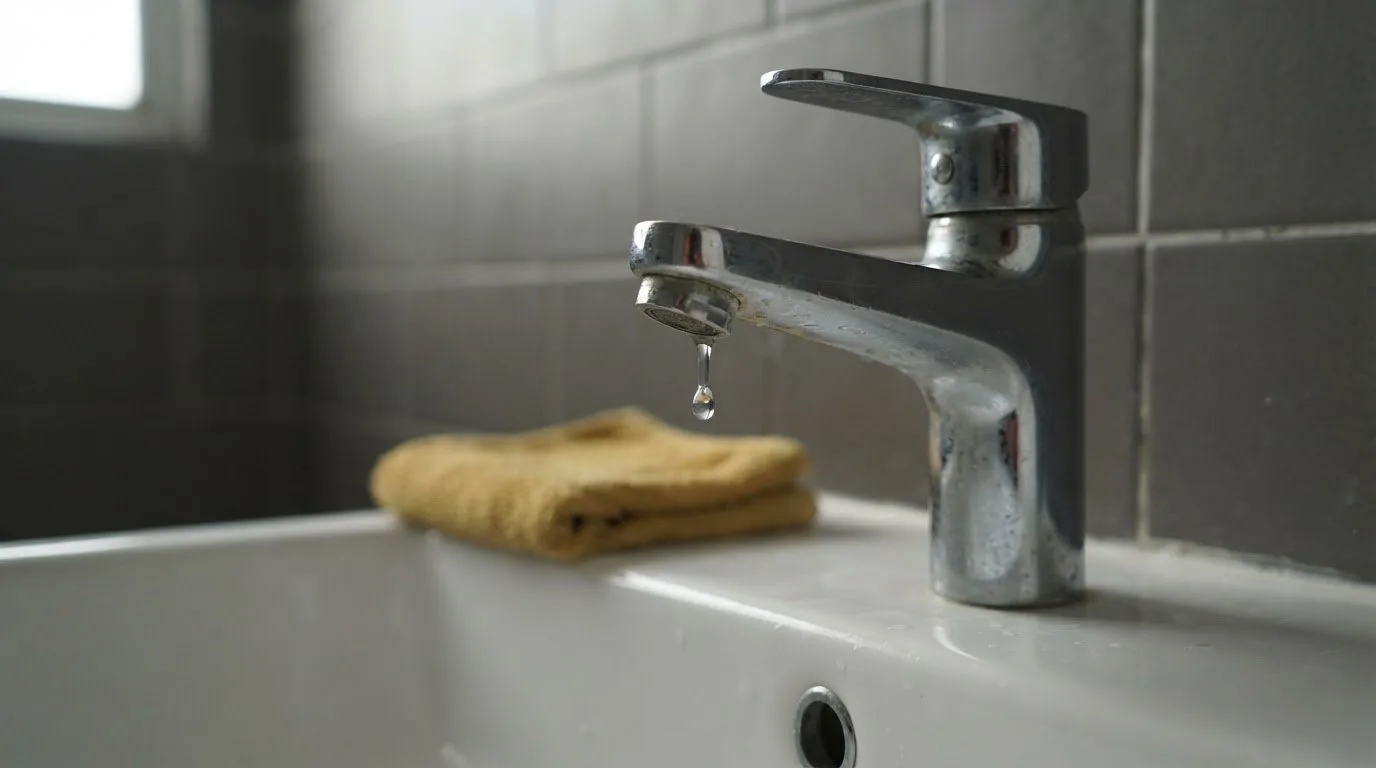
A leaky bathroom faucet doesn’t always need replacing. A bathroom faucet typically lasts around 10-15 years, so when to replace a bathroom faucet depends on its age, condition and whether a repair can solve the problem. A minor leak may need a new washer or seal, while persistent leaks, corrosion or repeated trouble can point to replacement.
It’s frustrating when a drip keeps returning or the water flow changes, especially when you’re unsure whether the faucet or the plumbing is at fault. Learn how to weigh repair against replacement, spot signs of wear, and choose a faucet that fits your basin. The right choice can restore reliable everyday use and refresh your bathroom.
We’ll also explain when cleaning the aerator may help, what to consider when choosing a compatible model, and when a plumber’s expertise is useful. Use these signs to decide whether your faucet needs attention now or can keep working after a straightforward repair.
Key Takeaways
- Weigh a repair against replacement by looking at the faucet’s condition, the cause of the leak and whether the problem keeps returning.
- Choose a replacement that matches your basin’s mounting arrangement and existing connections to avoid fit issues.
- Before replacing a faucet for weak flow, consider whether a clogged aerator or plumbing restriction could be the cause.
- A straightforward swap may suit a confident DIYer, while stubborn fittings, persistent leaks or uncertain connections are reasons to call a plumber.
- Replace faucets individually as they wear out; you don’t need to change every bathroom faucet at once.
1. How long should a bathroom faucet last?
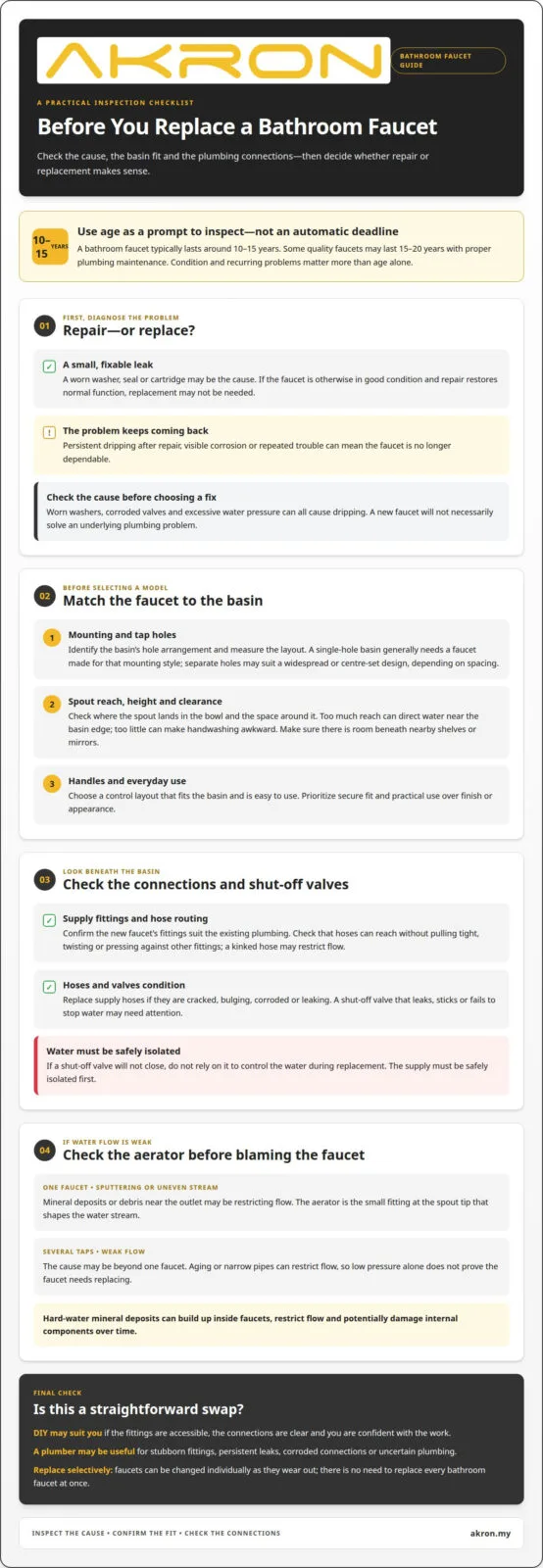
A bathroom faucet typically lasts around 10-15 years, with quality, maintenance and use shaping its lifespan. That range is practical guidance, not a Malaysian plumbing deadline or water-efficiency standard. Judge replacement by the faucet’s condition, rather than age alone.
Some quality kitchen and bathroom faucets last 15 to 20 years with proper plumbing maintenance. The difference between that range and the typical 10-15 years reflects how much lifespan depends on the fixture and its conditions. A well-maintained faucet may keep working beyond a decade, while wear or recurring problems can make replacement sensible sooner.
Treat the faucet’s age as a reason to inspect it, not as an automatic signal to replace it. A relatively new faucet with a small leak, for example, may only need a washer or seal replaced. A leak that returns after repair, visible corrosion, or repeated problems may mean the fixture is no longer dependable.
The cause of a leak matters, too. Worn washers, corroded valves, and excessive water pressure can all cause dripping, so a new faucet won’t necessarily solve the underlying problem. If the faucet is otherwise in good condition and a worn washer or cartridge is to blame, repair may make more sense. If the fixture is corroded or leaks keep returning, consider replacement.
Consider performance as well as age. A difficult-to-turn handle, persistent dripping, or corrosion around the faucet can signal wear. Low water pressure alone, however, doesn’t prove the faucet has reached the end of its life. Aging or narrow pipes may restrict flow, so identify the likely cause before deciding an older fixture needs replacing.
Maintenance can influence how long a faucet remains useful. Keep an eye on leaks and visible corrosion, and pay attention when a repair stops solving the problem. Hard-water mineral deposits can also build up inside faucets, restricting flow and potentially damaging internal components. Those signs may justify closer inspection, especially on an older faucet approaching the 10-15-year range.
You don’t need to replace every bathroom faucet at once. Replace a worn fixture when persistent problems develop, or include selected faucets in a bathroom remodel. When weighing repair against replacement, consider the faucet’s age, condition, cause of the problem, and whether repairs restore normal function. This gives you a practical basis for deciding, without treating an estimated lifespan as a fixed deadline.
2. Choosing a compatible replacement faucet
A replacement faucet needs to suit both the basin and the plumbing beneath it. First identify how the current faucet is mounted, how many holes the basin has, and where the water connections are. A stylish model may still be unsuitable if its base doesn’t cover the existing holes or its fittings don’t align.
Check the basin’s tap-hole arrangement before choosing a design. A single-hole basin generally needs a faucet designed for that mounting style. A basin with separate holes may suit a widespread or centre-set faucet, depending on the hole spacing and design. Measure the existing layout and compare it with the replacement’s installation requirements.
Next, check how the faucet’s shape works with the basin. A spout that reaches too far may direct water close to the edge; one that falls short can make handwashing awkward. Check the spout’s height and reach, as well as the clearance between the spout and basin. A tall faucet, for example, needs enough room below nearby shelves or mirrors.
- Mounting: Match the faucet base to the basin’s hole pattern and available surface.
- Reach and height: Compare the spout position with the bowl and surrounding space.
- Handles: Choose a control layout that fits the basin and remains easy to use.
- Connections: Check that the faucet’s supply fittings suit the existing plumbing.
When planning the replacement, look beneath the basin at the supply hoses and shut-off valves. Note the hose routing and check that the new faucet’s connections can reach without pulling tight, twisting, or pressing against other fittings. A kinked hose may restrict flow, and a strained connection can become a source of leaks.
Replace faucet supply hoses if they are cracked, bulging, corroded, or leaking. Replace shut-off valves if they leak, stick, or fail to stop the water when turned. If a valve won’t close, don’t rely on it to control the water during replacement. The water supply must be safely isolated first.
Choose a finish and handle style that work with the basin and bathroom accessories, but prioritize fit over appearance. A new finish won’t make incompatible mounting or connections suitable. Before choosing between a streamlined single handle and separate controls, for example, confirm that the faucet can sit securely on the basin.
Finally, compare the faucet’s fitting instructions with the space beneath the basin. A crowded cabinet, awkward pipe position, or corroded connection can complicate an otherwise compatible replacement. Matching the mounting, spout dimensions, and plumbing connections helps you shortlist options that suit your bathroom’s actual setup.
3. Low water pressure and aerator mineral buildup
A weak bathroom faucet doesn’t automatically need replacing. Mineral deposits can collect in the aerator, the small fitting at the spout tip that shapes the water stream. In Malaysia, hard water can leave deposits inside faucets, restricting flow and potentially damaging internal components over time. Start by checking whether the aerator is clogged before blaming the whole fixture.
Notice how the water behaves. A sputtering or uneven stream from one faucet can point to debris or mineral buildup near its outlet. If several taps have weak flow, the cause may lie beyond that faucet. Aging or narrow pipes can restrict water flow throughout a bathroom, so replacing one fixture may not resolve the underlying problem.
Compare the affected faucet with another tap at home. If the basin faucet runs weakly but a nearby shower flows normally, the aerator or faucet is a more likely source. If both fixtures have reduced flow, look beyond the basin faucet before deciding to replace it. This comparison can help distinguish a local blockage from a wider plumbing restriction.
Cleaning the aerator can remove mineral buildup that restricts water flow. If it unscrews, protect the finish with a cloth as you loosen it. Rinse the screen and small parts, then gently brush away visible deposits. Don’t force a stuck fitting, as this could damage the aerator or faucet finish.
- One weak faucet: Inspect its aerator for visible deposits or trapped debris.
- Several weak outlets: Consider whether restricted pipes may be affecting more than one fixture.
- Flow improves after cleaning: The faucet may not need replacement for this symptom alone.
- Flow stays weak: The restriction could be deeper inside the faucet or elsewhere in the plumbing.
After reinstalling the cleaned aerator, check the stream again. A steadier flow suggests that buildup was contributing to the problem. If the stream remains weak, don’t assume a new faucet will solve it. Internal deposits, worn components, or restricted supply pipes can cause similar symptoms, but each calls for a different next step.
Mineral buildup is also worth considering when assessing an older faucet. Deposits inside the fixture can affect flow and damage internal parts, while repeated cleaning may not resolve deeper wear. Consider replacing the faucet if poor flow persists after cleaning the aerator and the fixture also shows corrosion, leaks, or other signs of deterioration. Cleaning the aerator and comparing the flow can help you make a better-informed decision.
4. DIY faucet replacement versus hiring a plumber
A straightforward faucet replacement may suit a capable DIYer, but the basin setup matters. If the new faucet matches the existing mounting holes and connections, the job may involve removing the old fixture and fitting the replacement. A cramped cabinet, corroded fittings, or an unreliable shut-off valve can make the same task more difficult.
Before starting, read the replacement faucet’s instructions and compare its fittings with the existing supply connections. Make sure you can shut off the water, and clear space beneath the basin for tools and access. If the faucet’s mounting arrangement doesn’t match the basin, stop before removing the old fixture. A mismatch can leave the replacement unsecured or unsuitable.
During a DIY replacement, take care around the basin and its finish. Old nuts can be hard to reach, especially when the basin is close to a wall or inside a compact vanity. Don’t force a stuck connection, which could damage a fitting or pipe. Once the faucet is installed, turn the water on gradually and check each connection for drips.
A plumber is a sensible choice if the problem goes beyond a direct faucet replacement. A shut-off valve that won’t close, a leaking supply connection, or a faucet that doesn’t fit the basin may require plumbing work. Persistent low flow or leaks after replacement also suggest that the cause may be beyond the new faucet.
- DIY may suit the job: The replacement matches the basin, connections are accessible, and shut-off valves work.
- Pause and get plumbing help: A valve is stuck, fittings are corroded, or pipes move when connections loosen.
- Reassess after fitting: Continued leaks or weak flow indicate that installation or another plumbing issue needs attention.
Consider the whole task, not just removing and attaching the faucet. A compatible model, accessible fittings, and working shut-off valves make the project more manageable. A cramped basin cabinet or unfamiliar plumbing connections can increase the chance of delays and mistakes. If you can’t identify how the existing connections work, hiring a plumber is a practical next step.
Base your decision on the plumbing’s condition and your confidence with the work. A straightforward replacement doesn’t automatically require professional help, but forcing a difficult connection can turn a small job into a larger repair. If you’re ready to choose a compatible fixture, explore bathroom faucet options that suit your basin and planned setup.
Akron Malaysia: Faucet
Akron Malaysia offers faucets to help you choose a replacement that suits your bathroom’s practical needs and style. Once you’ve checked the basin’s mounting arrangement and plumbing connections, compare faucet options with those details in mind. A compatible design can refresh the space while fitting your existing setup.
If you’re also updating the basin or bathroom accessories, consider how their finishes and shapes work together. Akron Malaysia offers wash basins and bathroom accessories alongside faucets, helping you plan a coordinated bathroom refresh.
For help with your next step, contact Akron Malaysia.
Make your next bathroom update count
Deciding when to replace a bathroom faucet can also be an opportunity to rethink how your bathroom works for you every day. Choose a fixture that suits your routine and complements the space, rather than treating the change as purely practical. A thoughtful update can make the basin area feel more cohesive without requiring a complete remodel.
Before choosing, picture how you want the finished space to look and function. A new faucet can stand on its own or be part of a wider bathroom update. Let your priorities guide the decision, whether you want to improve everyday comfort or create a more consistent style.
If you’re ready to explore your next step, discuss your faucet plans with Akron Malaysia. A considered choice can help your bathroom feel more like your own.
Frequently Asked Questions
Can I repair a leaky faucet, or should I replace it?
Repair is often a sensible choice when the faucet is otherwise sound and the leak comes from a replaceable part. A washer or cartridge, for example, may stop a drip without requiring a new fixture. Consider replacement if repairs don’t last, corrosion is visible, or suitable parts aren’t available. Assess the faucet’s overall condition, not just the water dripping from the spout.
How long should a bathroom faucet last?
A bathroom faucet typically lasts around 10-15 years, while some quality faucets can last 15 to 20 years with proper plumbing maintenance. These ranges are guides, not fixed replacement dates. A faucet’s actual lifespan depends on its quality, maintenance and use. Keep a note of repairs and changes in performance, so age can be considered alongside its current condition.
Can hard water damage a faucet?
Yes. Hard water can leave mineral deposits inside a faucet, restricting water flow and damaging internal components over time. Deposits may collect around the water outlet or inside the fixture, affecting the stream. If the flow changes, consider whether buildup is involved before replacing the faucet. Problems that persist after cleaning may point to deposits or wear deeper inside the fixture.
What should you do?
Start by identifying the problem: note whether the faucet drips, is difficult to operate, or has reduced flow. Then consider whether the issue affects one faucet or several. This can help indicate whether the cause is local or elsewhere in the plumbing. Use what you observe to decide whether repair, closer inspection, or replacement is the most practical next step.
What should I consider before buying a new faucet?
Consider how the new faucet will fit and function in your bathroom. Check that the handle style is comfortable to use and the finish works with the basin and surrounding fixtures. Think about your daily routine, too: the faucet should be practical for handwashing and other regular tasks. A suitable choice balances appearance with your bathroom’s layout and needs.
When should I act?
Act when a leak keeps returning, corrosion is visible, or the faucet no longer works reliably. A drip that stops after a simple repair may not call for immediate replacement. If you’re deciding when to replace a bathroom faucet, consider whether the problem persists and whether the fixture is still in good condition. Making the decision promptly can help you plan a suitable repair or update.