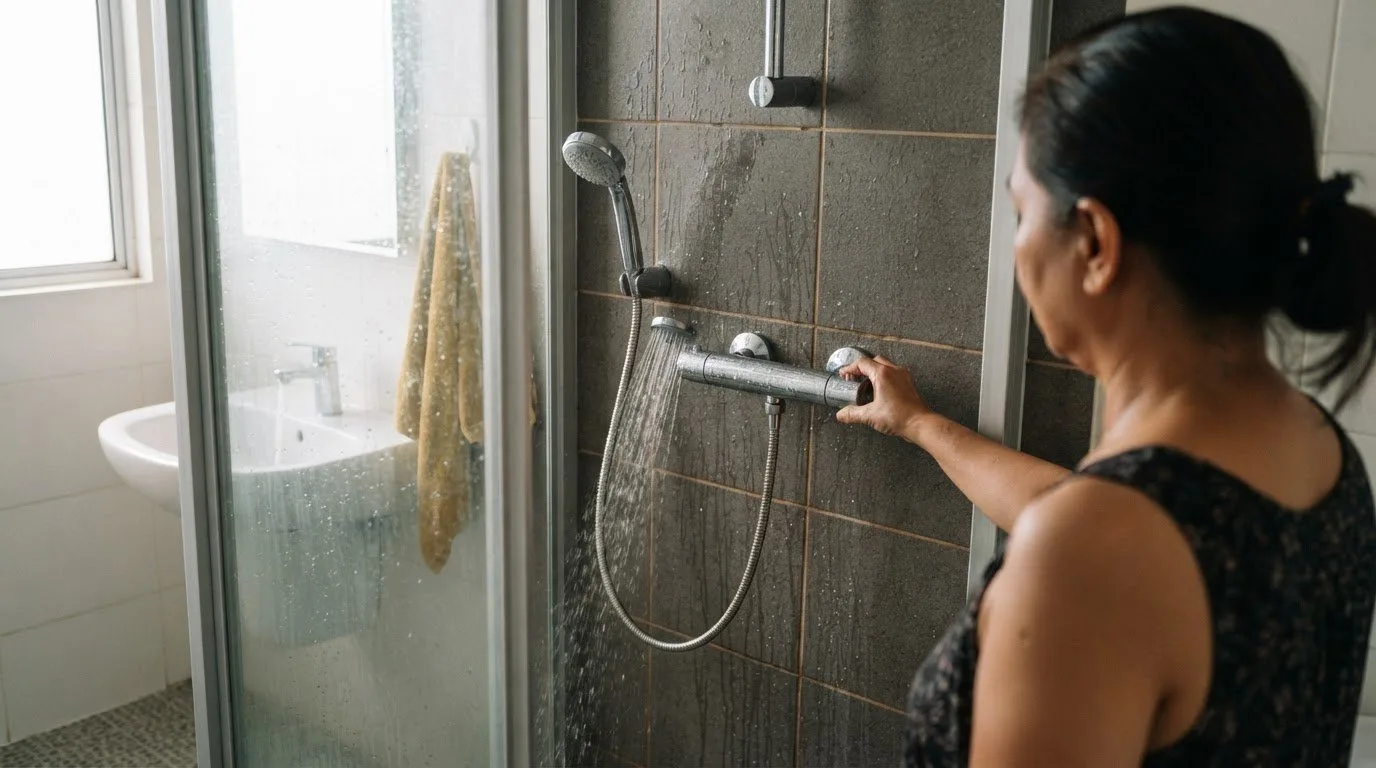
A safer, more comfortable shower starts with steadier temperature control. The benefits of a thermostatic shower mixer include maintaining your chosen temperature as water supply conditions change, reducing repeated adjustments to hot and cold controls, and helping limit overheating with a safety stop. The right fit also depends on your bathroom’s water pressure, shower outlets and preferred fitting style.
You shouldn’t have to keep reaching for the controls whenever someone turns on another tap. A thermostatic mixer blends hot and cold water to help maintain your selected temperature, though performance with low water pressure depends on the valve and plumbing system. This guide explains how temperature control works, what safety features can do, and how to match a mixer with your water pressure, showerhead and bathroom layout. You’ll have a clearer idea of which features matter for a comfortable, practical shower that suits your space.
Key Takeaways
- Match the mixer to your water pressure and the valve’s minimum pressure requirements to support reliable performance.
- Look for a safety stop and hot-water shutoff protection, while continuing to supervise children and older adults.
- Choose a fitting style that suits your bathroom layout, whether exposed or concealed.
- Confirm that the mixer works with your preferred showerhead and outlets before settling on a setup.
- Consider how the shower will fit your daily routine, not just how it looks in the bathroom.
Thermostatic Shower Mixer: What Is It and Why Does It Matter?
A thermostatic mixer blends hot and cold water to maintain your selected shower temperature. Its value becomes clear when a toilet flush or another tap changes household water use.
How Temperature Regulation Works
A thermostatic shower valve adjusts the balance of hot and cold water to keep the temperature close to your chosen setting. You select the desired temperature once instead of repeatedly adjusting separate controls during an everyday shower.
Inside the valve, a temperature-sensitive element responds as the incoming water changes. If the hot supply cools or the cold supply shifts, the valve changes the blend to help restore a consistent temperature. Some models can regulate temperature within ±2 °C, while qualifying care-focused models may maintain it within ±1 °C. These figures apply to selected models, not every thermostatic mixer.
The benefits of a thermostatic shower mixer include less need for repeated hot-and-cold adjustments. Some mixers also respond quickly when you change the setting, helping you reach a comfortable shower temperature sooner.
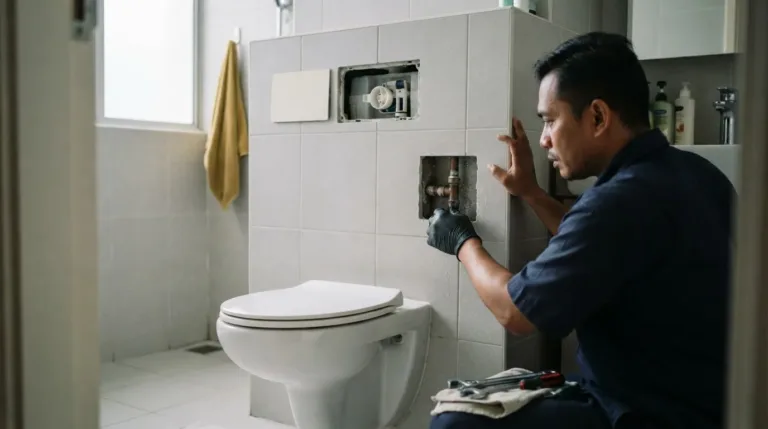
For installation, professional help is advised, especially for a mixer connected to concealed plumbing. Follow the product installation guide during rough-in and fit-off. Regular wiping and occasional cartridge or filter cleaning support maintenance.
Consistent Temperatures During Water Use Changes
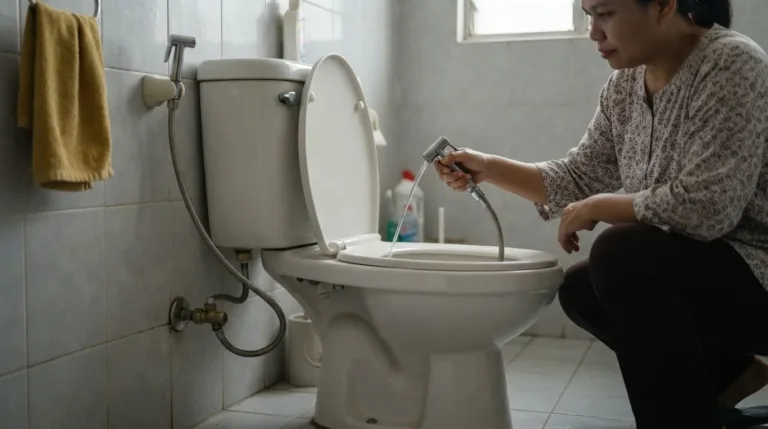
A thermostatic mixer is designed to maintain temperature when another household fixture draws water. For example, if someone flushes a toilet while you shower, the valve adjusts the hot-and-cold blend as supply conditions change.
A standard manual mixer may experience temperature fluctuations when the water supply changes. A thermostatic valve automatically adjusts the blend to help reduce sudden changes and repeated reaching for the controls. This can make it easier to maintain a consistent setting during everyday use.
Temperature control doesn’t mean the water supply stays identical. The mixer responds to changes by adjusting the blend, helping the shower stay closer to your chosen temperature. This matters when household water use overlaps, such as when someone turns on a tap while you shower.
Thermostatic and Manual Mixer Differences
A thermostatic mixer actively adjusts the hot-and-cold blend to maintain a selected temperature, while a manual mixer requires you to adjust the controls when supply changes affect the water. For households that value a steady setting, thermostatic control can reduce hands-on adjustment.
Which is better depends on your priorities: choose thermostatic control for temperature consistency, or a manual mixer if you prefer direct adjustment. A manual mixer may fluctuate when another tap or toilet changes the supply. A thermostatic model helps compensate, but its performance still depends on the valve and water supply.
For children, a stable setting can make temperature easier to manage, but it doesn’t replace adult supervision. Choose a comfortable temperature and stay attentive during use, especially if someone else in the home is using water at the same time.
Water pressure compatibility
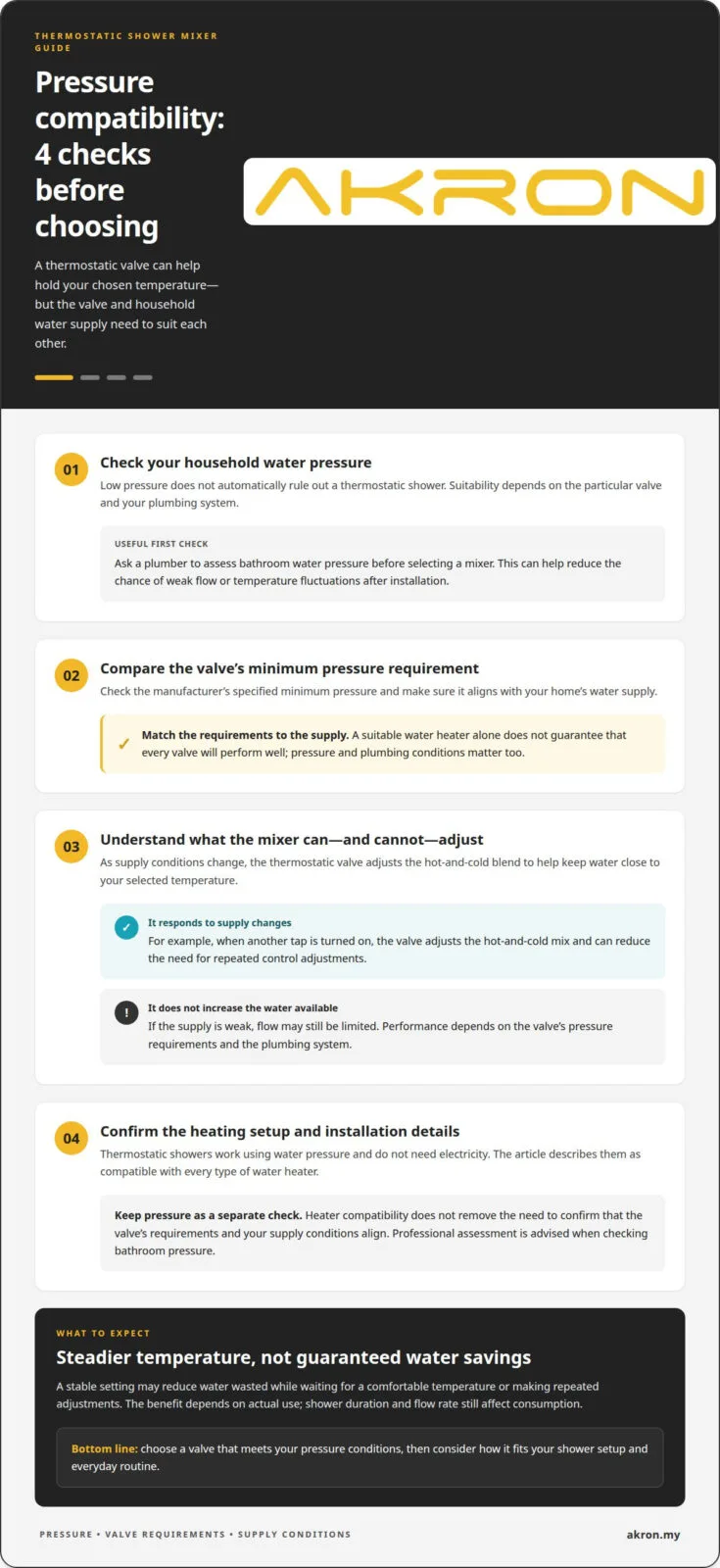
A thermostatic mixer blends hot and cold water, but its performance also depends on the household water supply. Valve requirements and plumbing conditions determine whether it suits your bathroom.
Common problems include weak flow or temperature fluctuations when the valve and water system aren’t compatible. Low pressure doesn’t rule out a thermostatic shower, but the specific valve’s minimum pressure requirements matter.
Compatibility With Household Water Systems
Compatibility means the mixer can operate with your home’s water pressure and heating arrangement. Thermostatic showers can work in low-pressure situations, but suitability depends on the valve and plumbing system. The manufacturer’s minimum pressure requirements help determine the right match. A plumber can assess bathroom pressure before you select a mixer, reducing the chance of poor flow after installation.
These showers don’t need electricity; they work using water pressure. They’re also described as compatible with every type of water heater. Still, pressure is a separate consideration: a suitable heater doesn’t automatically mean every valve will perform well. For an integrated system, the valve requirements and supply conditions need to align.
Adjusting to Water Supply Changes
As pressure or supply conditions shift, the thermostatic valve adjusts the hot-and-cold blend to help maintain the selected temperature. For example, turning on a nearby tap can affect the shower supply. The mixer responds automatically, reducing the need to keep changing its controls as household water use changes.
This response can make the shower feel more consistent, but it doesn’t increase the water available to the bathroom. If the supply is weak, the shower may still have limited flow. The valve’s pressure requirements and the plumbing system determine how well it can respond to fluctuations.
Water savings are possible because a stable temperature can reduce water wasted while waiting for a comfortable setting or making repeated adjustments. The benefit depends on actual use: someone who already sets the temperature quickly may save less than someone who frequently adjusts the hot and cold controls.
A thermostatic mixer doesn’t guarantee lower water use in every home. Shower duration and flow rate still affect consumption. In a shared Malaysian household, for example, another tap drawing water may change the supply, while the mixer helps limit temperature shifts rather than controlling how much water each person uses.
Pressure suitability is a practical starting point before choosing a shower fitting, integrated layout or finish. To explore options for your bathroom, browse the shower product range.
Anti-scald protection and safety locks
A thermostatic mixer helps prevent scalding by controlling shower temperature as water conditions change. Some models also have a built-in safety stop intended to prevent overheating and reduce burn risk.
Temperature Limiting and Scald Prevention
A built-in safety stop is designed to limit overheating at the shower setting. It matters when a sudden change in the hot or cold supply could otherwise make the water uncomfortable or too hot.
Some thermostatic taps also cut off hot water if the cold-water supply is interrupted. This helps reduce scalding risk, but it doesn’t replace careful use. Choose a comfortable setting and supervise children and older adults during showers.
Temperature control helps address one common risk: a supply change that makes shower water unexpectedly hotter. For example, if cold water is interrupted, a thermostatic tap can stop the hot-water supply. This helps reduce the chance of a sudden rise in shower temperature.
The safety stop and temperature control have related but distinct roles. Temperature regulation adjusts the hot-and-cold blend as supply conditions change. A safety stop is intended to prevent the user from reaching an overheating setting. Operation varies by mixer design, so rely on the specific controls provided with the model.
Safety Locks and Sudden Temperature Changes
Safety locks and stops are intended to help limit access to an excessively hot setting. They can be useful in a shared bathroom, where different people may use the same shower and prefer different temperatures.
A safety feature can reduce risk, but it isn’t a substitute for supervision or an appropriate setting. An adult should remain attentive when a child or older person is showering. Keep the selected temperature comfortable, and pay attention if water flow or supply conditions change.
Use the controls deliberately: set the shower temperature before stepping under the water, then adjust gradually if needed. This helps you notice changes instead of reacting to unexpectedly hot water. If the water suddenly feels hotter, move away from the spray and turn the controls off.
Don’t assume every mixer uses the same lock or stop mechanism. Some models include a built-in safety stop, but its design and operation depend on the product. Read the operating instructions so you know how to select the setting and use any safety control correctly.
These features support safer use, but they can’t remove every risk. Continue supervising children and older adults, and avoid leaving someone unattended in a running shower. Temperature control, appropriate settings and attentive use work together to help reduce scalding hazards.
Choosing a thermostatic shower for a bathroom
Choose a mixer by matching its temperature control to your bathroom layout and shower routine. The key decisions are which outlets you plan to use, the fitting style, and whether the room is being renovated or newly built.
Start with the showerhead and outlets. Thermostatic mixers can work with traditional showerheads, rain showers and handheld showers, but the valve must suit your chosen setup. For example, a system with a fixed rain head and a handheld outlet needs a mixer designed for both. Compatibility helps ensure the controls work with the arrangement you actually use.
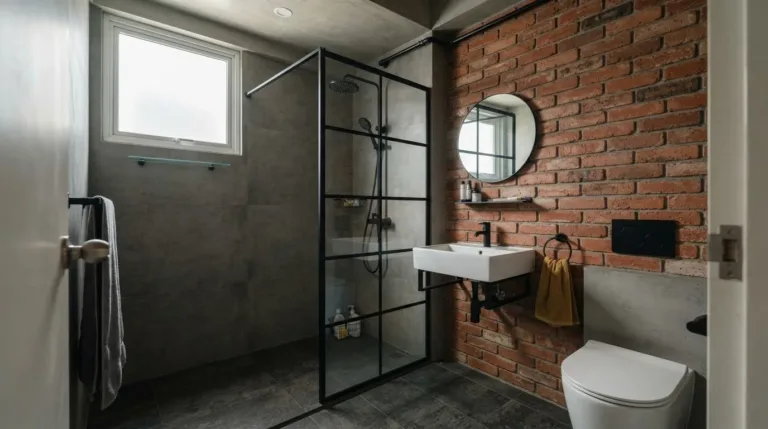
Next, consider the bathroom’s existing plumbing and project stage. Exposed fittings can suit a bathroom where the controls and pipework remain visible. Concealed fittings may suit a layout that supports hidden plumbing. During a renovation or new build, decide on the arrangement before construction rather than treating the mixer as a finishing detail.
Installation planning matters most for concealed plumbing. Consult the installation guide before construction and during the rough-in and fit-off stages. This helps align the valve position, outlets and finished wall layout. Professional installation is advised for thermostatic mixers, particularly when plumbing is integrated behind the wall.
Also consider who uses the shower and how they prefer to adjust the temperature. A straightforward control layout can make it easier for different household members to select a familiar setting. If several people share the bathroom, choose an arrangement that keeps the controls accessible and works naturally with the showerhead they use most.
Some advanced thermostatic mixers connect to smart-home systems for remote control through smartphone apps or voice commands. This may suit a bathroom where remote operation is useful, but it adds a technology choice rather than changing the basic job of temperature control. Consider whether app or voice access fits your everyday routine before making it a deciding feature.
Finish with a practical fit check: confirm the valve works with your chosen showerhead and outlets, then make sure its exposed or concealed style suits the room and project stage. A well-matched setup helps the mixer adjust water temperature as intended while fitting the bathroom’s design. If you’re planning a bathroom update, consider the requirements of your space and the shower arrangement that suits it.
Akron Malaysia: Shower
Akron Malaysia offers shower products for bathrooms where comfort, practicality and design need to work together. Use the points in this guide to define your preferred setup, including the showerhead, outlets, fitting style and temperature-control needs. These choices help you identify the kind of shower that suits your space and daily routine.
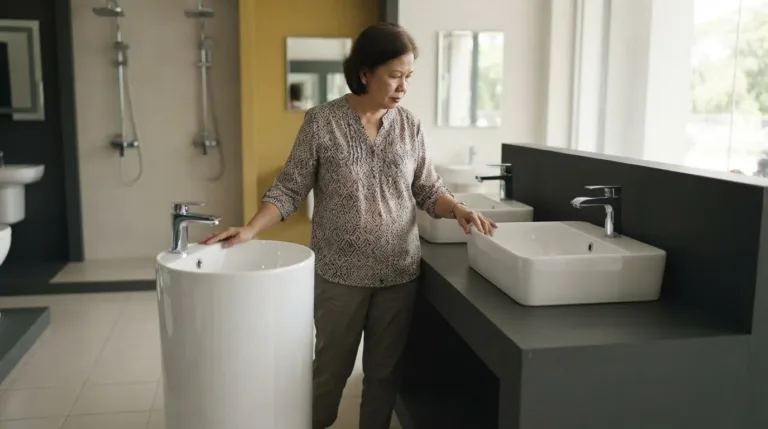
If you’re updating more than the shower, consider how it will sit alongside other bathroom fixtures, such as a faucet, wash basin or water closet. A coordinated plan can help the room feel considered while keeping each fixture suited to its purpose.
For help with your bathroom plans, contact Akron Malaysia.
Make your next bathroom choice with confidence
The right shower setup should feel natural in your daily routine and work with your bathroom layout. Use the benefits of a thermostatic shower mixer as a guide, then consider how each fixture supports the space as a whole. A thoughtful choice can make your bathroom more comfortable and cohesive without adding features you don’t need.
Akron Malaysia offers bathroom essentials including a Water Closet, Wash Basin and Faucet. Bring your priorities into focus, whether you’re refreshing one fixture or planning a more coordinated bathroom.
Take the next step at your own pace. Contact Akron Malaysia today to discuss your bathroom plans and explore options that suit your home.
Frequently Asked Questions
Are Thermostatic Showers Safer for Children and Older People?
They can help reduce scald risk, but they don’t replace supervision or careful temperature selection. A thermostatic mixer’s safety stop is intended to limit overheating, and some taps cut off hot water if the cold supply is interrupted. Before a child or older person uses the shower, an adult should set a comfortable temperature and stay attentive throughout. Treat the control as an added safeguard, not a substitute for supervision.
How a thermostatic shower or bath tap works?
A thermostatic shower or bath tap blends hot and cold water to reach the temperature you select. Its valve responds to changes in the incoming supply by adjusting that blend. For example, if another household tap changes the water supply while a bath is filling, the valve works to maintain the selected temperature. The chosen tap or mixer must suit its outlet and the home’s plumbing conditions.
What are the Benefits of Thermostatic Shower Valves?
Thermostatic shower valves help maintain a preferred water temperature, reduce repeated control adjustments and provide safety features intended to limit overheating. Some models also let you adjust water flow to suit your routine. Maintenance remains part of ownership: wiping the fitting and occasionally cleaning its cartridge or filter helps keep it working. Regular servicing and timely replacement of worn components also support valve performance over time.
What are the common misconceptions about thermostatic showers?
A common misconception is that every thermostatic mixer works equally well with every plumbing system. Low-pressure compatibility depends on the valve and system, so the model’s minimum pressure requirements matter. Another misconception is that temperature control removes the need for supervision. Safety stops help reduce overheating risk, but children and older adults still need attention, and users should select a suitable temperature setting.
What is a Thermostatic Shower and is it Worth Upgrading?
A thermostatic shower uses a valve to blend hot and cold water and maintain a chosen temperature. An upgrade is most relevant if you often readjust a manual mixer or experience uncomfortable temperature changes during showers. Consider the valve’s pressure requirements, the existing plumbing and your preferred shower outlets. If those suit your bathroom and steady temperature control matters to you, upgrading can be a practical choice.
How does a thermostatic shower mixer work?
The mixer combines hot and cold supplies, then adjusts their proportions to maintain the temperature selected at its control. If the incoming supply changes, the valve responds by changing the blend. This differs from manually turning separate hot and cold controls whenever the water feels too warm or cool. The exact response and available controls depend on the mixer model and its installation.