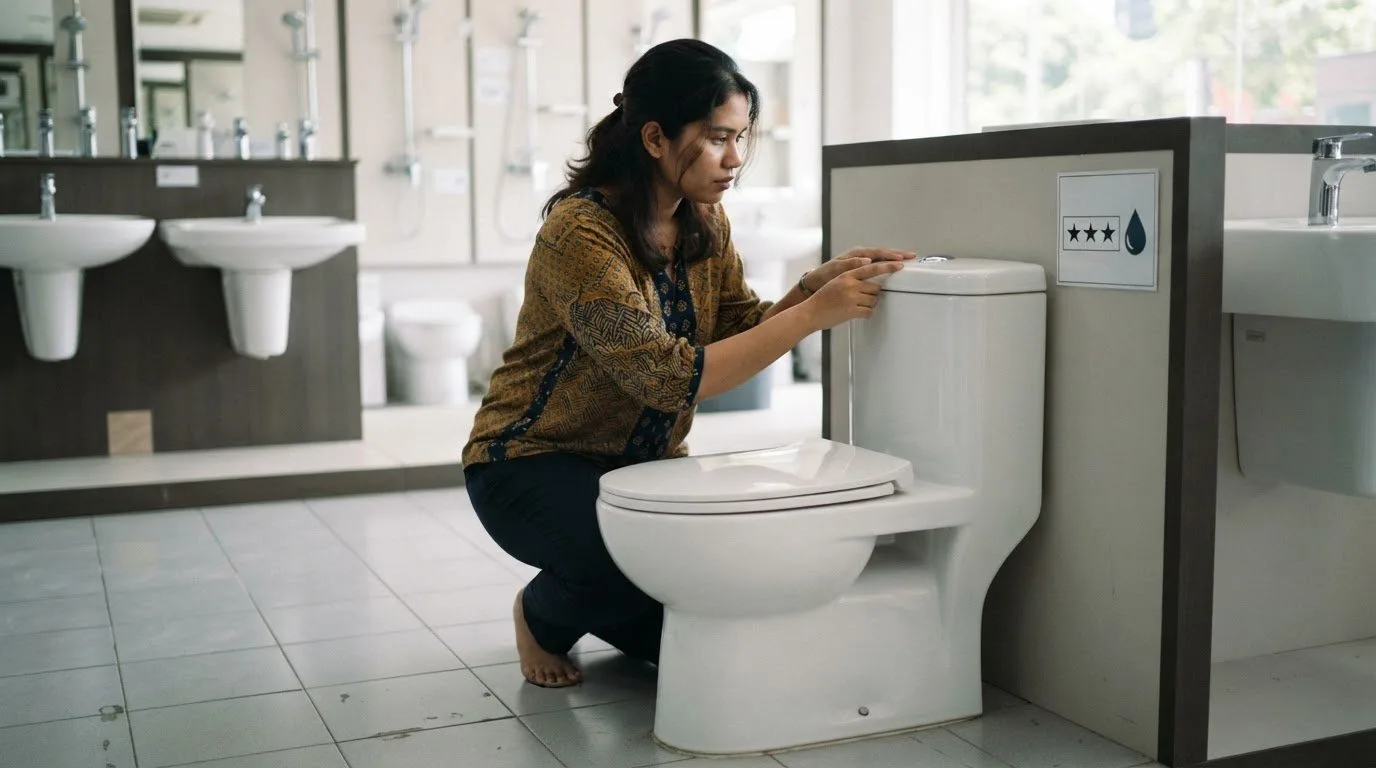
A water-efficiency label doesn’t mean the same thing in every country. To understand what a water-efficient product label is in Malaysia, start with WEPLS: the voluntary scheme launched in January 2013 and rates covered products on a three-star scale according to water consumption.
A star rating or water-use figure may seem directly comparable across markets, but product coverage, thresholds and labelling rules vary. The details behind the symbol matter as much as the rating itself.
This guide explains which products Malaysia’s scheme covers, what its star ratings mean and how water-use thresholds work for washing machines. It also looks at international examples to clarify what a label does, and does not, tell you.
Key Takeaways
- Identify which product categories Malaysia’s WEPLS covers, and distinguish scheme participation from mandatory requirements.
- Use washing-machine water-use thresholds to understand how a product’s rating is assigned.
- Compare labels by their criteria, product coverage and enforcement, not by star symbols alone.
- Learn what information a Malaysian WEPLS label displays and how its rating helps you assess water consumption.
- Explore Water Closets and other bathroom fixtures as you plan a more water-conscious bathroom.
Which products are typically subject to mandatory water efficiency labeling or standards?
Water-efficiency rules may cover washing machines, dishwashers, toilets, taps and showers, but the exact product list depends on the country and scheme. A category covered by another country’s rules is not automatically included in Malaysia’s Water Efficient Product Labelling Scheme (WEPLS).
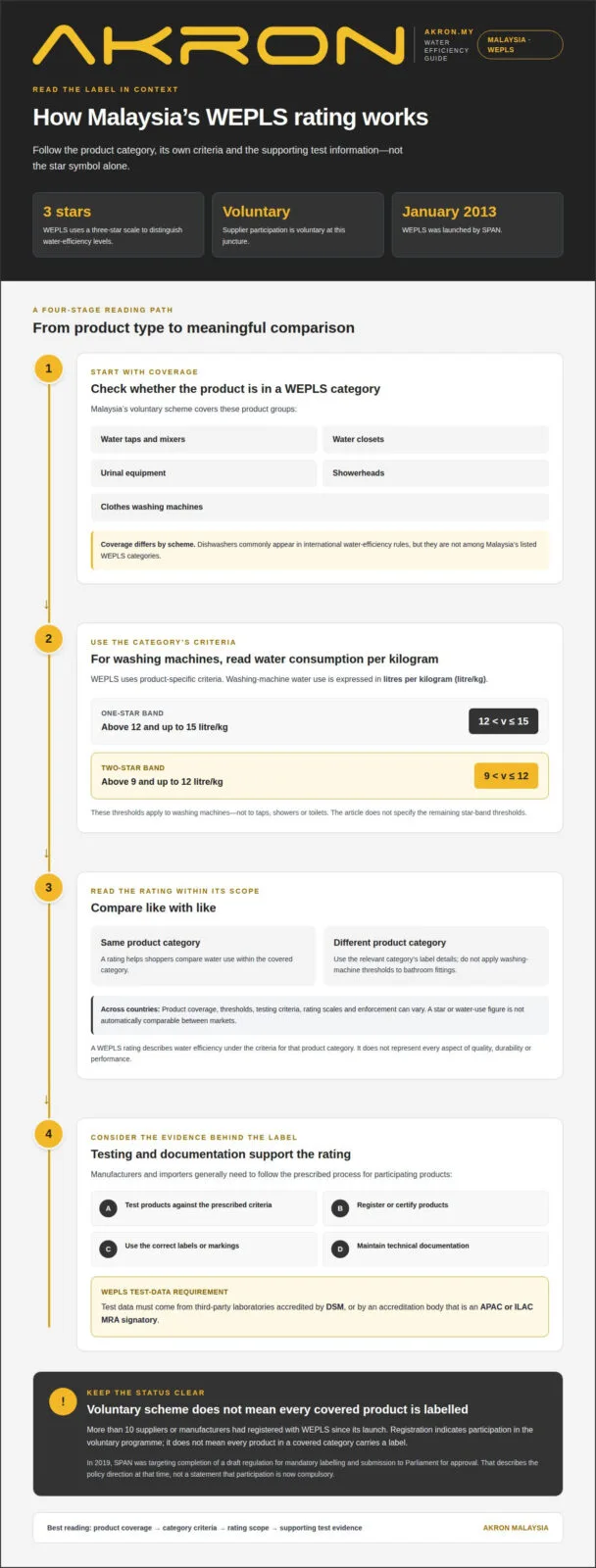
Malaysia’s voluntary WEPLS covers water taps and mixers, water closets, urinal equipment, showerheads and clothes washing machines. Knowing the list helps distinguish products covered by this scheme from categories addressed by other countries’ standards.
- Washing machines: A WEPLS rating considers water consumption in litres per kilogram.
- Dishwashers: They commonly appear in water-efficiency rules internationally, but aren’t among Malaysia’s listed WEPLS categories.
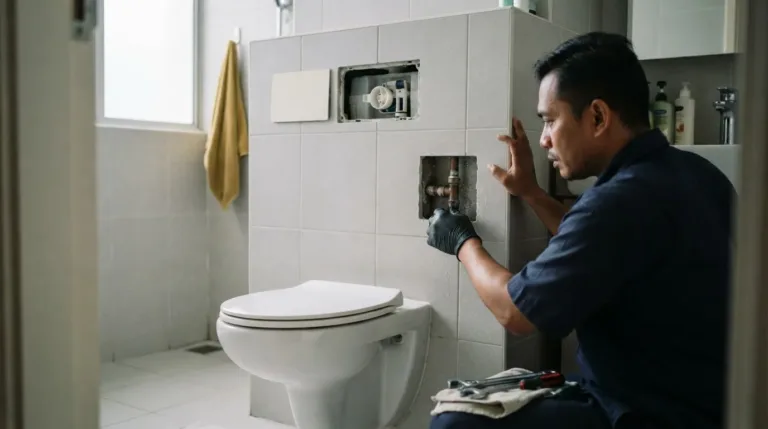
- Water closets: Toilet products are covered by Malaysia’s scheme and by rules in some other markets.
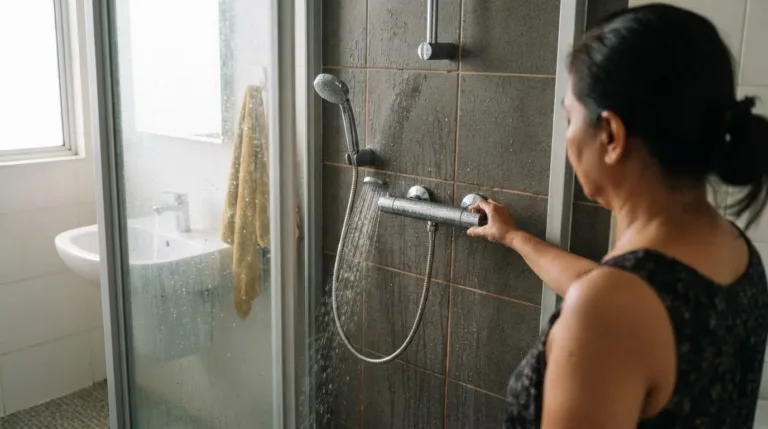
- Taps and mixers: Malaysia’s scheme includes these fittings, alongside showerheads.
- Urinal equipment: This is another product category named under Malaysia’s WEPLS.
Washing-machine example: Two machines can use different amounts of water to perform the same household task. How to compare: WEPLS applies product-specific criteria, including water consumption measured in litres per kilogram. What this tells you: The rating helps shoppers compare water use within the covered category.
For washing machines, Malaysia’s WEPLS assigns one star to consumption above 12 and up to 15 litre/kg, written as 12 < v ≤ 15 litre/kg. The two-star band is above 9 and up to 12 litre/kg, written as 9 < v ≤ 12 litre/kg. These thresholds apply to washing machines, not taps, showers or toilets.
Bathroom-product example: A tap and a showerhead belong to different product categories. How to compare: Use the relevant category’s label details rather than applying washing-machine thresholds. What this tells you: The comparison stays focused on the product you are considering.
Testing and documentation matter, too. Manufacturers and importers generally test products against prescribed criteria, register or certify them, use the correct labels or markings, and maintain technical documentation. WEPLS test data must come from third-party laboratories accredited by DSM or an APAC or ILAC MRA signatory accreditation body.
Are there limitations to relying on a water-efficiency label? Yes. A label reflects the criteria for a particular product category and country, so ratings may not be directly comparable across countries or product types. It describes water efficiency, not every aspect of a product’s performance.
Purpose of the Water Efficient Product Labelling Scheme
Malaysia’s Water Efficient Product Labelling Scheme (WEPLS) gives shoppers information about a product’s water consumption. Its practical purpose is to make water-use performance easier to identify when comparing covered products. A rating enables comparison within a category; it is not a claim about every aspect of quality, durability or performance.
SPAN initiated WEPLS, which launched in January 2013. The scheme uses three stars to distinguish water-efficiency levels. A label can help a shopper notice water-use information at the point of choice, while giving suppliers a consistent scheme for presenting participating products.
Malaysia’s regulatory background includes the Water Services Industry Act 2006 (Act 655), which governs the water services industry. Act 655 came into force on 01 January 2008. This context is distinct from the scheme’s launch: the Act’s commencement date is not the WEPLS launch date.
In 2019, SPAN was targeting completion of a draft regulation for mandatory WEPLS labelling and submission to the Malaysia Parliament for approval. SPAN was also drafting laws to make the labelling requirement mandatory. These steps describe a policy direction at that time, not a statement that participation is now compulsory.
The key distinction is whether participation is voluntary or mandatory. Supplier participation in Malaysia’s WEPLS is voluntary at this juncture. If labelling becomes mandatory after the requirement is officially mandated, Malaysia would provide a transition period to give affected parties time to adjust.
More than 10 suppliers or manufacturers had registered with WEPLS since the scheme launched. Registration shows that businesses can take part in the voluntary program, while the label gives shoppers information about registered products. It does not mean every product in a covered category carries the label.
How does a water-efficiency label compare with other product labels or certifications? It focuses on water-use performance under the criteria for its product category. Other labels or certifications may assess different qualities, so a water rating is not a substitute for them.
Example, voluntary participation: A supplier has a product in a WEPLS-covered category and participates in the scheme. The supplier uses the relevant label for its registered product. Shoppers can consider the displayed water-efficiency information while bearing in mind that participation in the scheme is voluntary at this juncture.
Do water efficiency labeling programs differ internationally?
Yes. Countries set their own product coverage, testing criteria, rating scales and enforcement methods. A star rating or flow figure needs to be understood in its market context. The same product may face different rules across borders, so labels are not automatically comparable.
Singapore example: Singapore’s Water Efficiency Labelling Scheme (WELS) is a mandatory programme. How it works: Covered products follow the requirements of the national scheme. What this means: The label belongs to Singapore’s system; it does not establish a universal rating for other markets.
Australia example: Australia also has Water Efficiency Labelling. The European Union, by comparison, uses eco-design rules as a different policy approach. How it works: Each market applies its own framework. What this means: Read the label or requirement in the context of its country and product category.
Legal references also differ. New Zealand’s Consumer Information Standards (Water Efficiency) Regulations are identified as SR 2017/212. Ontario, Canada, has Regulation 509/18 covering energy and water efficiency for appliances and products. These identifiers show why a label’s governing scheme matters alongside its displayed rating.
Other examples address particular products or label use. Taiwan’s fee-charging standards for use of the Water Efficiency Label are identified as Order No. 10704600950, 2018. China’s rules on water-efficiency labelling of toilets are listed as 2025 rules. These examples concern different market conditions and should not be treated as interchangeable standards.
China’s product-specific documents add another layer. The Energy and Water Efficiency Thresholds for Intelligent Water Closets appear in Standard GB 38448-2025. China’s 2025 edition of the Water Efficiency Labelling Product Catalogue is identified as Announcement No. 1662, 2025. Its fourth-batch product catalogue is identified as Notice No. 1516, 2023. Each example ties criteria or coverage to a named document.
Comparing ratings: You see a rating on a product from another country. What to do: Identify the product category, market and applicable criteria before comparing it with a local label. Why it matters: This accounts for differences in thresholds and rating systems, rather than relying on symbols alone.
There are also differences in policy status. The United Kingdom is listed as having draft regulations for mandatory water efficiency labelling in 2026. A draft is not the same status as an existing mandatory program, so distinguish proposals from rules already in force.
To assess whether a label is genuine and current, match its scheme name, product model and registration details against the relevant scheme’s official records. A Malaysian WEPLS label displays a registration number, brand, model and water consumption, giving you specific details to compare.
What is Malaysia’s Water Efficient Product Labelling Scheme (WEPLS)?
Malaysia’s Water Efficient Product Labelling Scheme (WEPLS) is a product-rating scheme initiated by SPAN. It launched in January 2013 and uses a three-star scale to show water efficiency. Supplier participation is voluntary at this juncture. The label helps shoppers identify participating products and understand their water-use information.
WEPLS covers water taps and mixers, water closets, urinal equipment, showerheads and clothes washing machines. Each product is assessed within its own category, so a star rating for one type should not be treated as a direct performance comparison with another. For example, washing-machine water use is assessed differently from water use for a tap or showerhead.
The stars communicate levels of efficiency among similar products:
- One star: The product is water efficient.
- Two stars: The product is highly water efficient.
- Three stars: The product has the highest level of water efficiency among similar products on the market.
The star descriptions make the scale easier to read, but the category still matters. A three-star rating compares a product with similar products, not every product carrying a WEPLS label. For a useful comparison, consider the product type alongside the rating and water-consumption information.
WEPLS labels come in versions designed to be attached to or hung on a product. Both formats display the same core identification details: the water-efficiency star rating, WEPLS registration number, brand, model and water consumption. These details tie the rating to a specific product, rather than leaving the star symbol unexplained.
Shopping example: You are comparing two labelled water closets. First, identify each model using its brand and model details. Then compare the rating and water consumption shown on each label. This gives you a clearer product-to-product comparison than relying on appearance or star count alone. The registration number also identifies the product’s WEPLS record.
Using a label: A supplier has a product in a WEPLS-covered category and participates voluntarily. The relevant label can be attached to or hung on the product, allowing shoppers to see the rating and product information while comparing options. However, category coverage does not mean every product carries a WEPLS label.
In short, WEPLS combines category-specific ratings with product identification details. Read the stars, model and water-consumption information together. This helps you understand what the label says about a particular product without treating it as a universal rating or a guarantee of other product qualities.
Akron Malaysia: Water Closet
Akron Malaysia offers Water Closets for readers considering bathroom fixtures after learning how water-efficiency labels work. Use a WEPLS label’s model and consumption details to assess a labelled product, then consider how a Water Closet suits your bathroom’s practical needs and style.
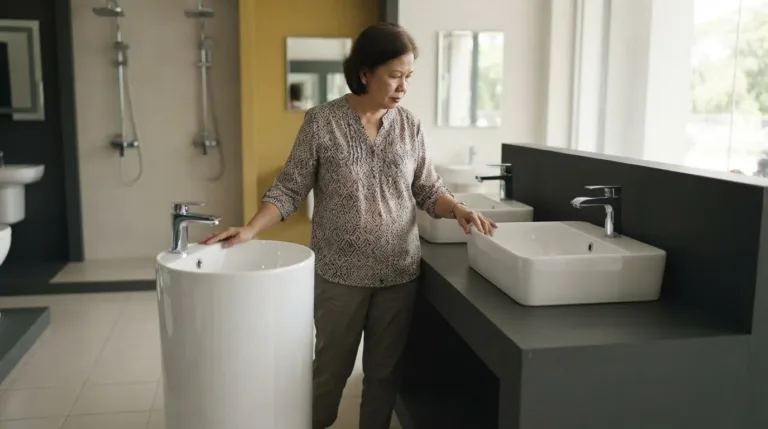
Akron Malaysia also offers Wash Basins, Faucets and Showers, making it easier to explore related bathroom fixtures in one place. Browse the bathroom product range as you plan your space.
For questions about choosing bathroom products, contact Akron Malaysia.
Make your next bathroom choice with confidence
Understanding what a water-efficient product label tells you is a useful starting point, but it is only one part of the decision. As you plan your bathroom, consider how each fixture will serve your household and fit the room’s layout. Weigh the product information alongside the look and everyday function you want.
Akron Malaysia offers Water Closets, Wash Basins and Faucets to help you create a practical, coordinated space. Choose fixtures that suit your plans, using clear product details to support an informed decision.
Ready to take the next step? Contact Akron Malaysia to discuss your bathroom product needs. A thoughtful choice can bring comfort and function together in a space that feels like home.
Frequently Asked Questions
What does a water-efficient product label mean?
A water-efficient product label communicates water-use performance against criteria for a particular product category. It helps you assess a product’s water efficiency, but does not tell you everything about its design, durability or overall performance. A washing-machine label, for example, relates to that category’s criteria. When comparing similar products, consider the displayed product details alongside the rating.
Which water-efficient product labels are used in Malaysia?
Malaysia’s water-efficiency scheme is the Water Efficient Product Labelling Scheme, or WEPLS. It provides a local framework for covered products, with supplier participation voluntary at this juncture. Treat a water-efficiency mark from another country as a separate scheme rather than assuming its criteria match WEPLS. The scheme name and registration details help identify a Malaysian WEPLS label.
Which products are covered by Malaysia’s water-efficiency label?
Malaysia’s WEPLS covers water taps and mixers, water closets, urinal equipment, showerheads and clothes washing machines. A showerhead, for example, falls within the scheme’s coverage, while a dishwasher is not included in this list. Coverage does not mean every product in a category carries the label, because supplier participation is voluntary. Compare the specific product and its label details.
How are products rated or graded for water efficiency in Malaysia?
WEPLS uses a three-star scale to show a product’s efficiency relative to similar products. One star means water efficient, two stars means highly water efficient, and three stars represents the highest water-efficiency level among similar products on the market. Treat the rating as a comparison within its category, not as a direct ranking of unlike products. A washing-machine rating, for instance, is not a grade for a water closet.
What water-consumption standards must products meet to qualify for the label?
WEPLS uses criteria specific to each product type, so there isn’t one water-consumption threshold for every covered item. For washing machines, one star applies above 12 and up to 15 litre/kg; two stars applies above 9 and up to 12 litre/kg. The unit matters: litre/kg describes washing-machine consumption. Don’t apply those figures to taps, showers or water closets, which use their own product criteria.
Do water-efficient products cost more, and how much can they save on water bills?
A water-efficiency rating does not determine a product’s purchase price or guarantee a particular bill saving. The effect on a water bill depends on the product’s actual consumption, how often it is used and household water use. Compare consumption information for similar products, then consider how the fixture fits your daily routine. This gives you a more useful basis for weighing efficiency and cost than assuming a star rating equals a fixed ringgit saving.