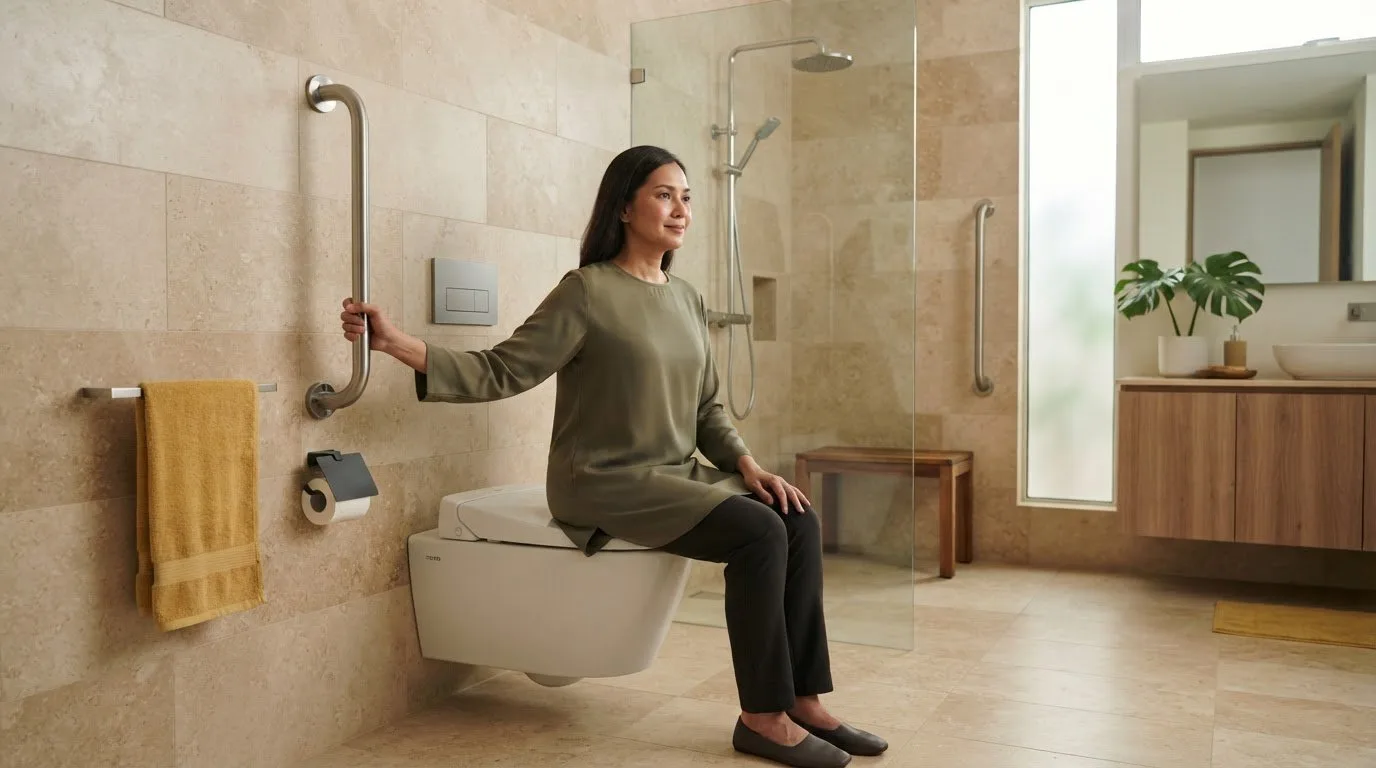
What if a grab bar is secure but still hard to reach when you need it? Choosing grab bars for a bathroom means looking beyond appearance. Their position should support the way you move, whether you’re sitting down on a toilet, standing up, stepping into a shower, or changing position on a wet floor.
A bathroom can feel both safe and welcoming when practical features are planned around everyday routines. But a grab bar is useful only when its position, fixing, and fit work together. A towel bar may look similar, but it isn’t designed to support your weight.
This guide explains how to assess grab bars, plan their position, and consider installation and ongoing care. Start by identifying the movement that needs support, then assess the user’s reach, the bathroom layout, and the wall. These checks help you make safety a considered part of the bathroom design, rather than choosing a bar by appearance alone.
Key Takeaways
- Think of a grab bar as a support point for movement, not a replacement for personal assistance or professional advice.
- Plan around the intended user’s routines, reach, bathroom layout, wall type, and preferred bar position.
- Compare straight and angled designs by how they fit the planned position and the user’s reach, rather than assuming one shape suits everyone.
- Before installation, identify the task, inspect the wall, and plan the position. Use a fixing method that suits the wall and follows the product instructions.
- Check for looseness, damage, or changes around fixing points, and follow the maker’s cleaning guidance.
Why grab bars can make everyday bathroom movement feel more supported
A grab bar is a fixed handhold designed to give someone a point of support while moving around the bathroom. It can provide a place to steady a hand when sitting, standing, or moving through a bathing area. For a general overview of its purpose and common uses, see Grab bar.
Support needs vary from person to person. A handhold may make a familiar routine feel more manageable, but it doesn’t replace personal assistance or professional advice when either is needed. A grab bar also has a different purpose from a towel rail or other bathroom accessory. Don’t rely on a rail designed for another use to support body movement.
What is a grab bar, and what is it designed to do?
A grab bar provides a handhold during a movement that might otherwise feel awkward or uncertain. To plan its position, consider where the person naturally reaches while carrying out the task, not just where a bar looks tidy on the wall. Its usefulness depends on being appropriate for the user and securely installed for the wall and product. It shouldn’t be treated as a substitute for assistance or professional guidance.
Which bathroom routines may call for an extra handhold?
Notice when movement takes extra effort or feels less steady. This might be lowering onto or rising from the toilet, stepping into or out of a shower or bath, or shifting position while washing. Observe the routine: where does the person reach, and which way do they move? The right location depends on those habits, the bathroom layout, and the individual’s needs. An arrangement that works for one household may not suit another.
Begin with the person who’ll use the bathroom and the specific movements they want support with. Watching those routines helps turn a general safety idea into a practical plan for the space.
How to choose grab bars and plan where they belong
Start with the movement that needs support, then assess the user and the bathroom. A position that looks neat on the wall may be awkward to reach during an actual routine. Prioritise comfort and function, then consider how the finished arrangement fits the room.
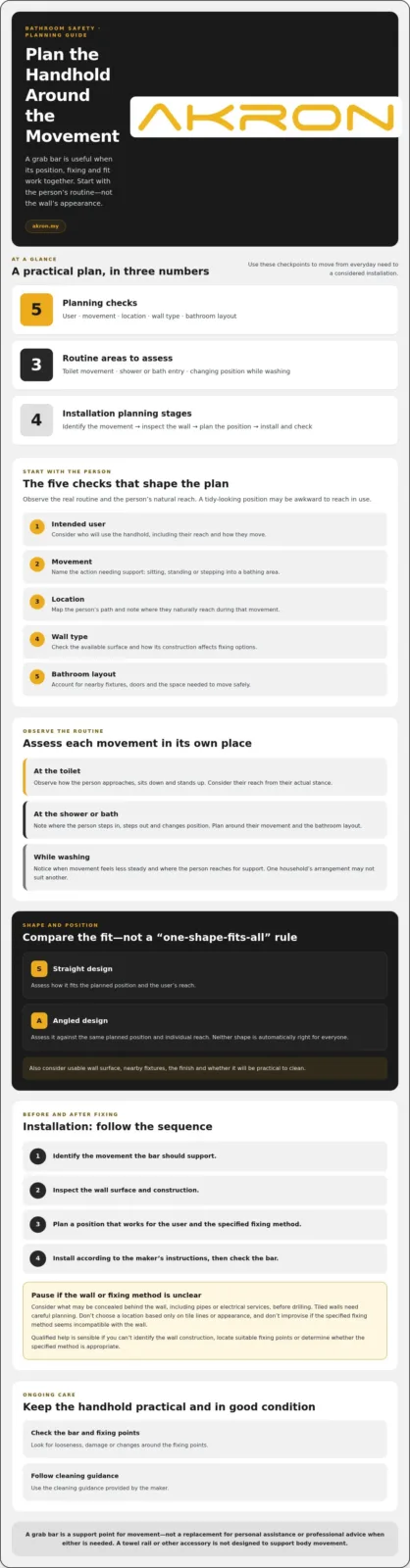
Use this checklist to shape your plan:
- Intended user: Consider who will use the handhold, including their reach and how they move.
- Movement: Identify the action that needs support, such as sitting, standing, or stepping into a bathing area.
- Location: Map the person’s path and note where they naturally reach during that movement.
- Wall type: Check the available surface and consider how the wall’s construction affects fixing options.
- Bathroom layout: Account for nearby fixtures, doors, and the space needed to move safely.
Which positions should you assess around a toilet or shower?
Assess each area separately. Beside a toilet, observe how the person approaches, sits down, and stands up. Around a shower or bath, note where they step in, step out, and change position. Consider the user’s reach from their actual stance rather than assuming one position or measurement suits every household. If you’re reviewing the toilet area as part of a wider update, Akron Malaysia’s bathroom product range includes fixtures and accessories for the space.
The ADA Standards for Accessible Design provide guidance for accessible environments in the United States. They can be a reference, but they aren’t Malaysian requirements and don’t replace a plan tailored to the person and bathroom.
What should you consider before choosing a grab bar?
Assess the usable wall surface, the task the bar is intended to support, and the surrounding layout. Straight and angled designs are broad options. Compare how each shape fits the planned position and the user’s reach; neither is automatically right for everyone. Consider the finish alongside nearby bathroom fixtures and whether the surface will be practical to clean.
Include the wall and fixing method in your decision. Wall construction affects installation planning, so the position and fixing need to work with the product’s instructions. A considered choice balances everyday use, a comfortable appearance, and the practical conditions in the bathroom.
How grab bar installation affects secure support
Choosing a suitable position is only part of the plan. The bar also needs to be fixed in a way that suits the wall and follows the product maker’s instructions. For an overview of grab bars as part of home safety modifications, see AARP’s guide to home modifications.
Work through the planning in order: identify the movement the bar should support, inspect the wall, plan the position, then install and check it. Each step informs the next. A position may suit the user but still need reconsideration if the wall construction doesn’t support the specified fixing method.
What should be checked before fixing a grab bar?
Identify the wall surface and consider what may be concealed behind it, including pipes or electrical services, before drilling. Tiled walls need careful planning because the position, wall construction, and fixing method must be considered together. Don’t choose a location based only on tile lines or appearance.
Follow the manufacturer’s installation instructions, including the specified fixing method. Fixings that don’t suit the wall may not provide the intended support. Don’t improvise if the instructions and wall construction appear incompatible. Pause and resolve the issue before proceeding.
When is professional installation a sensible choice?
Qualified help is sensible if you can’t identify the wall construction, locate suitable fixing points, or determine whether the specified method is appropriate. This is especially relevant when the wall is tiled or its internal structure isn’t clear. Secure attachment depends on suitable support behind the surface and correct installation, not simply a firm-looking finish.
After installation, check the bar and surrounding area as directed by the manufacturer. Look for movement, looseness, or changes around the fixing points. If anything seems uncertain, don’t rely on the bar until the installation has been assessed and the issue addressed.
If you’re planning a broader bathroom refresh, consider how your safety planning fits with the fixtures and accessories used elsewhere in the room.
How to keep grab bars practical, comfortable, and in good condition
Regular attention can help you notice changes before relying on a grab bar as part of a daily routine. Check it visually and follow the product maker’s guidance for cleaning and care. Cleaning as directed helps avoid damage from unsuitable methods.
What should you check after installation?
Look for movement, visible damage, or changes around the fixing points and nearby wall surface. Pay attention to anything that looks loose, cracked, or different from its usual condition. Don’t rely on a bar that moves or appears damaged until it has been assessed and the issue addressed.
Use the manufacturer’s instructions for inspection and care. Cleaning directions can vary by product and finish, so don’t assume a particular chemical or abrasive method is suitable. Follow any specific cleaning instructions. If you’re unsure how to interpret a change, seek appropriate guidance rather than assuming the bar is secure.
How can a support feature fit a welcoming bathroom design?
Practical support and a considered look can go together. Think about how the bar’s finish sits alongside nearby faucets, shower fittings, and other bathroom accessories. A coordinated palette can help the room feel cohesive, while the bar’s position should still suit the user’s movement and reach. Don’t let appearance dictate a placement that feels awkward or difficult to use.
When planning a wider update, consider how fixtures work together as well as how they look. Akron offers bathroom fixtures and accessories that can help you plan a comfortable, functional space with a consistent style. Keep everyday routines and practical needs at the centre of the design.
Make your bathroom work better for everyday life
Choosing grab bars starts with the person who’ll use them. Identify the movements that need support, plan positions around the user’s reach and bathroom layout, and make sure the wall and fixing method suit the installation instructions. A useful position matters, but so does secure attachment.
Keep the bar in good condition with visual checks for movement, damage, or changes around the fixing points. Follow the maker’s care guidance, and don’t rely on a bar that seems loose until it has been assessed. Thoughtful planning can make practical support feel like a natural part of a comfortable bathroom.
For a wider bathroom update, Akron offers fixtures and accessories through direct purchase and authorized dealers nationwide. Explore its affordable, high-quality products, designed to combine durability with style, at Akron’s bathroom solutions.
Frequently Asked Questions
What are grab bars used for in a bathroom?
Grab bars provide a fixed handhold to support everyday bathroom movements, such as sitting down, standing up, or moving through a shower or bathing area. The right location depends on the person’s routine, reach, and bathroom layout. A grab bar is a support point, not a replacement for personal assistance or professional advice when those are needed. Choose its position based on how it will be used.
Where should grab bars be installed near a toilet or shower?
Plan the position where the user can comfortably reach during the movement that needs support. Near a toilet, observe how the person approaches, sits, and stands. In a shower or bathing area, consider where they step in, step out, or change position. There isn’t one position that suits every user or bathroom. Map the movement path first, then account for reach, nearby fixtures, and available wall space.
Can grab bars be installed on tiled bathroom walls?
A tiled wall may be suitable, but the tile surface alone doesn’t determine whether the installation will be secure. The wall construction behind it and the product’s specified fixing method matter too. Before drilling, consider concealed pipes or electrical services, and plan the position around the user and the wall. Follow the manufacturer’s instructions. If you can’t establish whether the wall and fixing method are suitable, seek qualified help.
How do you know if a grab bar is securely installed?
Follow the manufacturer’s installation and inspection instructions, and look for movement, visible damage, or changes around the fixing points and nearby wall. A visual check can reveal warning signs, but it can’t confirm every detail behind the surface. If the bar moves, appears loose, or the wall shows changes, don’t rely on it until it has been assessed and the issue addressed. Don’t use a towel rail as a substitute.
Are grab bars and towel rails designed for the same purpose?
No. A grab bar is intended to provide a handhold for support during movement. A towel rail is designed to hold towels, not to support someone’s body weight. They may look similar, but their intended uses aren’t interchangeable. If someone reaches for a towel rail to steady themselves, consider which movement needs support and plan for a purpose-designed handhold with appropriate fixing.
Can I install a grab bar myself, or should I use a professional?
You may be able to install one yourself if you can identify the wall construction, account for concealed services, and follow the manufacturer’s instructions and specified fixing method. If the wall type or suitable fixing points are unclear, qualified professional help is a sensible choice. Secure support depends on both suitable wall support and correct installation. Don’t proceed by guesswork, especially if the wall is tiled or its structure is uncertain.